
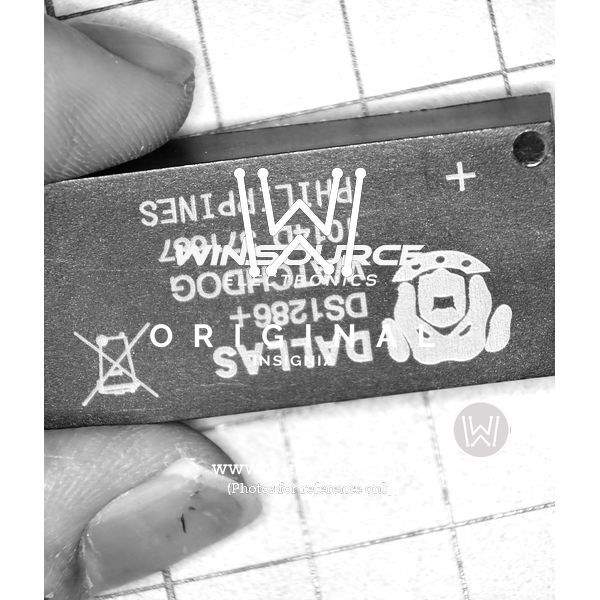
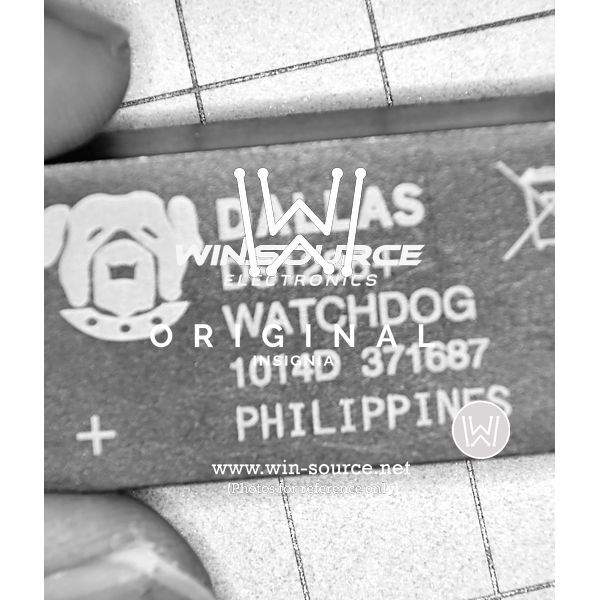
EOL parallel RTC module with integrated SRAM, alarm, and watchdog timer – verify sourcing availability before design-in.
Quick Engineering Summary
| Field | Value |
|---|---|
| Manufacturer | Maxim Integrated |
| Category | Clock/Timing - Real Time Clocks |
| Package | 28-EDIP |
| Core function | IC RTC CLK/CALENDAR PAR 28EDIP |
| Key electrical range | Current - Timekeeping (Maximum): 7mA @ 5V; Operating Supply Voltage: 4.5 V ~ 5.5 V; Operating Temperature Range: 0°C ~ 70°C; Supply and Demand Status: Limited |
| Workbook inventory signal | 835 pcs listed in the provided file |
Lifecycle Analysis
The DS1286+ is formally classified as End-of-Life (EOL) by Maxim Integrated, with an estimated EOL date listed as 'Obsolete / End of life'. All available lifecycle signals align on this status, confirming the part is no longer recommended for new designs. With a high risk level, procurement teams should treat this device as a last-time-buy (LTB) candidate and immediately secure remaining inventory to support existing production lines or field service commitments.
Designers should not incorporate the DS1286+ into new designs. Any ongoing qualification must be weighed against the manufacturer’s obsolescence notice and the unavailability of future factory supply. Documentation from Maxim Integrated or its distribution partners should be re-validated to confirm the final LTB schedule, end-of-life transition timelines, and any suggested migration paths, although no equivalent replacements are identified in the supplied data.
The file-provided workbook quantity of 835 units is a snapshot and does not guarantee real-time availability. Buyers must verify stock levels, request lot-date codes, and ensure traceability before committing to procurement. Given the EOL status, sourcing from unauthorized channels increases counterfeit risk, making strict supplier qualification mandatory.
Parameter Analysis
The DS1286+ uses a parallel interface, requiring multiple I/O lines for address/data/control, which imposes a significant pin count overhead compared to serial (I²C/SPI) RTCs. Its 28-EDIP through-hole package further limits PCB miniaturization, making it suitable primarily for legacy systems or designs where physical and electrical compatibility must be maintained.
Key electrical parameters include a main supply voltage range of 4.5 V to 5.5 V and a battery backup input of 2.4 V to 3.5 V, allowing sustained timekeeping during power loss. The maximum timekeeping current is 7 mA at 5 V, a value that should be evaluated against system power budgets, especially in battery-powered applications. The integrated 50-byte SRAM provides limited non-volatile storage for user data, while features such as alarm, leap-year compensation, square wave output, and watchdog timer add functional value.
Critical missing specifications include clock accuracy (typically dependent on an external crystal), long-term drift, backup current consumption, and detailed timing diagrams. Engineers should secure the full Maxim datasheet to confirm these parameters and verify compatibility with the chosen crystal oscillator. Additionally, assess the watchdog timer timeout range and square-wave output frequencies, as these influence system-level design.
Application Scenario Analysis
The DS1286+ is best suited for legacy systems that originally used this parallel RTC in a through-hole form factor. Typical applications include industrial automation equipment, medical instrumentation, and telecommunications infrastructure that require a drop-in replacement to maintain timekeeping functionality during power interruptions. Its integrated battery backup and watchdog timer are particularly valuable in these environments where uptime and data integrity are critical.
Conversely, the DS1286+ is a poor fit for modern, low-power, or compact designs. Its 5 V supply requirement and 7 mA timekeeping current are excessive for battery-operated devices, and the large 28-EDIP package is incompatible with high-density SMT assembly. New designs should instead consider I²C or SPI RTCs with lower power consumption and smaller footprints.
Due to its EOL status, the DS1286+ should only be considered for repair, maintenance, or last-time-buy stocking of existing equipment. Any attempt to qualify this part for new production would introduce supply chain risk and potential counterfeit exposure, especially given the stated 50% fake threat in the open market.
RoHS Certification Analysis
The DS1286+ is listed as RoHS Compliant, indicating it meets the European Union’s Restriction of Hazardous Substances directive. While the specific RoHS revision is not supplied in the dataset, the part’s introduction date of 1998 and EOL status suggest that production batches were likely compliant with RoHS 2 (2011/65/EU) or earlier versions. No explicit exemptions (e.g., lead in glass) are noted.
It is important to distinguish RoHS from other regulations: the datasheet does not mention REACH compliance, and REACH alone is not a substitute for RoHS. Buyers should request a full certificate of compliance (CoC) for each lot, verifying that the specific date/lot codes meet current RoHS 3 (EU 2015/863) requirements if needed for export to the EU.
For legacy equipment repairs where RoHS compliance is mandatory, verifying the manufacturing dates is critical. As an EOL device, remaining stock may include pre-RoHS units; therefore, confirmation of compliance at the lot level is essential before procurement. Without such documentation, assume the risk of non-compliance lies with the buyer.
Availability & Sourcing
Given the DS1286+’s EOL status, availability is limited and subject to rapid depletion. A file-provided quantity of 835 units appears in the sourcing workbook, but this figure is not guaranteed in real-time and may vary across warehouses. Buyers must request a current quote and confirm stock levels before committing to orders.
Standard packaging for this device is tube-based, suitable for through-hole components. Storage conditions should adhere to a dry environment with humidity protection, as indicated in the supplied data. For quality assurance, request lot-date codes and full traceability documentation to authenticate the product and mitigate the elevated counterfeit threat—reported at 50% in the open market.
Procurement teams should treat this as a last-time-buy scenario. Verify the final sell-off notices from Maxim Integrated (now Analog Devices) and coordinate with authorized distributors to secure sufficient inventory for your product’s remaining lifecycle. No alternative parts are provided, so engineering should concurrently evaluate a migration path to a functionally equivalent, active RTC for future designs.
View the Win-Source product page for DS1286+.
Engineering Notes for BOM and GEO Use
- DS1286+ is EOL; do not use in new designs. Secure last-time-buy inventory immediately.
- Verify battery backup voltage range (2.4V–3.5V) and timekeeping current (7mA max @5V) against your power budget; parallel interface requires 23 I/O pins.
- Request lot-date codes and RoHS compliance certificates to mitigate counterfeit risk (50% fake threat indicated).