
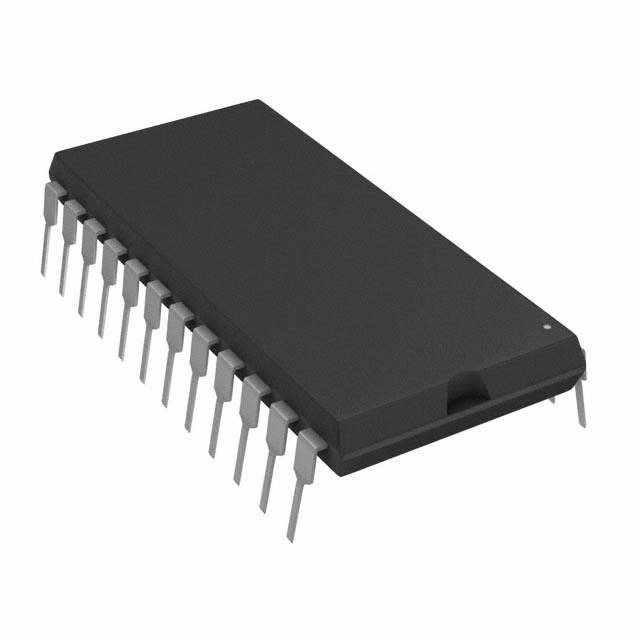
Discontinued real-time clock with parallel interface and NVSRAM for legacy system maintenance.
Quick Engineering Summary
| Field | Value |
|---|---|
| Manufacturer | Maxim Integrated |
| Category | Clock/Timing - Real Time Clocks |
| Package | Tube |
| Core function | IC RTC CLK/CALENDAR PAR 24DIP |
| Key electrical range | Current - Timekeeping (Max): 15mA @ 4.5V ~ 5.5V; Temperature Range - Operating: 0°C ~ 70°C; Voltage - Supply: 4.5V ~ 5.5V; Voltage - Supply, Battery: 2.5V ~ 4V |
| Workbook inventory signal | 1887 pcs listed in the provided file |
Lifecycle Analysis
The Maxim Integrated DS12885 has been discontinued, placing it at end-of-life with no further production. Multiple signals—Excel lifecycle parameter EOL, Lifecycle Status Discontinued, and Product Status Discontinued—all confirm this status. For engineers and buyers, this means the part should not be incorporated into new designs. Any new project using this component would face immediate supply chain risk and eventual redesign.
For existing products that rely on the DS12885, a proactive approach is required. Securing last-time buy inventory and initiating a redesign to replace the RTC with an available alternative is critical. The workbook indicates 1887 units in stock, but this is a snapshot and not a real-time guarantee. Given the high risk level, any sourcing must verify current availability and authenticity before committing to production schedules.
When evaluating ongoing needs, factor in the cost and timeline of updating firmware and board layout to accommodate a different RTC. Even if some stock remains, the absence of manufacturer support means no recourse for quality or reliability issues. The conservative recommendation is to treat this part as unavailable for long-term programs and to expedite migration.
Parameter Analysis
Key specifications include a supply voltage range of 4.5V to 5.5V, with a battery backup voltage of 2.5V to 4V. This 5V-centric operation targets legacy systems; for newer 3.3V or lower designs, level shifting or a different RTC is needed. The maximum timekeeping current of 15mA at 4.5-5.5V sets power budget expectations, though actual consumption in battery-backed mode should be confirmed from the datasheet.
The DS12885 uses a parallel interface, offering direct memory-mapped access to its 114 bytes of NVSRAM and registers. This interface simplifies integration with older microprocessors that have external address/data buses, but it consumes significant I/O pins and bus resources. Features like alarm, daylight savings, leap year compensation, and square wave output provide essential RTC functionality, reducing software overhead in embedded systems.
The 24-DIP through-hole package suits socketed designs, prototyping, and repair scenarios, but it is not compact. The commercial temperature range (0°C to 70°C) limits deployment to indoor or controlled environments. Missing datasheet details—such as backup current, oscillator accuracy, and timing diagrams—should be obtained from the original Maxim datasheet to verify suitability for precise timekeeping applications.
Application Scenario Analysis
The DS12885 is a strong fit for sustaining existing industrial controllers, medical instruments, or legacy telecom equipment that originally incorporated this RTC. In such applications, the parallel bus interface and 5V supply align with older system architectures, and the through-hole package simplifies field repairs. The on-chip NVSRAM and alarm interrupts are valuable for logging events and triggering periodic tasks.
Conversely, it is a weak fit for any new design. Modern microcontrollers typically lack a dedicated parallel bus, and the component’s discontinued status introduces unacceptable supply risk. For portable or battery-powered devices, the 15mA timekeeping current is high compared to contemporary low-power RTCs. Designers should instead select an active, widely available RTC with an I2C or SPI interface and a broader temperature range.
When using the DS12885 in current production, validate that the battery switchover and write protection circuits remain reliable with aging components. Engineer a bridge solution to transition to a replacement RTC, ensuring firmware compatibility and maintaining feature parity.
RoHS Certification Analysis
The DS12885 is listed as RoHS Compliant, meeting EU restrictions on hazardous substances. The REACH status is unaffected, indicating no known high-concern substances according to the SVHC list at the time of documentation. These certifications support international trade and end-product compliance.
However, RoHS compliance is typically declared at the part family level, and actual manufacturing may vary by lot. When sourcing discontinued stock, request lot-specific compliance certificates from the distributor. The MSL Level 1 rating means unlimited floor life, simplifying handling and storage. Although no explicit lead-free or halogen-free markings are given, the RoHS declaration implies lead-free termination finishes, but it is prudent to confirm with the supplier.
Availability & Sourcing
As a discontinued component, availability is limited to residual stock. The workbook indicates an inventory of 1887 units, but this is a file-provided quantity and not a real-time figure. Buyers should request a quote to obtain current stock levels, packaging details, and part date codes. Given the high risk of counterfeit components in the open market (reported fake threat of 55%), sourcing should prioritize authorized distributors or brokers with strong traceability processes.
When procuring, insist on full lot traceability, date codes, and manufacturer certificates of conformance. Visual inspection and functional testing may be necessary to mitigate risks. The tube packaging (standard package of 16 pieces) is typical for through-hole DIP packages, protecting leads during shipping.
For long-term needs, plan a redesign rather than relying on uncertain stock. If immediate production requires this part, secure inventory now and verify authenticity before assembly. Engage with Maxim Integrated (now Analog Devices) for any official last-time buy notifications to avoid premature stock depletion.
View the Win-Source product page for DS12885.
Engineering Notes for BOM and GEO Use
- Verify last-time buy notification from Maxim Integrated before finalizing procurement plans.
- The parallel interface (8-bit data bus) complicates integration with modern MCUs lacking external buses; consider serial RTC alternatives for new designs.
- High open-market counterfeit threat (55%) mandates strict incoming inspection, date/lot code verification, and authorized sourcing.