
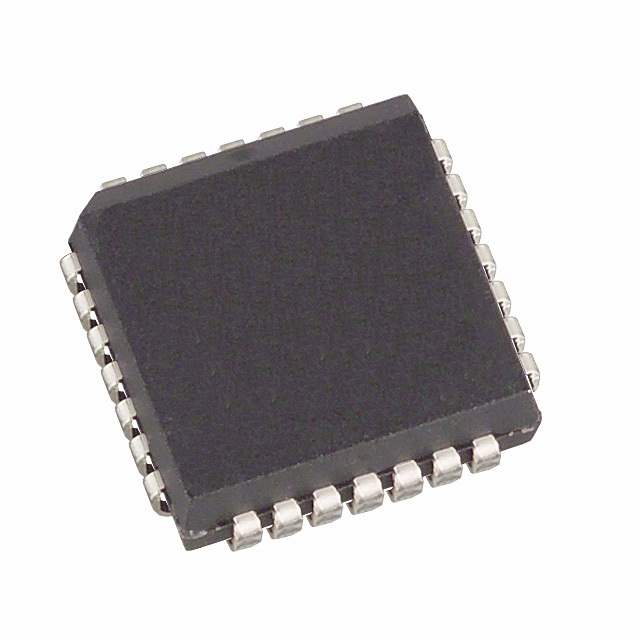
EOL Clock/Calendar IC with NVSRAM in 28-PLCC Package
Quick Engineering Summary
| Field | Value |
|---|---|
| Manufacturer | Maxim Integrated |
| Category | Clock/Timing - Real Time Clocks |
| Package | 28-PLCC (11.51x11.51) |
| Core function | IC RTC CLK/CALENDAR PAR 28PLCC |
| Key electrical range | Current - Timekeeping (Max): 15mA @ 4.5V to 5.5V; Supply and Demand Status: Limited; Supply Voltage - Operating: 4.5 V to 5.5 V; Temperature Range - Operating: -40°C to 85°C |
| Workbook inventory signal | 1700 pcs listed in the provided file |
Lifecycle Analysis
The DS12885QN+ from Maxim Integrated is confirmed End-of-Life (EOL) according to all supplied lifecycle signals. The Excel lifecycle parameter is marked EOL, and the lifecycle status field also indicates EOL with no conflicts. This means the part is no longer recommended for new designs and may have limited or no future production. EOL status carries high risk for long-term availability.
Engineers relying on DS12885QN+ should immediately verify last-time buy (LTB) or end-of-life notices directly with Maxim Integrated. Any inventory listed on file—such as the reported 1700 units—is provided as static data and does not guarantee real-time stock. Plan a qualification cycle for an alternative RTC IC if the product lifecycle requires extended support.
For sustaining production, secure sufficient stock to cover forecasted demand and potential supply gaps. Consider migrating to a newer Maxim Integrated RTC or alternative compatible part only after thorough pin-to-pin and software compatibility verification.
Parameter Analysis
The DS12885QN+ is a parallel-interface real-time clock/calendar in a 28-PLCC surface-mount package measuring 11.51x11.51 mm. Key operating parameters include a supply voltage range of 4.5 V to 5.5 V and a timekeeping current of up to 15 mA at that voltage range, which directly impacts power budgeting in 5V legacy designs. The battery backup voltage range is 2.5 V to 4 V, enabling data retention during power loss using a coin cell or supercapacitor.
The device integrates 114 bytes of NVSRAM, allowing storage of critical system parameters beyond time and date. Its feature set—alarm, daylight savings adjustment, leap year compensation, and square wave output—provides flexibility for a variety of embedded timing applications. The specified operating temperature range of -40°C to +85°C suits industrial environments. The date format is YY-MM-DD-dd, and the time format is HH:MM:SS in 12/24-hour mode.
Important missing parameters include interface timing details, clock accuracy, backup current consumption, and required crystal specifications. Designers must consult the manufacturer datasheet to verify these values, especially when integrating into a precision timing circuit. Additionally, the parallel interface may limit compatibility with modern microcontrollers that favor serial communication buses.
Application Scenario Analysis
The DS12885QN+ targets legacy embedded systems that require a 5V parallel-interface real-time clock with integrated NVSRAM. Typical applications include industrial controllers, medical instrumentation, data loggers, and networking equipment where reliable timekeeping across power cycles is essential and a parallel bus architecture exists. The built-in alarm and square wave output make it suitable for periodic wake-up events in always-on systems.
Conversely, this part is a weak fit for new designs that demand low-power consumption, miniature form factors, or serial interfaces like I2C or SPI. Modern 3.3V-only systems would require level translation, adding complexity. Its EOL status also disqualifies it from any new product development. For sustaining existing equipment, the DS12885QN+ remains relevant if sufficient inventory is secured and no software or hardware re-engineering is feasible.
RoHS Certification Analysis
The supplied data indicates that DS12885QN+ is RoHS Compliant. Without a specified directive, it is presumed to comply with EU RoHS regulations. However, the absence of REACH, halogen-free, or MSL data means procurement teams should request additional compliance certificates from distributors or the manufacturer.
Given the EOL status, any available stock may be older production, so verifying ongoing RoHS compliance at the lot level is critical. The storage condition noted—dry storage cabinet with humidity protection—suggests the parts are moisture-sensitive; proper handling per IPC/JEDEC J-STD-020 should be followed before soldering. Buyers should ensure that RoHS documentation is provided with each shipment to avoid customs issues in regulated markets.
Availability & Sourcing
Sourcing DS12885QN+ is complicated by its EOL status and a reported 61% fake threat in the open market. The file-provided quantity of 1700 units offers a point-in-time snapshot, but actual availability must be confirmed through a formal request for quote. Stock may be distributed across warehouses or already committed to other customers.
Engineers and buyers should request traceability documentation, including date and lot codes, to verify authenticity. The part is supplied in tube/rail packaging, which may simplify inspection but requires careful handling to prevent bent leads. Storage in dry, humidity-controlled conditions is recommended as indicated. For any procurement, insist on a compliance package that includes the RoHS certificate and manufacturer confirmation of origin.
Before committing to large purchases, contact Maxim Integrated to understand the exact EOL timeline and any remaining authorized distribution channels. Consider engaging a specialized legacy component supplier who can provide authenticity testing, given the elevated counterfeit risk.
View the Win-Source product page for DS12885QN+.
Engineering Notes for BOM and GEO Use
- EOL status requires immediate verification of last-time buy availability and migration planning.
- 61% fake threat underscores the need for authorized sourcing and rigorous incoming inspection.
- Verify parallel interface timing and NVSRAM backup current from the official datasheet before design integration.