
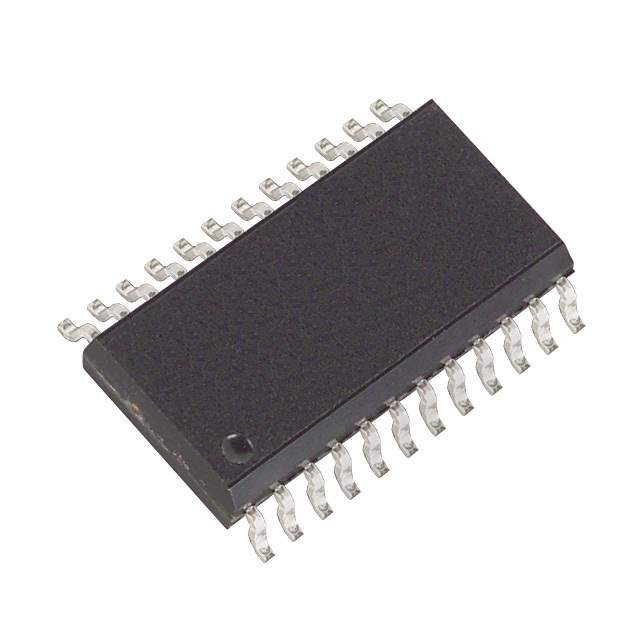
Discontinued parallel interface RTC with alarm and 114B NVSRAM. Verify availability and lifecycle before design-in.
Quick Engineering Summary
| Field | Value |
|---|---|
| Manufacturer | Maxim Integrated |
| Category | Clock/Timing - Real Time Clocks |
| Package | Tube |
| Core function | IC RTC CLK/CALENDAR PAR 24SOIC |
| Key electrical range | Current - Timekeeping (Max): 15mA @ 4.5V ~ 5.5V; Temperature Range - Operating: 0°C ~ 70°C; Voltage - Supply: 4.5V ~ 5.5V; Voltage - Supply, Battery: 2.5V ~ 4V |
| Workbook inventory signal | 576 pcs listed in the provided file |
Lifecycle Analysis
The DS12885S has been officially discontinued by Maxim Integrated, with lifecycle status marked as Discontinued. Conflicting internal signals (EOL vs Discontinued) further reinforce that this part is no longer in active production and should not be used in new designs.
For procurement teams, this means supply is limited to remaining distributor inventory or surplus stock. The file-provided quantity of 576 units is a static snapshot and does not reflect real-time availability. Buyers must verify stock levels and manufacturer notices before committing to purchases for production runs.
Engineering planning should focus on identifying a compatible replacement or redesigning the board for an active RTC. Any use of DS12885S in sustaining products is limited to last-time-buy situations or repair depots where a drop-in is essential.
Parameter Analysis
The DS12885S integrates a parallel-bus real-time clock with essential features: alarm, daylight savings adjustment, leap year compensation, and 114 bytes of NVSRAM. It operates at a supply voltage of 4.5V to 5.5V with a separate battery backup input of 2.5V to 4V, and draws a maximum of 15mA during timekeeping.
The specified operating temperature range of 0°C to 70°C limits it to commercial applications, not industrial extended temperatures. The parallel interface and 5V operation suit legacy microcontroller systems but are less common in modern low-voltage designs.
Missing from the sourced data are critical specifications such as clock accuracy, crystal requirements, backup current consumption, and interface timing. Engineers must consult the original Maxim DS12885S datasheet to verify these parameters before integration or equivalence assessment.
Application Scenario Analysis
The DS12885S is a strong fit for existing designs that originally used parallel-interface RTCs, such as legacy embedded controllers, industrial automation equipment, point-of-sale terminals, and telecom infrastructure that require a drop-in replacement. Its 5V operation and parallel bus match older microprocessor systems.
Weaker fit scenarios include modern low-power or 3.3V-only designs, which are better served by serial (I2C/SPI) RTCs with lower operating current. The 0°C to 70°C temperature range excludes use in outdoor, automotive, or extended industrial environments unless additional temperature testing is performed.
For battery-backed applications, the DS12885S's backup voltage range supports common lithium coin cells, but the relatively high timekeeping current (15mA) makes it less suitable for ultra-low-power designs. Any new application should instead consider current-production RTCs with improved power efficiency.
RoHS Certification Analysis
The DS12885S is listed as RoHS Compliant, indicating conformance with the EU's Restriction of Hazardous Substances directive. Additionally, the REACH status is Unaffected, and the moisture sensitivity level is MSL 1, which supports standard surface-mount assembly processes.
However, RoHS compliance can be lot-specific, especially for discontinued components. Buyers should request a certificate of compliance from the distributor or broker for the exact date and lot code being purchased to ensure it meets current regulatory thresholds.
No specific exemptions are noted in the available data, but typical exemptions for RTCs might include lead in internal connections or ceramic capacitors. Procurement should verify the absence of exemptions if full RoHS compliance is critical.
Availability & Sourcing
As a discontinued part, the DS12885S is only available through existing inventory channels. The file indicates a snapshot quantity of 576 units, but actual availability may vary. Standard packaging is a tube with 31 pieces per tube. Buyers should request a quote for current stock and lead time.
Counterfeit risk for this part is assessed at 35% in the open market, making traceability and authenticity verification essential. Sourcing from authorized Maxim Integrated distributors or broker partners with documented ISO testing and visual inspection processes is strongly advised.
When ordering, specify full lot and date code traceability, request RoHS compliance certificates, and consider third-party electrical testing if the part will be used in high-reliability applications. For new production, prioritize migration to an active alternative from Analog Devices/Maxim Integrated.
View the Win-Source product page for DS12885S.
Engineering Notes for BOM and GEO Use
- The DS12885S is discontinued; new designs should use a current-production RTC from Analog Devices/Maxim Integrated with serial interface for better availability.
- Given the 35% fake threat in the open market, only source DS12885S from authorized distributors or brokers with rigorous traceability and testing protocols.
- The parallel interface and 5V supply limit compatibility; ensure the 24-SOIC footprint and battery backup voltage range (2.5-4V) match your design before substitution.