
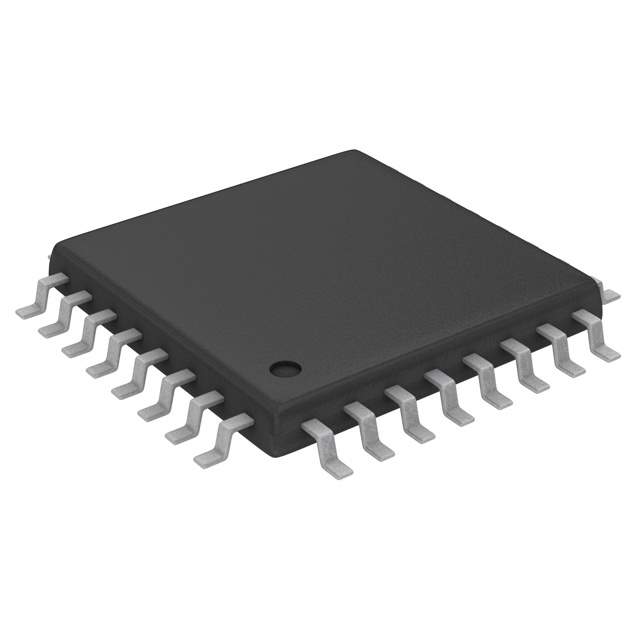
Parallel RTC with NVSRAM and Alarm from Maxim Integrated
Quick Engineering Summary
| Field | Value |
|---|---|
| Manufacturer | Maxim Integrated |
| Category | Clock/Timing - Real Time Clocks |
| Package | 32-TQFP (7x7) |
| Core function | IC RTC CLK/CALENDAR PAR 32TQFP |
| Key electrical range | Current - Timekeeping (Maximum): 15mA @ 4.5V ~ 5.5V; Operating Supply Voltage: 4.5 V ~ 5.5 V; Operating Temperature Range: 0°C ~ 70°C; Supply and Demand Status: Limited |
| Workbook inventory signal | 1 pcs listed in the provided file |
Lifecycle Analysis
The DS12885T+ from Maxim Integrated is currently listed as Active according to multiple lifecycle signals, indicating that the part is still in full production and available for new designs. However, the supplied data also includes an estimated EOL date of 2024, which introduces a degree of caution. While no official EOL notice has been issued, this estimate suggests that the DS12885T+ may be approaching the latter stage of its product life. For engineers and component buyers, this means the part is suitable for sustaining production but may not be the best choice for long-life new designs without first confirming future availability directly with Maxim Integrated.
Given the conflict between the Active status and the EOL estimate, a conservative procurement approach is recommended. This includes validating the lifecycle status through Maxim Integrated's official product page or sales channel, evaluating alternative parts for migration planning, and securing sufficient inventory for existing production needs. The DS12885T+ has been on the market since 1999, so its maturity is well-established, but any planning horizon beyond 2024 should account for potential changes. Verifying documentation and manufacturer revalidation needs is essential before committing to large-scale procurement.
Parameter Analysis
The DS12885T+ is a parallel real-time clock (RTC) with key parameters that define its suitability for embedded systems. It operates from a 4.5V to 5.5V supply, making it ideal for legacy 5V microcontroller designs, while its battery backup voltage range of 2.5V to 4V ensures reliable data retention during power loss. The timekeeping current maximum is specified as 15mA under active supply, which is a critical factor for power budgeting in the system. The parallel interface, as opposed to serial I2C or SPI, may limit integration with modern low-pin-count MCUs but is still prevalent in industrial and infrastructure equipment.
The device includes 114 bytes of non-volatile SRAM (NVSRAM), which is useful for storing system configuration or critical timestamp data. Other features such as alarm, daylight savings adjustment, leap year compensation, and a square wave output enhance its utility in time-sensitive applications. The 32-TQFP package with a 7x7mm body and SMD mounting aligns with standard PCB assembly processes, and the commercial temperature range of 0°C to 70°C restricts use to controlled environments. Important missing parameters from the available data include clock accuracy (ppm), crystal drive requirements, and battery switchover voltage thresholds. Engineers should consult the official Maxim Integrated DS12885T+ datasheet to verify these before finalizing the design.
Application Scenario Analysis
The DS12885T+ is well-suited for embedded systems that require accurate timekeeping and event scheduling over a parallel bus. Typical strong-fit applications include industrial controllers, data loggers, POS terminals, and legacy medical devices where a 5V supply and an 8-bit parallel interface are already part of the architecture. The integrated alarm and NVSRAM make it valuable for systems that need to timestamp events or take action at specific times, even after a power cycle, thanks to the battery backup capability.
Conversely, the DS12885T+ is a weak fit for modern power-constrained IoT devices, handheld electronics, or designs requiring wide temperature ranges (-40°C to +85°C). Its 5V operation and parallel interface are at odds with the trend toward low-voltage, serial-communication sensors and MCUs. Additionally, the commercial temperature limit excludes outdoor or automotive applications. For designs transitioning to newer RTC solutions, alternatives with I2C/SPI interfaces and lower power consumption should be evaluated. However, for sustaining existing equipment where a drop-in replacement is needed, the DS12885T+ remains a viable choice provided the lifecycle and EOL risks are managed.
RoHS Certification Analysis
The DS12885T+ is listed as RoHS Compliant, indicating that it adheres to the European Union's Restriction of Hazardous Substances directive. This typically means the part is free from lead, mercury, cadmium, hexavalent chromium, and other restricted substances above the allowable thresholds. Additionally, the part is marked as Halogen Free compliant, which further reduces environmental impact and meets the requirements of many OEM environmental standards. While the specific RoHS standard version (such as EU 2015/863 or RoHS 3) is not explicitly stated, the compliance status suggests conformity with current RoHS regulations.
It is important for procurement teams to verify RoHS compliance at the lot level, as component certifications can lapse or change with production shifts. Although the DS12885T+ is sold as compliant, a certificate of compliance (CoC) should be requested with each purchase, along with full material declarations if required by the end-product's market. The absence of explicit REACH information in the supplied data means buyers should also confirm REACH SVHC status separately to ensure full regulatory coverage for their supply chain.
Availability & Sourcing
Current inventory signals for the DS12885T+ indicate limited stock, with file-provided quantities suggesting only single-piece availability. The supply and demand status is categorized as 'Limited,' which aligns with the part's mature lifecycle and the estimated EOL date of 2024. Despite its Active status, sourcing the DS12885T+ may require lead times and should be planned accordingly. Buyers are advised to request a quote for current stock levels, lead times, and any minimum order quantities directly from authorized distributors. Additionally, verify the authenticity and traceability of parts, given a 37% fake threat in the open market.
Given the potential EOL risk, securing inventory for production pipelines is prudent. When ordering, specify packaging requirements (tray for the 32-TQFP), date and lot code traceability, and compliance documentation including RoHS and, if applicable, REACH certifications. The part's storage condition recommends dry storage and humidity protection, so ensure proper handling during transit and storage. Since the lifecycle appears active, the immediate focus is on quotation and compliance verification, but any procurement strategy should include a contingency plan for migration if Maxim Integrated officially announces EOL. For current availability, contact Win Source or authorized Maxim Integrated distributors to confirm real-time stock.
View the Win-Source product page for DS12885T+.
Engineering Notes for BOM and GEO Use
- Verify the EOL date directly with Maxim Integrated; the estimated 2024 EOL may affect long-term availability despite Active status.
- Parallel interface and 5V supply voltage limit use in modern low-power or serial-bus designs; confirm system compatibility.
- 114B NVSRAM and battery backup range (2.5V–4V) enable data retention during power loss, critical for timestamped logging applications.