
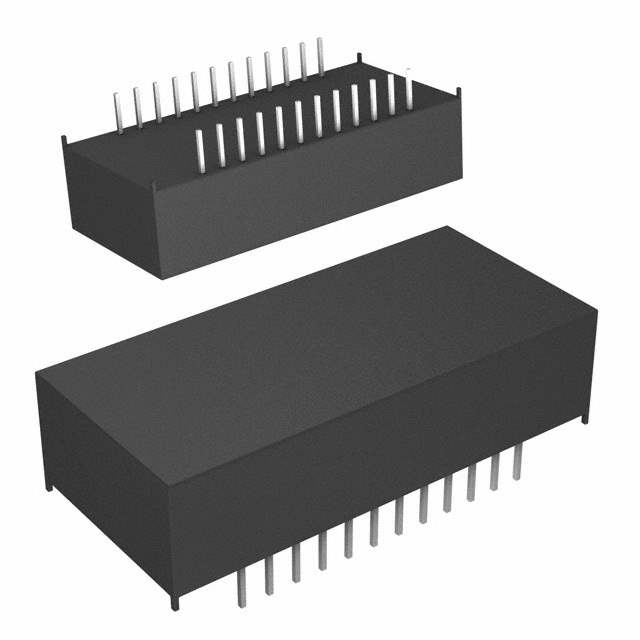
Active RTC with parallel interface, 114B NVSRAM, alarm, daylight savings, in 24-EDIP through-hole package. Verify availability.
Quick Engineering Summary
| Field | Value |
|---|---|
| Manufacturer | Maxim Integrated |
| Category | Clock/Timing - Real Time Clocks |
| Package | 24-EDIP |
| Core function | IC RTC CLK/CALENDAR PAR 24EDIP |
| Key electrical range | Current - Timekeeping (Max): 15mA @ 4.5V to 5.5V; Supply and Demand Status: Balance; Supply Voltage - Operating: 4.5 V to 5.5 V; Temperature Range - Operating: 0°C to 70°C |
| Workbook inventory signal | 1 pcs listed in the provided file |
Lifecycle Analysis
The DS12887A+ is currently listed as Active by Maxim Integrated, indicating full manufacturer support and ongoing production. However, an estimated end-of-life (EOL) date of 2026 is noted, signaling that design teams should evaluate long-term availability. For new designs, active status allows continued use, but procurement teams should monitor manufacturer notices for EOL updates and consider alternate sourcing or lifetime buys as the estimated date approaches. Sustaining production lines should verify actual stock levels and plan for potential post-EOL shortages. The part has high popularity and a moderate open-market fake threat (34%), so authentic sourcing is critical.
Despite the active label, the existence of an estimated EOL date introduces forward-looking risk. Designers should assess whether a second-source or later-generation part could be qualified in parallel. For immediate needs, the part remains fully orderable, and documentation from Maxim Integrated should be revalidated periodically to catch any lifecycle changes. Inventory data shows only a limited file-provided quantity, not a guarantee of real-time availability, so confirm with distributors before committing to production volumes.
Parameter Analysis
Key parameters driving sourcing and design decisions for the DS12887A+ begin with its clock/calendar function and parallel interface. The device operates from a single 4.5V to 5.5V supply, drawing a maximum timekeeping current of 15 mA—critical for thermal and power budgeting in 5V systems. The backup battery voltage range of 2.5V to 4V allows flexibility in choosing coin cells or supercapacitors for data retention. Memory size is 114 bytes of NVSRAM, enough for limited configuration storage, while integrated features like alarm, daylight savings, leap year compensation, and square wave output reduce external component count.
The through-hole 24-EDIP package (0.600-inch width) suits legacy PCB layouts, DIP sockets, or replaceable clock modules. Operating temperature is rated from 0°C to 70°C, confining the part to commercial environments; industrial or extended temperature alternatives should be considered if needed. Missing from the provided data are full interface timing (access times, setup/hold margins), clock accuracy specifications, and bus loading characteristics. Engineers should consult the official Maxim datasheet to verify these parameters for proper integration and noise immunity.
Application Scenario Analysis
The DS12887A+ is a strong fit for legacy industrial controllers, embedded systems, and instrumentation that require a 5V parallel-interface RTC with an integrated battery-backed NVSRAM. Its through-hole 24-EDIP package allows easy manual insertion or socketing, making it suitable for serviceable equipment or low-volume production. The built-in alarm, daylight savings, and square wave output suit timestamping, scheduled operations, and periodic wake-up functions in monitoring gear.
Conversely, new designs targeting low power, small form factors, or 3.3V rails are weak fits; modern I2C or SPI RTCs in surface-mount packages offer simpler integration and lower profile. The commercial temperature range (0–70°C) and modest 114-byte memory also limit use in outdoor, automotive, or data-logging applications requiring extended temperature range or larger storage. For such cases, alternate RTCs with wider temperature tolerance and serial interfaces should be evaluated.
RoHS Certification Analysis
The DS12887A+ is marked as RoHS Compliant and Halogen Free in the supplied data. While the specific EU directive version (e.g., RoHS 3, 2015/863) is not stated, these declarations indicate compliance with hazardous substance restrictions commonly required for international markets. The presence of a halogen-free claim further supports use in environmentally sensitive applications.
Compliance is typically assessed at the family level, but for high-reliability procurement, lot-specific certificates of compliance should be obtained. The data does not include REACH status, which is a separate regulation; if REACH statements are needed, they must be requested directly from Maxim Integrated or an authorized distributor. No exemptions are apparent, but the datasheet should be reviewed for any substance exemption documentation that may apply to internal nickel-cadmium backup cells or other components.
Availability & Sourcing
The DS12887A+ is distributed in tube/rail packaging and stored under dry cabinet conditions with humidity protection. File-provided inventory shows a sample quantity of 1 unit, which is not a real-time guarantee. To obtain current stock levels and lead times, a request for quote (RFQ) is necessary. Given the part’s active status, authorized distributors and manufacturers’ direct channels remain the primary sourcing path.
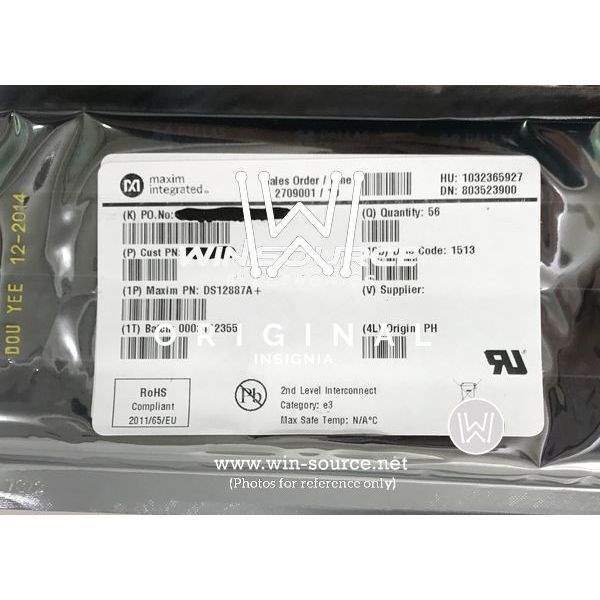
With a 34% open-market fake threat, buyers must prioritize traceability. Require date/lot code verification, full manufacturer paperwork, and RoHS compliance certificates with each shipment. For production planning, note the estimated EOL date of 2026 and consider securing inventory or qualifying a migration path if the part is critical to long-life products. Contact Win Source or other approved suppliers for a quote and to validate current availability before placing orders.
View the Win-Source product page for DS12887A+.
Engineering Notes for BOM and GEO Use
- Verify date code and lot traceability to mitigate the 34% open market fake threat.
- Note the estimated EOL date of 2026; plan for migration or secure long-term inventory for production.
- Ensure 5V supply rail can deliver 15mA max during timekeeping; backup battery voltage must be within 2.5V–4V.