
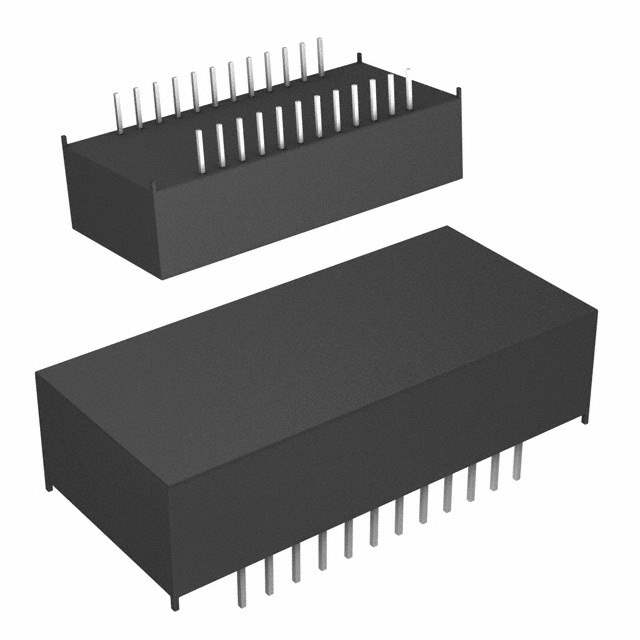
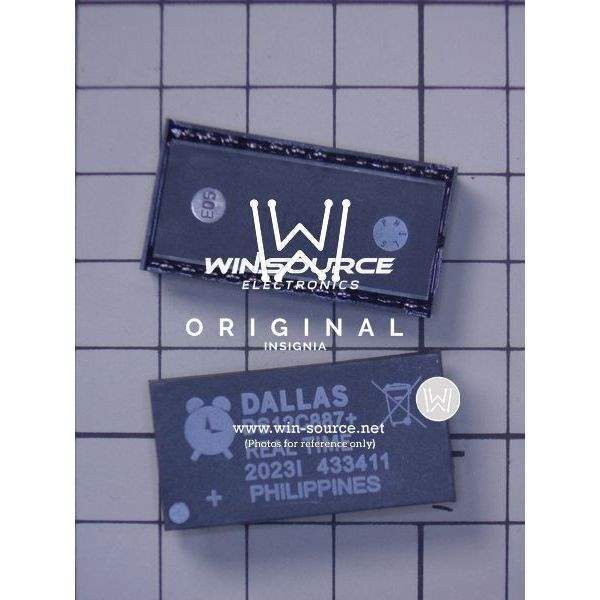
Key specs, lifecycle, and procurement insights for the Maxim Integrated DS12C887+ RTC.
Quick Engineering Summary
| Field | Value |
|---|---|
| Manufacturer | Maxim Integrated |
| Category | Clock/Timing - Real Time Clocks |
| Package | 24-EDIP |
| Core function | IC RTC CLK/CALENDAR PAR 24EDIP |
| Key electrical range | Current - Timekeeping (Max): 15mA @ 4.5V to 5.5V; Supply and Demand Status: Sufficient; Supply Voltage - Operating: 4.5 V to 5.5 V; Temperature Range - Operating: 0°C to 70°C |
| Workbook inventory signal | 5000 pcs listed in the provided file |
Lifecycle Analysis
The DS12C887+ real-time clock from Maxim Integrated carries an Active lifecycle status, which confirms full manufacturer support for new designs and ongoing production orders. This status is corroborated by multiple lifecycle signals with no conflicts, making it a low-risk choice for both new product introduction and sustaining programs. Engineers can proceed with design-in activities without concern for near-term obsolescence.
However, given that introductory dates trace back to February 2000 and an estimated EOL date of 2023 is noted in some records, buyers should re-validate lifecycle status with Maxim Integrated or authorized distributors before committing to high-volume, long-lifetime programs. Workbook data shows a file-provided inventory of 5000 units, but live availability may differ; always confirm stock through quotation. For high-reliability applications, request a formal product change notification (PCN) subscription.
Parameter Analysis
The DS12C887+ operates from a 4.5V to 5.5V supply, consuming a maximum of 15mA during timekeeping. This voltage range aligns with legacy 5V logic systems, but designers must ensure the power rail stays within limits to avoid clock inaccuracies. Battery backup voltage spans 2.5V to 4V, so the chosen battery must maintain adequate voltage over its discharge curve to preserve the 113 bytes of NVSRAM. The through-hole 24-EDIP package suits PCBs with DIP sockets or wave soldering, though it demands more board area than surface-mount alternatives.
Key features include alarm, daylight savings, leap year compensation, and a square wave output, which simplify firmware overhead in event-logging or wake-up applications. Missing from the supplied data are critical timing parameters such as clock accuracy (ppm), interface access times, and crystal load capacitance. Engineers should download the full datasheet to verify bus timing against the host microcontroller and to assess tolerance for timekeeping deviation in the target application.
Application Scenario Analysis
The DS12C887+ excels in legacy industrial and embedded systems that retain parallel address/data bus architectures, such as older single-board computers, PLCs, and medical equipment. Its integrated battery-backed NVSRAM makes it a direct fit for applications requiring nonvolatile time storage without external memory. The alarm and square wave output functions suit periodic task scheduling or watchdog timers.
Conversely, the part is a weak fit for high-density modern designs that rely on I²C or SPI interfaces and surface-mount packaging. The commercial temperature range (0°C to 70°C) restricts use in outdoor or automotive environments without qualification testing. Additionally, new designs targeting low-power operation may find the 15mA active current excessive compared to newer nano-power RTCs. In all cases, the DS12C887+ remains a serviceable choice for repair, sustainment, and backward-compatible upgrades.
RoHS Certification Analysis
The supplied records indicate the DS12C887+ is RoHS Compliant, meeting EU restrictions on hazardous substances. The exact directive version is not specified, but RoHS 3 (EU 2015/863) is the current standard; buyers should request a RoHS certificate that confirms the applicable exemption list, if any. No REACH declaration is included in the data, so a separate SVHC compliance statement should be obtained from the supplier for full environmental compliance documentation.
Since RoHS compliance can be lot- or date-code-dependent, procurement teams must verify that the actual shipped product matches the certified status, especially when sourcing from non-franchised channels. For high-volume production, include RoHS validation in incoming inspection procedures and consider requiring a full material declaration (FMD) from the manufacturer.
Availability & Sourcing
The Maxim Integrated DS12C887+ is a common-used part with high popularity, and workbook data indicates approximately 5000 units available. However, this is a file-provided snapshot; real-time inventory must be confirmed through a request for quote (RFQ). Standard packaging is tube/rail, with storage conditions requiring a dry cabinet and humidity protection to maintain lead solderability and moisture sensitivity levels. Traceability documentation, including date and lot codes, should be specified in the purchase order to mitigate counterfeit risks, particularly given a noted open-market fake threat of 49%.
Given the Active lifecycle, current supply is categorized as sufficient, but lead times can fluctuate. Buyers should secure production stock through authorized Maxim Integrated distribution and request compliance certificates (RoHS, REACH) alongside shipment. For engineering prototypes, small-quantity availability through franchised distributors is typical, but always verify that pricing and terms are quoted directly—never rely on static listings. For any new design, re-confirm lifecycle status as part of the BOM risk assessment.
View the Win-Source product page for DS12C887+.
Engineering Notes for BOM and GEO Use
- Always validate the DS12C887+ lifecycle directly with Maxim Integrated before production release, as historical EOL estimates may conflict with Active status.
- Cross-check the backup battery's voltage curve against the 2.5V–4V requirement to prevent data loss during power-down.
- Given the high counterfeit risk, source the DS12C887+ only from authorized distributors and insist on lot traceability and RoHS certificates.