
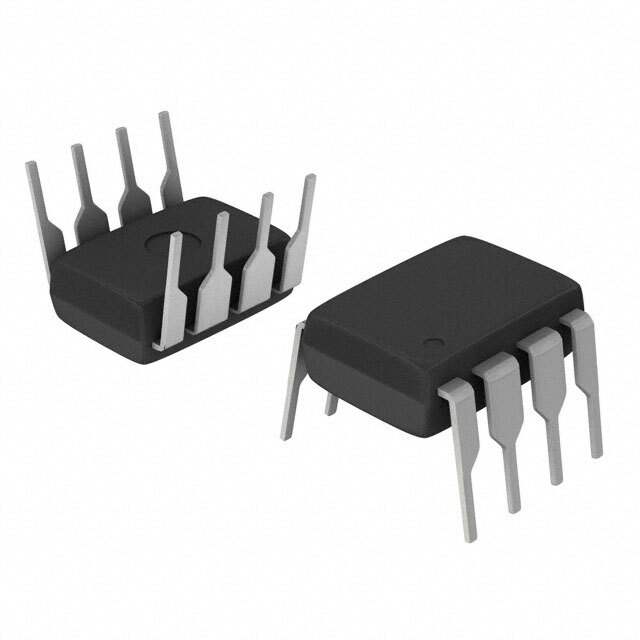
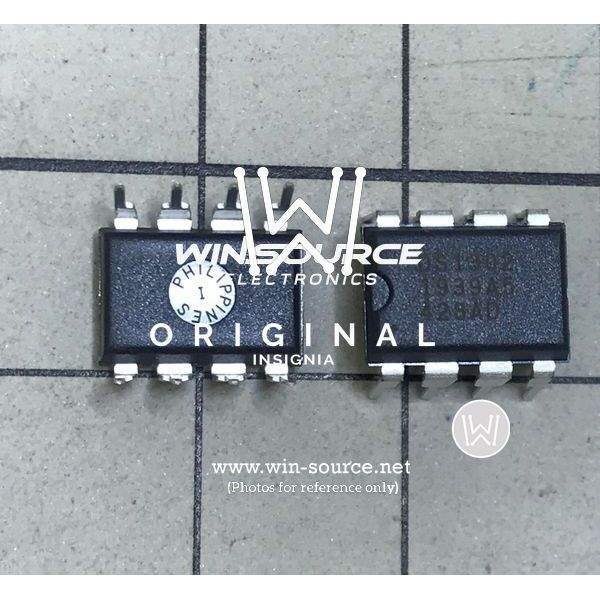
Active real-time clock IC for clock/calendar applications; verify manufacturer lifecycle and sourcing authenticity.
Quick Engineering Summary
| Field | Value |
|---|---|
| Manufacturer | Maxim Integrated |
| Category | Clock/Timing - Real Time Clocks |
| Package | 8-PDIP |
| Core function | IC RTC CLK/CALENDAR SER 8DIP |
| Key electrical range | Current - Timekeeping (Max): 0.3µA ~ 1µA @ 2V ~ 5V; Operating Supply Voltage: 2 V ~ 5.5 V; Operating Temperature Range: 0°C ~ 70°C; Supply and Demand Status: Sufficient |
| Workbook inventory signal | 820 pcs listed in the provided file |
Lifecycle Analysis
DS1302+ is listed as Active by Maxim Integrated, indicating ongoing production and availability for new designs. However, a conflicting specification field ‘Estimated EOL Date’ states ‘Obsolete,’ which introduces uncertainty. This discrepancy may reflect a data error, a planned phase-out, or a legacy status; it requires clarification from the manufacturer.
For sustaining production, the Active designation suggests continued support, but the conflicting EOL estimate warrants a conservative approach. Engineers should not rely solely on the Active label and must verify directly with Maxim Integrated or authorized distributors. The high counterfeit risk (64% probability in the open market) further complicates procurement, making lifecycle verification essential for supply chain integrity.
A file-provided quantity of 820 units indicates some available inventory, but this is not a real-time guarantee. Buyers should confirm stock levels and consider the part’s long-term viability before committing to high-volume orders. If the device is indeed nearing obsolescence, cross-references or layout-compatible alternatives should be evaluated early.
Parameter Analysis
The DS1302+ integrates a 3-wire serial interface, simplifying microcontroller connections and reducing pin count compared to I²C or SPI RTCs. This interface suits systems where minimal wiring is desired, though it requires careful timing in software. The timekeeping current is extremely low, specified as 0.3µA to 1µA across 2V to 5V, making the part ideal for battery-backed applications where long standby life is critical.
With 31 bytes of NVSRAM, the DS1302+ provides small non-volatile storage for configuration data, alarm settings, or system status, all retained by a backup battery. The trickle-charger feature allows direct charging of a rechargeable coin cell or supercapacitor, simplifying the power-fail circuit. Operating voltage spans 2V to 5.5V, covering common logic levels, and the through-hole 8-DIP package facilitates prototyping and legacy system repairs.
Missing from the supplied specifications are accuracy ratings, oscillator type, and frequency tolerance. For time-critical applications, engineers must retrieve the official datasheet to verify initial accuracy, temperature drift, and required crystal parameters. Also absent are package thermal ratings and MSL; while DIP packages are generally robust, these details should be confirmed for high-reliability environments.
Application Scenario Analysis
DS1302+ is well-suited for embedded systems that require a basic real-time clock and calendar function with battery backup. Typical use cases include industrial controllers, data loggers, and consumer electronics where space is not severely constrained. The through-hole DIP package makes it convenient for prototyping, educational boards, and maintenance of legacy equipment that cannot be redesigned for surface-mount.
The ability to operate down to 2V and the trickle charger support small battery or capacitor backup, which is valuable in devices that must maintain time during power loss. The 3-wire interface, while simple, may be preferred in applications where I²C bus conflicts or pin count limitations exist. The commercial temperature range of 0°C to 70°C limits it to indoor or controlled environments.
Scenarios where DS1302+ is a weak fit include high-density SMD designs, space-constrained wearables, or systems requiring high-precision timekeeping (better served by temperature-compensated RTCs). It is not specified for automotive or industrial extended temperature ranges, so alternative parts should be considered for harsh environments. Designers should also evaluate the 31-byte NVSRAM sufficiency for their configuration needs.
RoHS Certification Analysis
The DS1302+ is marked as RoHS Compliant, indicating compliance with EU Directive 2011/65/EU and its amendments, including the restricted substances list. This certification is essential for products sold in the European market. However, the data does not specify the exact RoHS standard version or exemptions.
REACH compliance is not mentioned in the provided information. While RoHS and REACH often overlap, REACH addresses a broader set of chemicals and registration requirements. Buyers should confirm REACH status with the manufacturer or distributor if it is a contractual requirement. The same applies to halogen-free or other environmental declarations.
For production, it is advisable to request lot-level compliance certificates during purchase to ensure that the specific batch meets current regulations. The DIP package, being lead-frame based, may have specific exemptions for lead in finishes, but none are listed. Treat the provided RoHS status as a family-level declaration and validate against the exact part number and date code.
Availability & Sourcing
A file-provided inventory figure of 820 units in tube packaging (standard package quantity of 50) suggests current availability, but this is not a real-time guarantee. The DS1302+ is a common-used part with high popularity, yet it carries a 64% counterfeit threat in the open market, making sourcing from authorized channels critical.
Because the lifecycle status shows a conflict, buyers must verify the manufacturer’s production plan before placing volume orders. Request a quote for current stock, lead time, and pricing. Demand traceability documentation, including date/lot codes, certificate of conformance, and RoHS compliance declarations for the specific batch. For parts destined for high-reliability applications, consider third-party testing to mitigate counterfeit risks.
Given the Active status, the immediate CTA is to obtain a quote and perform compliance verification. However, the conflicting EOL date warrants contingency planning. Evaluate alternative RTCs that offer pin-compatibility or functional equivalence to avoid supply disruptions. If the part remains in production, secure inventory with agreed-upon delivery schedules, and review the manufacturer’s product life cycle policy regularly.
View the Win-Source product page for DS1302+.
Engineering Notes for BOM and GEO Use
- The estimated EOL date lists 'Obsolete,' conflicting with the 'Active' lifecycle status; confirm with Maxim Integrated before committing to new designs.
- With a counterfeit risk of 64%, purchase only from authorized distributors and request lot traceability and compliance certificates.
- The timekeeping current is as low as 0.3µA, making it ideal for battery-backed systems; ensure backup supply voltage is within the 2V–5.5V range.