
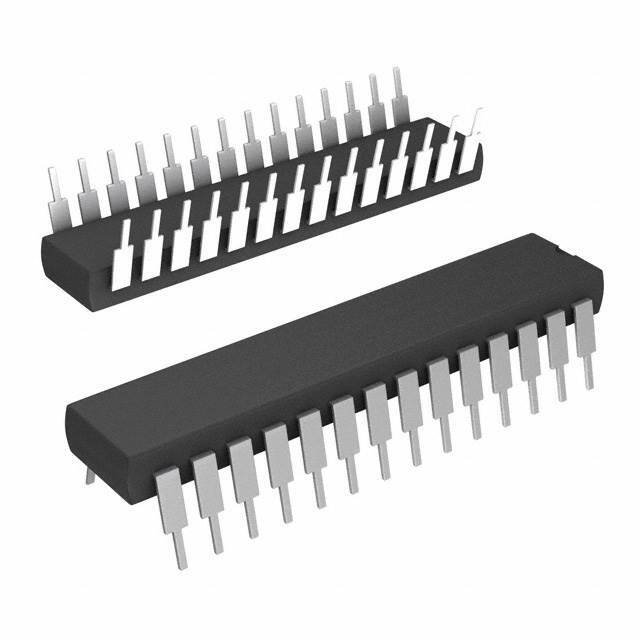
Discontinued RTC with 3-Wire Interface and Trickle Charger – Procurement and Engineering Reference
Quick Engineering Summary
| Field | Value |
|---|---|
| Manufacturer | Maxim Integrated |
| Category | Clock/Timing - Real Time Clocks |
| Package | 16-SOIC (0.295", 7.50mm Width) |
| Core function | IC RTC CLK/CALENDAR SER 16SOIC |
| Key electrical range | Current - Timekeeping (Max): 0.3µA ~ 1µA @ 2V ~ 5V; Supply and Demand Status: Shortage; Temperature Range - Operating: 0°C ~ 70°C; Voltage - Supply: 2V ~ 5.5V |
| Workbook inventory signal | 697 pcs listed in the provided file |
Lifecycle Analysis
The DS1302S-16 is officially Discontinued by Maxim Integrated. This status means that the manufacturer has ceased production, and no new orders are being accepted. For new designs, this part carries a high risk and should be avoided entirely; engineering teams must select an alternative active component.
Existing designs that depend on the DS1302S-16 face supply continuity challenges. While file-provided inventory shows 697 units, this quantity is not guaranteed and may include non-cancelable or non-returnable stock from various sources. Procurement teams should immediately verify date codes, lot traceability, and authenticity before committing to any purchase.
Designers should begin migration planning, focusing on drop‑in or functionally compatible RTCs with similar package, supply voltage, and interface. The transition path should include qualification of the new part under the system’s environmental and timing constraints. In the interim, secure enough stock to cover production until the migration is complete, and obtain the manufacturer’s official end‑of‑life notice to understand last‑time‑buy windows or potential obsolescence timelines.
Parameter Analysis
The DS1302S-16 operates over a supply voltage range of 2V to 5.5V, which is typical for battery‑backed RTCs and allows direct connection to a lithium coin cell. Its timekeeping current is specified between 0.3µA and 1µA at 2V to 5V, an extremely low draw that extends battery life in always‑on applications. The 3‑wire serial interface (CE, I/O, SCLK) is simple to bit‑bang from a microcontroller, though maximum clock speeds and timing diagrams must be verified in the original datasheet, as they are not provided here.
The integrated trickle‑charger feature enables charging of a backup capacitor or rechargeable battery, reducing BOM count. Memory size is 31 bytes of NVSRAM, suitable for storing configuration or small data logs. The operating temperature range of 0°C to 70°C limits the part to commercial environments; industrial designs requiring ‑40°C to +85°C must look elsewhere.
Important missing parameters that must be confirmed from the datasheet include clock accuracy (ppm), crystal oscillator requirements, I/O voltage levels, and detailed timing for read/write cycles. For any legacy design maintaining the DS1302S-16, these datasheet‑level details are critical to avoid timing violations or incorrect clock operation.
Application Scenario Analysis
The DS1302S-16 fits legacy systems requiring a low‑power serial RTC with battery backup and a small non‑volatile memory footprint. Typical strong‑fit scenarios include older embedded controllers, data loggers, and consumer electronics where the commercial temperature range is acceptable and the 3‑wire interface is already implemented in hardware and software. Its trickle‑charger capability is particularly useful for designs that charge a supercapacitor during normal operation and maintain time during power loss.
Weak‑fit scenarios include new product designs, where the part’s discontinuation makes it unviable. Industrial or outdoor applications needing extended temperature range (‑40°C to +85°C or wider) are also a poor match, as the DS1302S-16 is specified only for 0°C to 70°C. High‑reliability systems that require guaranteed long‑term supply, formal qualification packages, or compliance beyond basic RoHS may find the part unsuitable.
When considering the DS1302S-16 for repair or small‑scale production of legacy equipment, engineers should evaluate whether the existing firmware is tightly coupled to the 3‑wire protocol and whether the mechanical footprint (16‑SOIC, 7.50mm width) can be replicated by available alternatives. A full functional retest is advised if substituting with a similar device, especially regarding timekeeping accuracy and power‑up reset behavior.
RoHS Certification Analysis
The DS1302S-16 carries a RoHS Compliant designation, meaning it was manufactured to meet the restrictions on lead, mercury, cadmium, hexavalent chromium, PBBs, and PBDEs as defined by the EU RoHS Directive. This compliance is typically assessed under RoHS 3 (EU 2015/863), which added four phthalates to the restricted list.
Because the part is discontinued, the RoHS compliance data may reflect the original design and production period. For current procurement, it is not enough to rely solely on this status; a lot‑specific certificate of compliance should be requested from the distributor or remaining stock holder. The source data does not include REACH, halogen‑free, or MSL ratings. If these are critical to your product’s market access or assembly process, you must obtain these details separately. For lead‑free soldering, the 16‑SOIC package can typically withstand standard reflow profiles, but the maximum peak temperature and moisture sensitivity level (MSL) should be confirmed against the original datasheet or qualification reports.
Availability & Sourcing
As a discontinued part, DS1302S-16 availability is limited to residual distributor stock, broker channels, or second‑sourcing from obsolete component specialists. The file‑provided quantity of 697 units is for reference only and does not guarantee real‑time stock. Procurement should request a quote to confirm current availability, date codes, and lot homogeneity.
When sourcing, insist on traceability documentation: manufacturer packing slip, lot number, and a certificate of conformity or compliance. Be wary of counterfeit parts, especially from unauthorized suppliers. For high‑reliability applications, consider third‑party testing to verify electrical performance and marking authenticity.
Since the part is discontinued, engineers should evaluate migrating to an active RTC that provides functional compatibility. In the interim, secure enough inventory to support production and repair needs, but avoid over‑committing to a part with no future supply. Before placing any order, verify with the supplier that the stock is physically on hand and not just listed in a database.
View the Win-Source product page for DS1302S-16.
Engineering Notes for BOM and GEO Use
- Verify remaining inventory authenticity through date codes and manufacturer lot traceability before procurement.
- Not suitable for new designs; plan migration to an active RTC alternative with compatible interface and feature set.
- The 3-wire serial interface and integrated trickle-charger simplify battery-backed timekeeping in legacy embedded systems.