
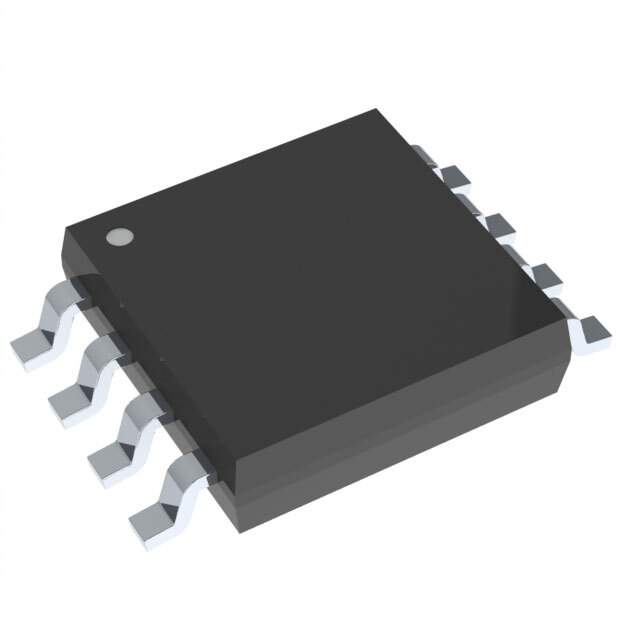
EOL status, high counterfeit risk, RoHS conflict – verify before procurement.
Quick Engineering Summary
| Field | Value |
|---|---|
| Manufacturer | Maxim Integrated |
| Category | Clock/Timing - Real Time Clocks |
| Package | 8-SOIC (0.209", 5.30mm Width) |
| Core function | IC RTC CLK/CALENDAR SER 8SOIC |
| Key electrical range | Current - Timekeeping (Maximum): 0.3μA ~ 1μA at 2V ~ 5V; Supply and Demand Status: Balance; Supply Voltage (V): 2V ~ 5.5V; Temperature Range - Operating: 0°C ~ 70°C |
| Workbook inventory signal | 10000 pcs listed in the provided file |
Lifecycle Analysis
The DS1302S is marked as Obsolete (End Of Life) according to the part status specification, despite lifecycle signals being listed as Unknown. This means the manufacturer has discontinued production, and no new units are being fabricated. For new designs, the DS1302S should not be used; engineers must select an active replacement. For existing production, procurement teams should immediately evaluate last-time buy options and secure inventory if the part is essential. The 10,000-unit inventory quantity shown is file-provided and not a real-time guarantee; actual availability may be lower.
Given the EOL status, the risk level is high. Verify the lifecycle directly with Maxim Integrated to confirm discontinuance and obtain any remaining authorized distribution channels. Without manufacturer verification, assuming stock availability is risky. Additionally, the high counterfeit threat (84%) exacerbates procurement challenges for obsolete parts.
Parameter Analysis
The DS1302S is a serial real-time clock (RTC) with a 3-wire interface, integrating 31 bytes of non-volatile SRAM and a trickle-charge circuit for backup power. Key specified parameters include a supply voltage range of 2V to 5.5V, an operating temperature range of 0°C to 70°C, and a timekeeping current between 0.3µA and 1µA, which is typical for low-power battery-backed operation. The date format is YY-MM-DD-dd, and features include leap-year compensation.
Critical missing datasheet parameters include timekeeping accuracy (ppm), battery switchover voltage, and backup current consumption. The device does not include an integrated crystal, so external oscillator characteristics directly affect accuracy. Engineers must refer to the original Maxim datasheet to confirm these values and validate design margins. The 8-SOIC package with MSL level 1 eases handling, but the commercial temperature range limits use in extended environments.
Application Scenario Analysis
The DS1302S is suitable as a basic timekeeping function in legacy embedded systems, such as industrial controllers, data loggers, and consumer appliances that require clock-calendar capability with battery backup. Its trickle charger supports a rechargeable coin cell or supercapacitor, making it useful for systems that need sustained timekeeping during power loss. The 3-wire serial interface simplifies microcontroller connectivity.
However, the obsolete status makes it a poor fit for any new design. Its 0°C to 70°C range excludes outdoor or automotive applications without additional heating/cooling. For high-reliability or extended temperature use, a more modern active RTC with wider temperature range and integrated crystal is recommended. The 31 bytes of non-volatile RAM may be sufficient for storing configuration or small data logs in low-complexity designs, but tight memory constraints limit its role in feature-rich systems.
RoHS Certification Analysis
The RoHS compliance status of DS1302S is conflicting: one field lists 'RoHS Compliant,' while another specification explicitly states 'RoHS Non-Compliant.' Given the part's obsolete status, it is likely that older production lots were non-compliant, and the compliant flag may refer only to a subset or later revisions. Without lot-specific certification documents, the conservative assumption is that the part is non-compliant with EU RoHS directives.
No exemption information is provided, and REACH status is not mentioned. Engineers should request the manufacturer’s RoHS certificate for any procured lot. If the device must be RoHS 3 (2015/863) compliant, this discrepancy could render the DS1302S unsuitable for EU markets. Verify explicitly with the supplier and consider that many obsolete parts were manufactured under less stringent regulations.
Availability & Sourcing
File data indicates 10,000 units of DS1302S may be available, packaged in tubes (manufacturer pack quantity 1). However, this figure is not a live inventory count and must be confirmed via a request for quote. Given the EOL lifecycle, actual stock may be limited or held by non-authorized sources. The open-market counterfeit threat is rated at 84%, so authentication is paramount; buyers should demand date/lot code traceability, photographic evidence, and compliance certificates.
Sourcing strategy should include verifying the lifecycle with Maxim Integrated directly, and if stock is needed, securing it quickly while planning a long-term migration. For prototype or low-volume maintenance, verified surplus may suffice, but for production, an active alternative must be identified. Always confirm RoHS status and request full traceability documentation before purchase. Avoid committing to new production runs dependent on this obsolete device.
View the Win-Source product page for DS1302S.
Engineering Notes for BOM and GEO Use
- Verify RoHS compliance per lot: specification indicates non-compliance, conflicting data may exist; request manufacturer certificate.
- Authenticate parts carefully due to 84% open market counterfeit threat; demand traceability and date/lot codes.
- Plan migration to an active RTC with similar footprint; the DS1302S should not be used in new designs.