
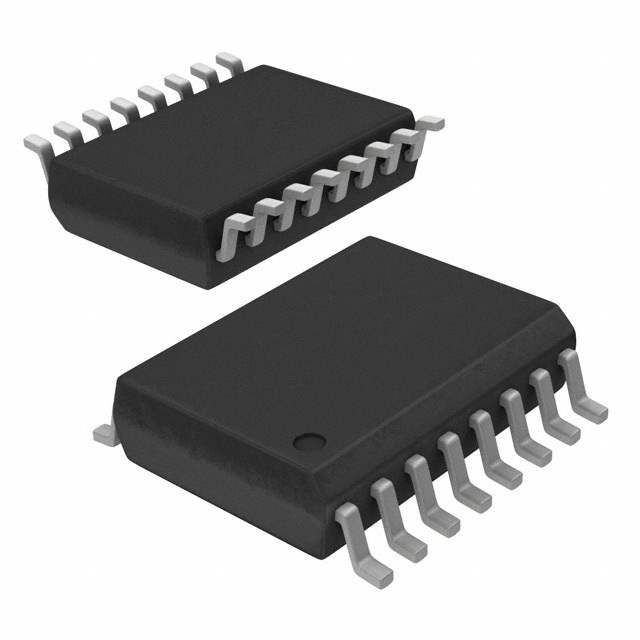
EOL 3-wire serial RTC with trickle charger, 31B NVSRAM, 16-SOIC. Verify RoHS and inventory before design-in.
Quick Engineering Summary
| Field | Value |
|---|---|
| Manufacturer | Maxim Integrated |
| Category | Clock/Timing - Real Time Clocks |
| Package | 16-SOIC |
| Core function | IC RTC CLK/CALENDAR SER 16SOIC |
| Key electrical range | Current - Timekeeping (Max): 0.3μA to 1μA @ 2V to 5V; Supply and Demand Status: Limited; Supply Voltage - Operating: 2 V to 5.5 V; Temperature Range - Operating: -40°C to 85°C |
| Workbook inventory signal | 9500 pcs listed in the provided file |
Lifecycle Analysis
All primary lifecycle signals for the DS1302SN-16 indicate End-of-Life (EOL) status, including the explicit 'EOL' parameters from the manufacturer’s Excel-based data and the dedicated Lifecycle Status field. A single conflicting specification field showing 'Status: Active' is likely an error or stale entry; however, it creates ambiguity. For procurement purposes, the part must be treated as EOL. This means it is no longer recommended for new design-in, and sustaining production should move to a migration plan. The file-provided inventory quantity of 9500 units is not a guaranteed real-time figure; buyers should not rely on it without confirmation. Contact Maxim Integrated directly to obtain the last-time buy (LTB) schedule and end-of-life notice (EOLN), if available. Risk is high because no direct replacement is suggested in this data, and the 47% counterfeit risk in open markets increases sourcing difficulty. Engineers should evaluate pin-compatible alternatives or plan a board redesign before depletion of authorized stock.
Parameter Analysis
The DS1302SN-16 is a serial real-time clock and calendar with a 3-wire interface, featuring 31 bytes of battery-backed NVSRAM and a trickle-charge circuit. Key parameters to assess in existing designs include its wide operating voltage range (2 V to 5.5 V) and minimal timekeeping current (0.3 µA to 1 µA at 2 V to 5 V), which are critical for battery life in portable or microcontroller-backed systems. The industrial temperature range of -40°C to 85°C suits outdoor or rugged embedded applications. However, the datasheet lacks detailed timing diagrams for the 3-wire interface, making protocol verification difficult without an original Maxim data sheet. Missing parameters that must be verified include input capacitance, oscillator design guidelines, and moisture sensitivity level (MSL). The 16-SOIC SMD package (150 mil) is standard, but pin-out and footprint should be cross-checked with the latest datasheet revision. With only 31 bytes of user RAM, buffer-limited logging tasks may exceed capacity; designers should confirm sufficient NVSRAM depth for the target firmware. For derating and reliability, the operating temperature already covers an industrial range, but thermal stress during soldering should align with the package’s maximum ratings, which are not provided here.
Application Scenario Analysis
Strong-fit scenarios for the DS1302SN-16 include legacy industrial control systems, utility meters, and embedded security panels that already use this part and require last-time-buy replenishment for sustaining production. Its 3-wire serial interface uses fewer I/O pins than I2C or SPI, making it suitable for simple microcontroller-based designs where pin count is constrained. The integrated trickle charger for a backup capacitor or rechargeable cell reduces external component count in cost-sensitive boards. Weak-fit scenarios are any new product development; because the device is EOL, using it in a new design risks early obsolescence and sourcing difficulties. Applications that demand standard I2C/SPI buses will require a different RTC family, as the DS1302 does not support these interfaces. Systems needing large timestamp logs or extended NVSRAM beyond 31 bytes will find this part insufficient. Additionally, the 47% counterfeiting rate on the open market makes aftermarket purchases extremely risky for any production volume; only authorized or traceable stock should be considered. For migration, evaluate an active Maxim RTC such as the DS1337 or DS3231, but they are not pin-compatible, so a board layout change will be necessary.
RoHS Certification Analysis
The DS1302SN-16 presents a significant compliance discrepancy: one data source lists the part as 'RoHS Compliant' while another explicitly states 'RoHS Non-Compliant'. This conflict is common in older or end-of-life devices where manufacturing revisions may have transitioned from leaded to lead-free processes, or vice versa. There is no REACH or halogen-free information provided here, and REACH compliance cannot substitute for RoHS. To resolve this, procurement teams must request a Certificate of Conformance (CoC) for the specific date code or lot being purchased. Visual inspection of the device marking for a RoHS symbol (e.g., 'e3') or requesting an XRF analysis report from the supplier can provide additional assurance. Since the part is EOL, stock available today may include non-compliant units from earlier production runs. For designs shipping into the EU, non-compliant parts may violate RoHS directives unless exemptions apply, but no exemptions are documented in the provided data. Consequently, assume the DS1302SN-16 is RoHS non-compliant until lot-specific evidence proves otherwise, and account for this in Bill of Materials (BOM) risk assessment.
Availability & Sourcing
Maxim Integrated’s DS1302SN-16 is in End-of-Life status, and obtaining authentic parts requires careful sourcing. The file-provided quantity of 9500 units from Win Source is a workbook snapshot and should not be interpreted as real-time available inventory. Buyers must request a current quote to confirm stock levels and date codes. The part is originally packaged in tubes, and the recommended storage condition is a dry cabinet with humidity protection; verify that the supplier has maintained proper storage to avoid moisture-related defects. Given a 47% counterfeit threat rate in the open market, any purchase should include high-resolution product photos, date/lot code traceability, and compliance documentation. For EOL parts, a formal RFQ process is essential to lock in quantities before remaining authorized stock runs out. Direct readers to request a quote for current availability and ask for the manufacturer’s discontinuation notice to validate the EOL timeline. Since the part is EOL, sourcing efforts should focus on authorized distributors with last-time-buy history rather than unaudited brokers. If immediate stock is not required, engineers are advised to migrate to an active RTC alternative to avoid long-term supply risk.
View the Win-Source product page for DS1302SN-16.
Engineering Notes for BOM and GEO Use
- Confirm lifecycle status directly with Maxim Integrated; treat as EOL despite a conflicting 'Active' field in specifications.
- Exercise extreme caution for counterfeit risk; open-market fake threat is reported at 47% for this part.
- Request per-lot RoHS compliance certificates; documentation conflicts make lot-by-lot verification essential.