
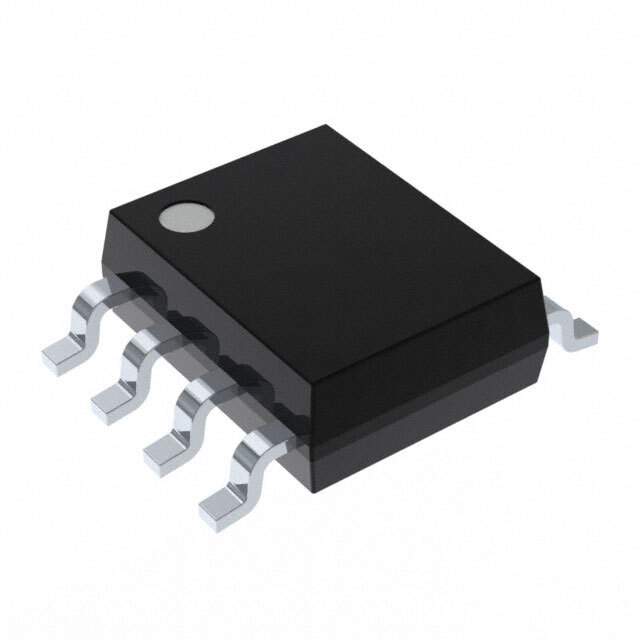
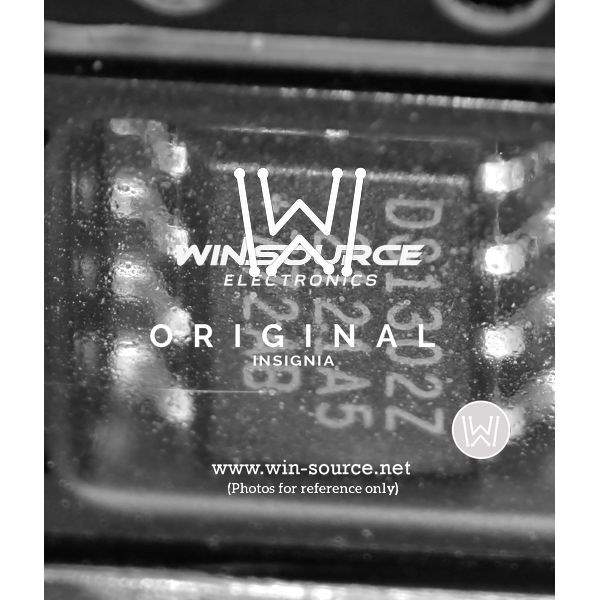
Understanding DS1302Z specifications, lifecycle uncertainty, RoHS status, and procurement considerations
Quick Engineering Summary
| Field | Value |
|---|---|
| Manufacturer | Maxim Integrated |
| Category | Clock/Timing - Real Time Clocks |
| Package | 8-SOIC |
| Core function | IC RTC CLK/CALENDAR SER 8SOIC |
| Key electrical range | Current - Timekeeping (Maximum): 0.3μA ~ 1μA at 2V ~ 5V; Supply and Demand Status: Balance; Supply Voltage (V): 2V ~ 5.5V; Temperature Range - Operating: 0°C ~ 70°C |
| Workbook inventory signal | 20000 pcs listed in the provided file |
Lifecycle Analysis
The lifecycle status of the DS1302Z presents conflicting information. The top-level data reports an 'Unknown' status, while a detailed specification entry lists the part as 'Obsolete (End Of Life)'. This discrepancy may stem from the part’s history under Maxim Integrated, now part of Analog Devices. For procurement and engineering, this signals a high-risk scenario.
Designers should avoid using the DS1302Z in new product introductions unless official manufacturer confirmation—preferably a current Product Change Notification (PCN) or general product page—clarifies an active lifecycle. For existing production, reliance on spot inventory carries the risk that the device is no longer supported, potentially leading to sudden shortages or quality inconsistencies.
Conservative practice dictates treating the DS1302Z as potentially discontinued. Engage with Analog Devices to obtain the most recent lifecycle statement. Meanwhile, evaluate form‑, fit‑, and function‑compatible replacements to de‑risk system‑on‑chip (SoC) designs if the part is formally withdrawn.
Parameter Analysis
The DS1302Z is a serial real‑time clock (RTC) with a 3‑wire interface, 31‑bytes of NVSRAM, and an integrated trickle‑charger for a backup capacitor or rechargeable battery. Timekeeping current consumption is outstanding, ranging from 0.3µA to 1µA across the 2V to 5V supply span. This low power draw directly extends battery life in portable and backup‑powered designs.
The supply voltage covers 2V to 5.5V, accommodating both 3.3V and 5V logic domains without level shifting. The backup battery input shares the same voltage range, simplifying dual‑supply sequencing. The commercial operating temperature range (0°C to 70°C) limits deployment to indoor or climate‑controlled environments and should be derated when heat‑dissipating components are nearby.
Key missing parameters that should be verified from the original datasheet include clock accuracy (ppm), crystal frequency requirements, I/O timing diagrams, and power‑on reset behavior. The 62% open‑market counterfeit threat rating underscores the need to confirm these specs on received lots, as performance may deviate significantly from genuine devices.
Application Scenario Analysis
The DS1302Z fits well in low‑power consumer electronics that require a simple timekeeping engine, such as digital clocks, home automation timers, and basic data loggers. Its trickle‑charge feature supports coin‑cell‑backed RTC operation, making it suitable for battery‑powered devices where the main power may be intermittently removed. The small 31‑byte NVSRAM can hold a few bytes of user data like configuration flags or a checksum, but is insufficient for larger non‑volatile storage needs.
Weak‑fit scenarios include systems that demand a standard I²C interface — the DS1302Z uses a proprietary 3‑wire serial protocol that may require additional software overhead compared to I²C‑compatible RTCs. The 0°C to 70°C temperature range precludes outdoor or industrial applications, where an extended‑ or automotive‑temperature RTC would be necessary. Additionally, the part’s uncertain lifecycle and questionable RoHS compliance make it a poor choice for new designs in regulated markets.
For applications that need a wider interface choice or higher temperature range, modern alternatives with I²C or SPI and industrial‑grade temperature spans should be evaluated.
RoHS Certification Analysis
RoHS status for the DS1302Z is contradictory: the compliance field states 'RoHS Compliant', but the detailed specification entry notes 'RoHS Non‑Compliant'. This conflict likely arises because the part pre‑dates modern environmental directives or was manufactured in multiple variants. Without a clear official statement, the safer assumption is that many available units are not RoHS compliant.
RoHS 3 (EU 2015/863) restricts lead, mercury, cadmium, and other hazardous substances. A non‑compliant RTC may cause issues during end‑product certification, particularly in the EU and other regulated regions. No supplementary REACH, halogen‑free, or MSL‑specific compliance data is supplied; the indicated MSL level of 1 (Unlimited) is typical for many SOIC packages but does not address material composition.
To proceed, request a full material declaration or RoHS certificate from the distributor or manufacturer for the specific lot. For designs requiring guaranteed RoHS compliance, evaluate alternative RTCs that are explicitly certified to current EU RoHS standards.
Availability & Sourcing
A file‑provided inventory quantity of 20,000 units is shown, but this is not a real‑time guarantee. Because the DS1302Z is listed as 'Obsolete (End Of Life)' in one data source, sustainable supply is questionable. The open‑market counterfeit threat is rated at 62%, meaning a majority of parts from non‑authorized channels may be fake or remarked.
When requesting a quote, specify date‑code traceability, lot integrity, and full RoHS compliance documentation. Packaging is tube‑standard for 8‑SOIC SMD parts, but ensure that moisture sensitivity handling aligns with the MSL Level 1 rating. Given the lifecycle ambiguity, securing inventory for maintenance, repair, and operations (MRO) may be prudent, but for ongoing production, a migration to an active alternative is strongly recommended.
Contact an authorized distributor for Analog Devices (which now owns Maxim Integrated) to verify current availability and obtain an official lifecycle statement. In the interim, treat all DS1302Z procurement with heightened scrutiny — request photographs, test samples, and certificates of conformance — to mitigate the high counterfeit risk.
View the Win-Source product page for DS1302Z.
Engineering Notes for BOM and GEO Use
- Verify lifecycle status with Analog Devices; specification suggests DS1302Z is obsolete, limiting new design suitability.
- The RTC draws only 0.3µA to 1µA in timekeeping, making it ideal for battery-powered systems but commercial temperature range restricts industrial use.
- Counterfeit risk is high (62%), and RoHS compliance is inconsistent; validate authenticity and environmental compliance before purchase.