
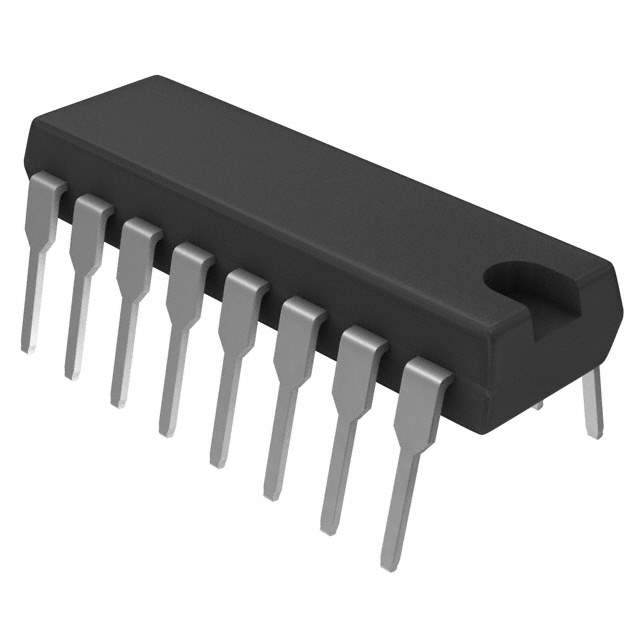
Engineering sourcing guide for DS1305+ real-time clock IC from Maxim Integrated
Quick Engineering Summary
| Field | Value |
|---|---|
| Manufacturer | Maxim Integrated |
| Category | Clock/Timing - Real Time Clocks |
| Package | DIP |
| Core function | IC RTC CLK/CALENDAR SPI 16DIP |
| Key electrical range | Frequency: 32.8 kHz; Max Supply Voltage: 5.5 V; Maximum Operating Temperature: 70 °C; Min Operating Temperature: 0 °C |
| Workbook inventory signal | 25 pcs listed in the provided file |
Lifecycle Analysis
The Maxim Integrated DS1305+ is in Active lifecycle status with a low risk level, indicating full manufacturer support for new designs and ongoing production. No conflicts exist among the lifecycle signals from the manufacturer and distribution channel. This status allows engineering teams to specify the part without concern for near-term obsolescence.
For high-volume or long-life programs, it is good practice to periodically confirm status directly with Maxim Integrated or Analog Devices, as lifecycle changes can occur without immediate channel updates. File-provided inventory data shows a snapshot of 25 units, but this is not a live guarantee; always verify real-time stock and lead times through an RFQ.
Conservative procurement should still include lifecycle verification clauses, especially if the design will extend beyond the part's typical market horizon. Given the Active status, no migration planning is necessary at this stage.
Parameter Analysis
The DS1305+ is a real-time clock with an SPI interface, supplied in a 16-pin DIP package (through-hole). Key operating parameters include a supply voltage range of 2 V to 5.5 V, a clock frequency of 32.8 kHz, and a commercial temperature range of 0 °C to 70 °C. The device provides 96 bytes of NVSRAM and a date format of YY-MM-DD-dd.
For design integration, the wide supply voltage allows use in both 3.3 V and 5 V systems, while the SPI interface simplifies communication with most microcontrollers. The 96-byte RAM can preserve critical data during power loss. However, the through-hole DIP package (19.43 mm × 7.87 mm) may limit use in space-constrained or fully automated SMT assemblies, despite a conflicting 'SMD (SMT)' entry in the raw data, which likely refers to an alternative packaging option; the predominant form factor is through-hole.
Missing specifications that should be verified in the official datasheet include timekeeping accuracy, battery backup current, ESD ratings, and the exact alarm and trickle-charger behavior. The reported maximum timekeeping current of 25.3 µA to 81 µA (over voltage range) also needs confirmation against the latest datasheet.
Application Scenario Analysis
The DS1305+ fits well in applications requiring a reliable battery-backed time base with SPI communication. Typical strong-fit scenarios include industrial controllers, data loggers, security systems, point-of-sale terminals, and legacy equipment where through-hole packages are preferred or required for repair and prototyping. The integrated trickle charger supports a backup capacitor or rechargeable battery, enabling sustained operation during power outages.
Weak-fit scenarios involve high-temperature environments beyond 70 °C, ultra-low-power battery-operated devices where the typical timekeeping current might be too high, and high-density surface-mount designs where a DIP package would require costly adapters or manual assembly. The part is not radiation-hardened, so it is unsuitable for aerospace or high-reliability applications without additional qualification.
Engineers should also note the reported fake threat level of 62 pct on the open market, making it essential to source from authorized distributors to ensure genuine, fully-specified parts.
RoHS Certification Analysis
The DS1305+ is listed as RoHS Compliant with lead-free construction and no REACH SVHCs. This assessment aligns with the European Union RoHS Directive 2015/863/EU (RoHS 3), which restricts hazardous substances such as lead, mercury, and cadmium. The compliance data provided by the supply chain does not indicate any specific exemptions.
Despite these positive signals, RoHS compliance should be confirmed on a lot-by-lot basis. Request the manufacturer's Declaration of Conformity and full material test reports when ordering for formal production. REACH compliance alone does not guarantee RoHS compliance, but in this case both are declared, strengthening confidence.
For designs subject to other environmental regulations (e.g., China RoHS, California Proposition 65), additional verification may be required, as the provided scope is primarily EU RoHS.
Availability & Sourcing
File-provided inventory data for the DS1305+ indicates a workbook quantity of 25 units and an additional database snapshot of 3,818 units, but these figures are not live stock counts. The part is also flagged with a shortage status and a high fake threat level (62 pct), so careful sourcing is essential. To obtain current availability, lead times, and pricing, submit an RFQ through the Win Source platform or contact authorized Maxim Integrated distributors.
Because lifecycle status is Active, the recommended procurement approach is standard: issue a quote request, verify compliance documentation (RoHS, REACH, and country of origin), and confirm date/lot codes for traceability. If volume requirements exceed current on-hand stock, discuss lead times and potential allocation with the supplier.
Given the shortage signal, buffer stock strategies or early commitment may be prudent for production builds. Always request manufacturer certificate of conformance and anti-counterfeit screening documentation when sourcing from non-authorized channels.
View the Win-Source product page for DS1305+.
Engineering Notes for BOM and GEO Use
- Verify critical datasheet parameters such as timekeeping accuracy, backup current, and alarm configuration before finalizing the BOM.
- The DIP-16 package simplifies through-hole prototyping; consider socketing or an adapter board for SMT-heavy designs.
- Market indicators show a shortage status; secure inventory early and confirm lead times with authorized distributors.