
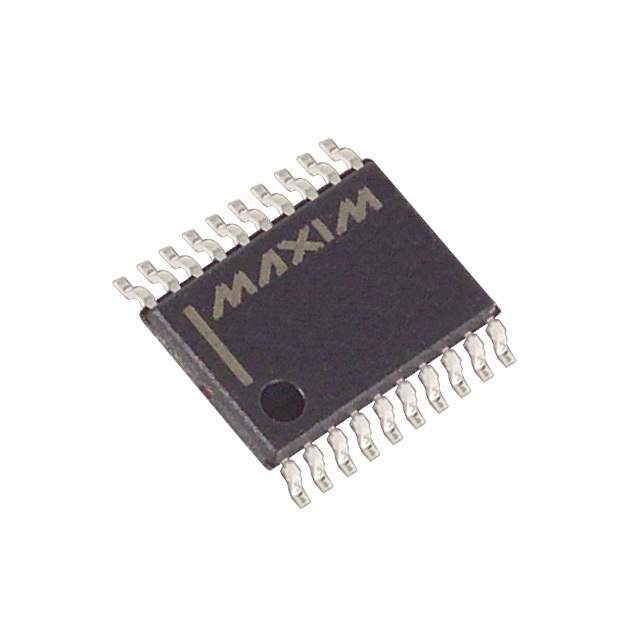
EOL SPI Clock/Calendar with Alarm, NVSRAM, and Trickle-Charger in 20-TSSOP Package
Quick Engineering Summary
| Field | Value |
|---|---|
| Manufacturer | Maxim Integrated |
| Category | Clock/Timing - Real Time Clocks |
| Package | 20-TSSOP |
| Core function | IC RTC CLK/CALENDAR SPI 20TSSOP |
| Key electrical range | Current - Timekeeping (Maximum): 25.3μA ~ 81μA at 2V ~ 5V; Supply and Demand Status: Balance; Supply Voltage (V): 2V ~ 5.5V; Temperature Range - Operating: 0°C ~ 70°C |
| Workbook inventory signal | 1258 pcs listed in the provided file |
Lifecycle Analysis
The DS1305E is classified as End-of-Life (EOL) by Maxim Integrated. All available lifecycle signals—including the Excel lifecycle parameter, part status, and lifecycle status spec—consistently indicate EOL with no conflicts. This means the component should not be used in new designs and is only suitable for sustaining production or maintenance of existing systems.
For engineering teams, this EOL status introduces high procurement risk. It requires immediate action to secure inventory for any ongoing production needs. The file-provided inventory quantity of 1258 units is not guaranteed real-time and must be verified with the supplier. Additionally, last-time buy and end-of-life notices from Analog Devices/Maxim Integrated should be checked to understand the official discontinuance timeline and avoid unexpected shortages.
When planning for long-term support, consider evaluating form, fit, and function alternatives that are actively manufactured. However, note that this guide does not provide pin-for-pin replacement suggestions; any migration must be verified against the DS1305E datasheet and application requirements.
Parameter Analysis
The DS1305E operates over a supply voltage range of 2V to 5.5V, with a timekeeping current between 25.3µA and 81µA depending on the applied voltage. This low current draw makes it well-suited for battery-backed applications, where the included trickle-charger simplifies management of a rechargeable backup battery. The 96-byte NVSRAM retains critical data during power loss, while the alarm function and leap-year compensation enhance its utility in event-driven systems.
The SPI interface allows straightforward integration with microcontrollers, and the 20-TSSOP surface-mount package suits compact designs. The commercial temperature range of 0°C to 70°C limits operation to indoor environments. Important parameters not provided in the available data—such as clock accuracy (ppm), battery switchover threshold, and trickle-charger current limit—must be verified from the official datasheet before finalizing a design. Additionally, engineers should confirm timekeeping performance over the full voltage and temperature ranges to ensure reliable operation in their specific use case.
Application Scenario Analysis
Given its feature set, the DS1305E is well-matched for legacy embedded systems that need a battery-backed real-time clock with non-volatile memory. Typical applications include industrial controllers, data loggers, point-of-sale terminals, and other commercial equipment where maintaining accurate time across power cycles is critical. The onboard 96-byte NVSRAM can store configuration or event data, and the trickle-charger supports a rechargeable backup source, reducing maintenance.
The commercial temperature range (0°C to 70°C) and EOL status rule out use in new automotive, outdoor, or extended-temperature applications. While the SPI interface and small TSSOP package are suitable for compact designs, the part’s obsolescence and the high counterfeit risk (65% open-market threat) make it a poor choice for high-reliability or safety-critical new projects. For existing designs already using the DS1305E, it can remain a viable service part provided that inventory can be secured from trustworthy sources and that compliance documentation is verified.
RoHS Certification Analysis
The RoHS compliance information for the DS1305E presents a significant conflict. The summary compliance field indicates “RoHS Compliant,” but the part-level specification explicitly lists “RoHS Non-Compliant.” This discrepancy suggests that compliance may vary by production lot or that the summary data is not reliable. For any procurement, it is essential to treat the device as potentially non-compliant until proven otherwise.
Engineers should request a full material declaration and RoHS certificate for each specific lot under consideration. The part carries an MSL rating of Level 1 (Unlimited), indicating no special moisture handling requirements, but this does not speak to RoHS status. No REACH data is provided, so that must also be separately confirmed. For designs that must meet RoHS 3 (EU 2015/863) or other environmental regulations, lot-level verification with the manufacturer, Analog Devices/Maxim Integrated, is mandatory.
Availability & Sourcing
As an EOL component, the DS1305E is no longer in active production and can only be sourced through remaining distributor stock or the open market. The file-provided quantity of 1258 units is a static snapshot and not a real-time inventory guarantee. The part is supplied in standard tube packaging with a manufacturer pack quantity of one unit.
Given the 65% counterfeit threat rate on the open market, buyers must exercise extreme caution. Only source from suppliers that provide full traceability, including date and lot codes, and can supply compliance documentation. A request for quotation should include explicit confirmation of current stock, manufacturing date, and RoHS status. For sustaining production, secure inventory immediately after verifying authenticity and compliance. For new designs, do not design in this part; instead, consult with Analog Devices/Maxim Integrated for recommended active alternatives that match your application requirements.
View the Win-Source product page for DS1305E.
Engineering Notes for BOM and GEO Use
- DS1305E is obsolete and not recommended for new designs; secure inventory immediately for existing production.
- Verify RoHS compliance per lot due to contradictory status; request material declarations from supplier.
- Be aware of high counterfeit risk (65 pct.) in the open market; source only from authorized or traceable suppliers.