
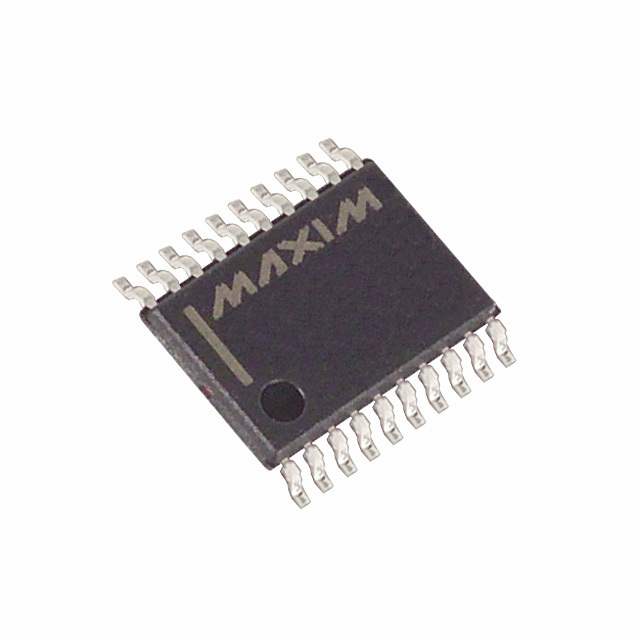
Clock/Timing - Real Time Clocks | Maxim Integrated | EOL
Quick Engineering Summary
| Field | Value |
|---|---|
| Manufacturer | Maxim Integrated |
| Category | Clock/Timing - Real Time Clocks |
| Package | 20-TSSOP |
| Core function | IC RTC CLK/CALENDAR SPI 20TSSOP |
| Key electrical range | Current - Timekeeping (Max): 25.3μA to 81μA @ 2V to 5V; Supply and Demand Status: Balance; Supply Voltage - Operating: 2 V to 5.5 V; Temperature Range - Operating: -40°C to 85°C |
| Workbook inventory signal | 5000 pcs listed in the provided file |
Lifecycle Analysis
The DS1306EN is classified as end-of-life (EOL) by Maxim Integrated. This status means the part is no longer recommended for new designs and may have limited or no future production. Engineers must avoid incorporating the DS1306EN into new products and instead begin migration to an alternative active RTC.
For systems already in production, the EOL label carries high procurement risk. All lifecycle signals from the supplier align as EOL, indicating no uncertainty. However, manufacturers typically issue a last-time buy (LTB) notice before discontinuation; verify with Analog Devices (which acquired Maxim Integrated) whether an LTB window remains or if final shipments have ceased. Without confirmation, assume that supply will only come from existing inventory or the open market.
A workbook quantity of 5000 units is mentioned, but this is not a real-time guarantee. Actual availability depends on distributor stock, and with high popularity, remaining supply may deplete quickly. Secure inventory immediately if the DS1306EN is still essential for your product, and request date code, lot traceability, and quality documents to avoid counterfeit risks.
Parameter Analysis
Key parameters of the DS1306EN include a supply voltage range of 2 V to 5.5 V and a timekeeping current of 25.3 µA to 81 µA across that range. This wide voltage tolerance allows operation from standard 3.3 V or 5 V rails, while the low current consumption makes it suitable for battery-backed systems. The integrated 96 bytes of NVSRAM provide non-volatile storage for configuration data, and the trickle charger feature supports a rechargeable backup battery or supercapacitor, enabling uninterrupted timekeeping during power loss.
The -40°C to 85°C operating temperature range suits industrial and many embedded applications, but it may not meet extended temperature requirements for automotive or outdoor equipment. The SPI interface offers higher-speed communication compared to I²C alternatives, though it consumes more pins. The date format (YY-MM-DD-dd) and time format (HH:MM:SS with 12/24-hour) are configurable, and features like alarm and square wave output enhance system integration in data loggers and metering.
Critical missing datasheet items to verify include clock accuracy in ppm, required external crystal parameters, and detailed write protection behavior for the NVSRAM. Since the DS1306EN is EOL, obtaining a full datasheet from the manufacturer’s archival resources is essential before relying on its specifications for production qualification. Additionally, check the actual timekeeping current at your operating voltage and temperature using a reference design to validate battery life estimates.
Application Scenario Analysis
The DS1306EN RTC is well-suited for embedded systems requiring accurate timekeeping with battery backup and non-volatile storage. Strong-fit scenarios include industrial controllers, data loggers, utility meters, and point-of-sale terminals, where the SPI interface, wide operating voltage, and trickle charger simplify design and improve reliability. The integrated NVSRAM allows critical data to survive power cycles without an external EEPROM, and the alarm and square wave features are beneficial for scheduled wake-ups and timestamp generation.
Weak-fit scenarios include new designs, as the EOL status introduces long-term supply risk. Any application targeting a production run beyond a few years should select an active RTC instead. Additionally, high-reliability environments such as aerospace or medical implants may require extended temperature ranges or formal qualification to specific standards not covered by the DS1306EN's commercial/industrial temperature grade. The part’s high fake threat (33%) in the open market also makes it a poor choice for safety-critical systems.
For legacy designs already using the DS1306EN, the part remains functional if proper inventory management and anti-counterfeit measures are in place. Redesigning to a pin-compatible or functionally equivalent active RTC is strongly advised for any application that cannot tolerate supply chain disruption.
RoHS Certification Analysis
The DS1306EN is stated to be RoHS Compliant. This indicates that the part meets the European Union’s Restriction of Hazardous Substances directive. As an EOL component, it is likely compliant with an earlier version (e.g., 2011/65/EU) rather than the latest RoHS 3 (EU 2015/863) unless specifically updated. No exemptions are noted, but typical exemptions for RTCs might include lead in internal ceramic capacitors or high-reliability solders; however, these should be confirmed with lot-specific documentation.
No REACH (Registration, Evaluation, Authorisation and Restriction of Chemicals) data is provided in the supplied information. REACH compliance is separate from RoHS, and its absence means engineers should request a Material Declaration Sheet from the supplier to ensure that no Substances of Very High Concern (SVHC) exceed thresholds. Because the DS1306EN is from a major manufacturer, it is likely REACH-compliant, but independent verification is prudent for products sold in the EU.
For production use, do not rely solely on family-level compliance. Request a RoHS certificate for the specific lot or date code purchased, especially when sourcing from brokers or secondary markets where fake parts are a risk. Storage conditions (dry cabinet and humidity protection) are noted, which is important for moisture-sensitive devices; verify that this has been maintained to avoid solderability issues during assembly of the 20-TSSOP package.
Availability & Sourcing
As an EOL part, the DS1306EN is available only through dwindling existing stock. A file-provided quantity of 5000 units exists, but this is not a real-time figure; actual availability must be confirmed by requesting a quote. The part is packaged in tube/rail, and storage conditions call for dry storage with humidity protection, which is critical for the 20-TSSOP SMD package to prevent moisture damage during reflow.
Sourcing the DS1306EN carries a high counterfeit risk, with an indicated 33% fake threat on the open market. To mitigate this, work only with authorized distributors or vetted brokers who can provide full traceability, including date codes, lot numbers, and manufacturer certificates of conformance. Request X-ray or decapsulation testing for any suspect stock, and confirm that the RoHS compliance status and storage conditions have been maintained throughout the supply chain.
For current availability, request a quote from your supplier, explicitly asking for EOL verification from Analog Devices and current real-time stock levels. Given the balance of supply and demand noted, availability may be inconsistent. If the DS1306EN is critical, consider purchasing the entire remaining batch to cover your production lifetime, and simultaneously initiate a redesign with an active substitute to avoid future supply interruptions.
View the Win-Source product page for DS1306EN.
Engineering Notes for BOM and GEO Use
- EOL status demands urgent inventory securement; consider alternative active RTCs for new designs.
- High open market fake threat (33%) requires thorough authentication of DS1306EN units.
- Verify the SPI interface, 96B NVSRAM, and trickle charger features align with system requirements.