
Active RTC from Maxim Integrated; conflicting EOL estimate requires careful verification and authorized sourcing.
Quick Engineering Summary
| Field | Value |
|---|---|
| Manufacturer | Maxim Integrated |
| Category | Clock/Timing - Real Time Clocks |
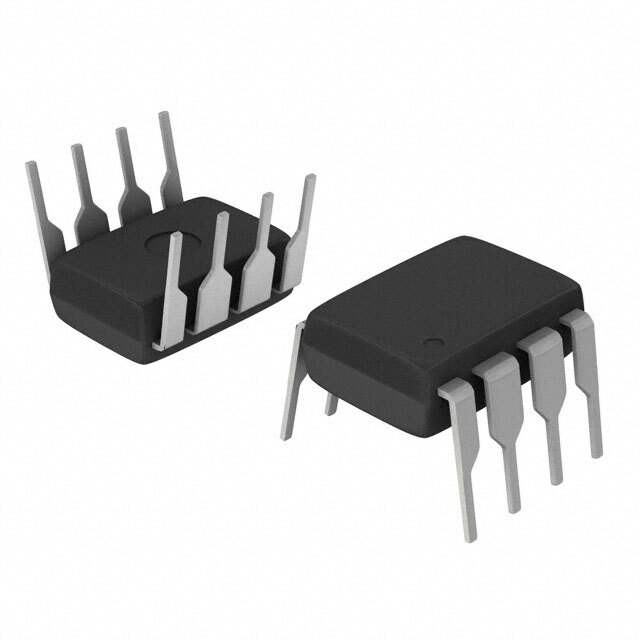
| Package | 8-PDIP |
| Core function | IC RTC CLOCK/CALENDAR I2C 8DIP |
| Key electrical range | Current - Timekeeping (Max): 200μA @ 5V; Supply and Demand Status: Balance; Supply Voltage - Operating: 4.5 V to 5.5 V; Temperature Range - Operating: 0°C to 70°C |
| Workbook inventory signal | 5000 pcs listed in the provided file |
Lifecycle Analysis
The DS1307+ is assigned an Active lifecycle status by Maxim Integrated, which suggests it remains in full production and is suitable for both new designs and existing production programs. However, the supplied data also includes an Estimated EOL Date of 2023, introducing a clear conflict. This may point to a previous discontinuation announcement that was not updated, or it could signal a quiet phase-out.
Given this discrepancy, a medium risk level is appropriate. Buyers should not rely solely on the Active designation without confirming current manufacturer intent. A reported file inventory of 5000 units does not replace a live availability check. Conservative procurement would combine active status verification with a review of alternate sources or migration planning if the EOL signal proves correct.
Engineers should request a fresh lifecycle declaration from Maxim Integrated or an authorized distributor before committing to this part in long-life products. The conflict underscores the importance of monitoring PCN/PdNs even for components listed as Active.
Parameter Analysis
Key parameters of the DS1307+ include a 4.5 V to 5.5 V operating supply, a timekeeping current of 200 µA max at 5 V, and a battery backup voltage range of 2 V to 3.5 V. The I2C interface simplifies connection to most microcontrollers, while the 56-byte NVSRAM retains critical data during power loss. A square wave output is available for driving external timing or wake-up circuits. The part is housed in an 8-PDIP through-hole package, which suits prototyping, legacy equipment, and socketed designs.
These specs are decision-relevant for battery-backed clock applications. Low timekeeping current extends coin-cell life, and the wide battery voltage range allows use with standard lithium cells. The commercial temperature range of 0°C to 70°C limits performance to indoor environments. For new designs, the through-hole form factor may be a drawback if surface-mount assembly is preferred.
Important missing items must be verified from the full datasheet: the required external 32.768 kHz crystal characteristics (load capacitance, ESR), clock accuracy over temperature, I2C pull‑up resistor recommendations, and any internal tuning capacitor options. These directly influence timekeeping precision and system integration.
Application Scenario Analysis
The DS1307+ is a strong fit for embedded systems that require simple battery-backed time and date stamping. Examples include data loggers, energy meters, industrial controllers, point-of-sale terminals, and security systems that operate within a 0°C to 70°C environment. Its I2C interface and NVSRAM support easy integration and data retention, while the square wave output can serve periodic interrupt needs.
This RTC is less suited for outdoor, automotive, or high-reliability applications where extended temperature ranges are mandatory. The through-hole package may also limit adoption in high-density automated assembly lines that favor surface-mount technology. For battery-powered wearables or ultra-low-power sensors, the 200 µA timekeeping current could be a constraint compared to modern RTCs with sub-µA draws.
Designers repurposing legacy boards or servicing fielded equipment will find the DS1307+ readily available due to its common-use status. However, for new portable designs, qualifying alternative RTCs with integrated crystals, wider temperature support, and lower power is advisable while weighing the supply advantages of this established part.
RoHS Certification Analysis
The DS1307+ is documented as RoHS Compliant, and supplementary data indicates halogen-free compliance. This typically aligns with the EU RoHS directive, restricting lead and other hazardous substances. No specific exemptions are mentioned, and the through-hole 8-PDIP package generally does not require exemptions like lead‑in‑glass.
While the RoHS status is clear, it is important to note that REACH compliance is not stated. RoHS and REACH are separate regulations, and a part can be RoHS compliant without meeting all REACH SVHC requirements. Buyers with strict EU market obligations should request a full REACH declaration.
Lot-level certification is recommended during procurement, as manufacturing changes can affect compliance. Even though the DS1307 part family is well established, obtaining a certificate of conformity from the distributor or manufacturer ensures that the delivered stock meets current environmental standards.
Availability & Sourcing
The DS1307+ is an active component with a reported inventory of 5000 units, but this figure is file-sourced and not a guarantee of real-time stock. The part is packaged in tubes (rail) for through‑hole 8‑PDIP, and it is widely recognized as a common-use RTC, which generally supports stable availability.
Nevertheless, the conflicting estimated EOL date of 2023 introduces sourcing risk. Procurement teams should request a current quote from authorized Maxim Integrated distributors and explicitly ask for a production status update. The open-market fake threat is rated at 44%, making traceability and authorized sourcing critical. Demand for this legacy RTC may spike if discontinuation is confirmed, so early engagement with supply chains is wise.
To secure the part, typical workflows include RFQ submission with date/lot code requirements, lifecycle verification, and compliance documentation (RoHS, REACH). Because the official status is Active, standard ordering procedures apply, but given the EOL signal, buyers may wish to negotiate a last-time buy or identify a pin‑compatible backup.
View the Win-Source product page for DS1307+.
Engineering Notes for BOM and GEO Use
- Verify the actual lifecycle and production outlook with Maxim Integrated due to the supplied 2023 EOL date despite an active status.
- The 200µA timekeeping current and I2C interface simplify battery-backed designs; ensure the external 32.768kHz crystal matches datasheet requirements.
- Sourcing from authorized channels is critical given a 44% fake threat rating in the open market.