
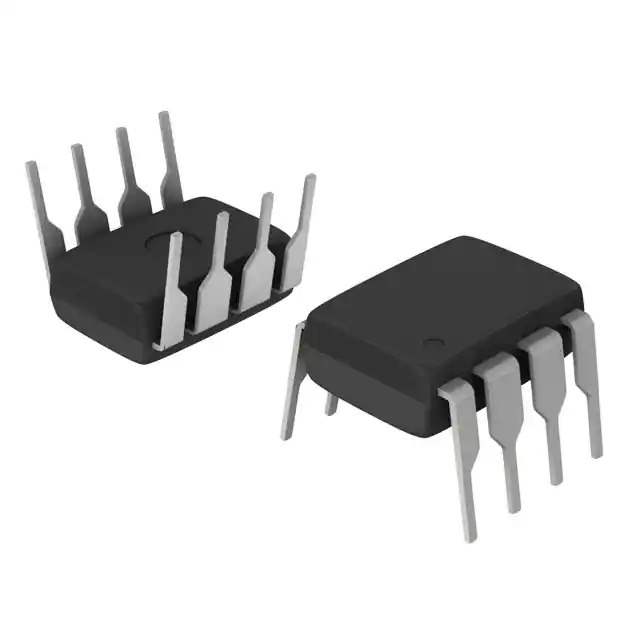
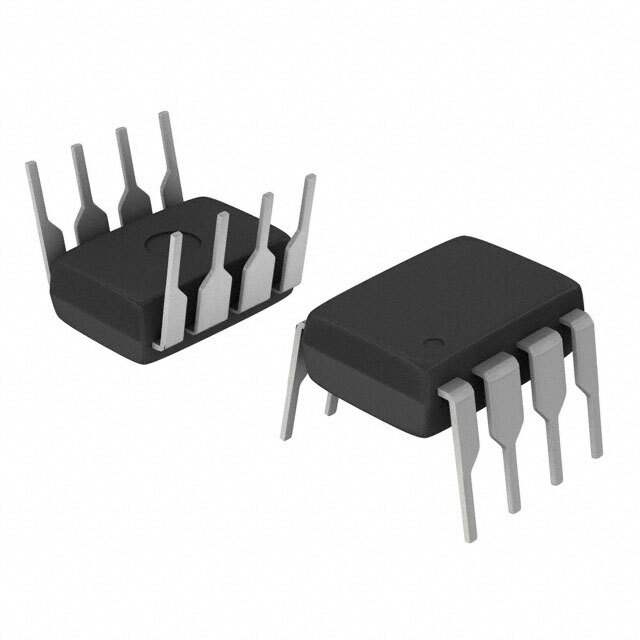
Discontinued Maxim Integrated real-time clock with I2C interface and 56B NVSRAM.
Quick Engineering Summary
| Field | Value |
|---|---|
| Manufacturer | Maxim Integrated |
| Category | Clock/Timing - Real Time Clocks |
| Package | Tube |
| Core function | IC RTC CLOCK/CALENDAR I2C 8DIP |
| Key electrical range | Current - Timekeeping (Max): 200µA @ 5V; Temperature Range - Operating: 0°C ~ 70°C; Voltage - Supply: 4.5V ~ 5.5V; Voltage - Supply, Battery: 2V ~ 3.5V |
| Workbook inventory signal | 5000 pcs listed in the provided file |
Lifecycle Analysis
The DS1307 is formally discontinued by Maxim Integrated. Multiple internal signals agree on an end-of-life state, though some records show ‘EOL’ while others list ‘Discontinued’. For procurement planning, treat the part as unavailable for new designs. It may still be sourced from residual distribution stock or the open market, but no new factory production is expected.
Engineers relying on the DS1307 for sustaining production should immediately verify the manufacturer’s product discontinuance notice (PDN) and any last-time-buy or last-time-ship schedules. Without a confirmed manufacturer roadmap, continued use carries supply interruption risk. The file-provided inventory quantity is a point-in-time estimate and does not guarantee real-time availability.
For any new board spin, a migration to an active, pin-compatible or functional equivalent RTC is strongly advised. Cross-reference with Maxim Integrated’s (now Analog Devices) current RTC portfolio to identify a replacement with a secure lifecycle.
Parameter Analysis
The DS1307 operates as a full binary-coded decimal (BCD) clock/calendar with 56 bytes of non-volatile SRAM. Key parameters include its I2C interface (2-wire serial), supply voltage range of 4.5V to 5.5V, and a dedicated battery backup input of 2V to 3.5V to maintain timekeeping during primary power loss. Maximum timekeeping current is 200µA at 5V, which influences backup battery sizing. The through-hole 8-DIP package (0.300” wide) suits legacy layouts and prototyping.
Timekeeping accuracy is not specified in the provided data, but the device relies on an external 32.768kHz crystal. Designers must verify crystal load capacitance matching and layout guidelines from the datasheet to achieve accurate RTC performance. The operating temperature range (0°C to 70°C) limits the DS1307 to commercial environments; extended-temperature applications would require an alternative part.
Other notable features include leap-year compensation, a programmable square-wave output, and date format YY-MM-DD-dd. Missing documentation items—such as I2C timing details, clock accuracy vs. temperature, and NVSRAM write endurance—should be obtained from the original Maxim datasheet before committing to a design reuse.
Application Scenario Analysis
The DS1307 fits legacy embedded systems that require a simple real-time clock with battery-backed timekeeping. Typical strong-fit applications include industrial controllers, data loggers, and telemetry equipment operating on 5V rails where through-hole mounting is acceptable. Its I2C interface and small 56-byte NVSRAM make it suitable for storing configuration or timestamp data in existing designs.
Weak-fit scenarios include any new product development, compact surface-mount designs, or battery-powered devices operating below 4.5V main supply. The 0°C to 70°C range excludes outdoor or automotive environments. Modern designs should consider active RTCs with integrated crystal oscillators, wider voltage ranges, and smaller SMT packages.
When evaluating the DS1307 for a sustaining project, confirm that the legacy firmware can still drive the I2C protocols as implemented. If the external crystal or load capacitors are obsolete, system qualification may require re-testing of timekeeping accuracy across the operating temperature.
RoHS Certification Analysis
The DS1307 is listed as RoHS Compliant. The provided data does not specify the compliance standard revision, but typical EU RoHS (Directive 2011/65/EU and amendment 2015/863) covers the six restricted substances plus four phthalates. No exemptions are noted.
Additionally, the part carries an MSL Level 1 rating, indicating it is unlimited with regard to moisture sensitivity and does not require special dry-pack handling. REACH status is recorded as ‘REACH Unaffected,’ which is a positive signal for EU market access.
For high-reliability or audited supply chains, it is essential to request the full material declaration and certificate of compliance from the distributor for the specific lot being purchased. Family-level RoHS declarations may not account for raw material variations over the production lifetime.
Availability & Sourcing
The DS1307 is discontinued, so availability depends solely on remaining stock at distributors or on the open market. File-provided inventory indicates a quantity of 5000 units, but this is not a real-time guarantee. Buyers should request a current quote to confirm stock and packaging (tube, standard package 50 pcs).
Traceability is critical for this part because the open market carries a 40% fake threat estimate. Source only from authorized Maxim Integrated/ADI distributors or thoroughly vetted independent sources that provide date/lot codes and compliance documentation. Insist on full verification of RoHS compliance and MSL Level 1 per shipment.
If the DS1307 must be procured for a production line, immediately negotiate a last-time-buy order. For new designs, engage the manufacturer’s product line to identify a recommended replacement. Always reconfirm lifecycle status with Maxim Integrated before placing any order to avoid purchasing from a depleting channel.
View the Win-Source product page for DS1307.
Engineering Notes for BOM and GEO Use
- Verify manufacturer discontinuation notice and last-time-buy dates before committing to production.
- Ensure RoHS compliance certificates are current per lot; MSL Level 1 allows unlimited floor life.
- Given high open-market fake threat (40%), source only from authorized or traceable distributors.