
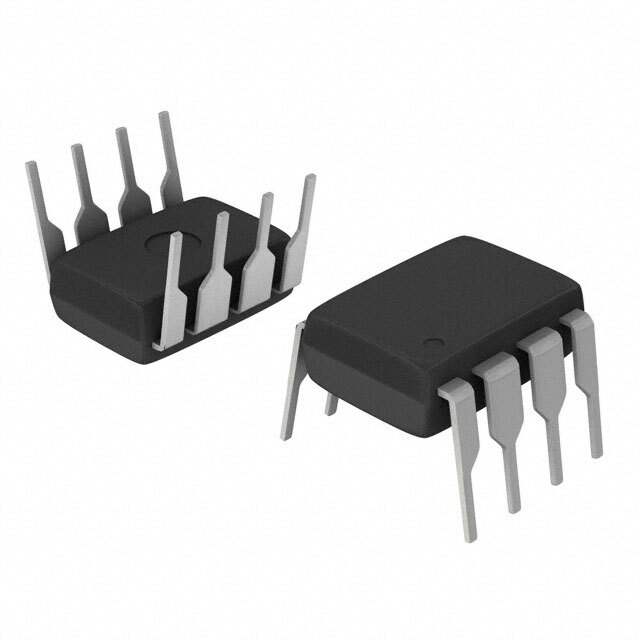
Active clock/calendar with I2C, NVSRAM, and industrial temperature range. Confirm 2023 EOL estimate with manufacturer.
Quick Engineering Summary
| Field | Value |
|---|---|
| Manufacturer | Maxim Integrated |
| Category | Clock/Timing - Real Time Clocks |
| Package | 8-PDIP |
| Core function | IC RTC CLOCK/CALENDAR I2C 8DIP |
| Key electrical range | Current - Timekeeping (Max): 200μA @ 5V; Supply and Demand Status: Balance; Supply Voltage - Operating: 4.5 V to 5.5 V; Temperature Range - Operating: -40°C to 85°C |
| Workbook inventory signal | 3000 pcs listed in the provided file |
Lifecycle Analysis
The DS1307N+ is currently listed as Active, indicating that Maxim Integrated continues to manufacture and support this part for new designs and ongoing production. The lifecycle risk level is low, meaning no near-term discontinuation is expected.
However, the dataset contains an estimated EOL date of 2023 that does not align with the Active status. This may be a legacy forecast that was never realized, but conservative procurement practice demands re-verification. Contact the manufacturer or authorized distributors to obtain the latest product change notice (PCN) and confirm that the DS1307N+ has not been moved to NRND or EOL status.
A file-provided inventory quantity of 3000 units appears in the data, but this is not a real-time guarantee. For production planning, always verify current stock levels and lead times through an official RFQ.
Parameter Analysis
Key parameters for the DS1307N+ include a maximum timekeeping current of 200µA at 5V and a main supply voltage range of 4.5V to 5.5V. The 56 bytes of NVSRAM and integrated leap year compensation reduce software overhead for calendar management. The separate battery backup input accepts 2V to 3.5V, allowing standard lithium coin cells to maintain time during power loss.
The device comes in an 8-PDIP through-hole package with an industrial temperature range of -40°C to 85°C, making it suitable for ruggedized embedded systems. I2C interface simplifies microcontroller connectivity, and the square wave output can serve as a periodic interrupt.
Several critical parameters are not provided in the source data and must be verified from the official datasheet: clock accuracy (dependent on external 32.768 kHz crystal), I2C bus speed compatibility, and backup current consumption when VCC is removed. Designers should also evaluate crystal ESR and load capacitance requirements to guarantee reliable oscillator startup across the temperature range.
Application Scenario Analysis
The DS1307N+ fits well in applications requiring a basic battery-backed real-time clock with I2C communication. Strong-fit scenarios include industrial controllers, data loggers, and home automation where the 5V supply rail is standard and the 85°C upper limit covers most factory-floor environments. The 56-byte NVSRAM is sufficient for storing configuration parameters or small event logs.
It is also a suitable choice for legacy designs and maintenance programs that rely on through-hole mounting and the DS1307 family footprint. The wide availability and Active status make it a low-risk selection for sustaining engineering.
Weak-fit scenarios include battery-powered devices that demand sub-microamp timekeeping currents, as the DS1307N+ requires 200µA typical. Systems needing sub-second accuracy without periodic calibration may find this part limited because accuracy depends entirely on the external crystal. For designs requiring extended temperature range beyond 85°C, a higher-grade RTC should be evaluated.
RoHS Certification Analysis
The DS1307N+ is classified as RoHS Compliant, meaning it meets the restriction of hazardous substances under EU directives. Additionally, the data indicates Halogen Free compliance, which can be important for eco-design requirements in certain markets.
No explicit REACH declaration is present in the source data. While REACH compliance is often assumed for active Maxim Integrated products, it is not a direct substitute for RoHS. If full material declaration is required for end-product certification, request the manufacturer’s REACH statement or a comprehensive IPC-1752 declaration.
Because compliance can vary by production lot, especially for mature through-hole packages, it is advisable to ask for a batch-specific certificate of conformance with each shipment. Family-level qualifications may exist, but lot-level traceability provides the strongest assurance for export and high-reliability applications.
Availability & Sourcing
The DS1307N+ is an Active, commonly used part with a balanced supply and demand status. The file-provided data indicates a quantity of 3000 units, but this is not a live inventory figure. For current stock, lead times, and pricing, a formal request for quotation (RFQ) is necessary.
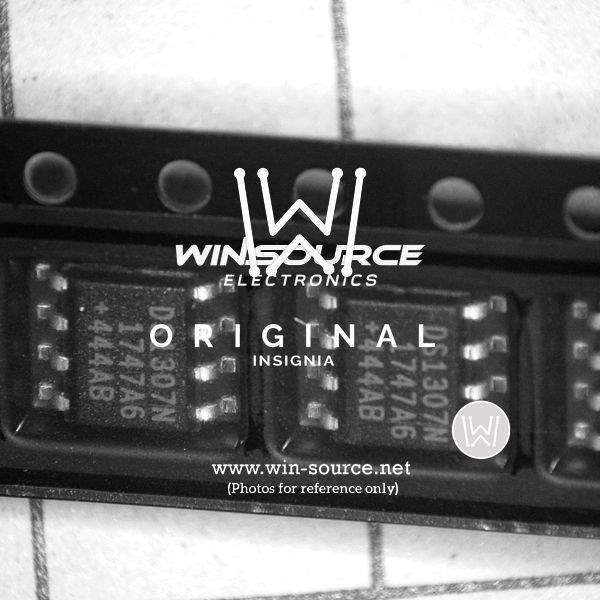
The standard packaging is tube/rail, and storage conditions call for a dry cabinet with humidity protection. When sourcing, specify full traceability including date codes and lot numbers, especially to verify that the parts are from a recent production run and not recycled or counterfeit. The dataset notes a 32 percent fake threat in the open market, so procurement through authorized channels is strongly recommended.
Since the part is Active, buyers should focus on obtaining current compliance documents and confirming the lifecycle status directly with Maxim Integrated. If the 2023 EOL estimate proves relevant, alternative second-source planning may be warranted, but the official status today supports standard RFQ and compliance verification.
View the Win-Source product page for DS1307N+.
Engineering Notes for BOM and GEO Use
- Verify with Maxim Integrated that the 2023 estimated EOL date does not reflect an NRND or undisclosed transition before committing to new designs.
- Validate crystal accuracy, I2C timing margins, and backup current consumption across the -40°C to 85°C range during qualification.
- Request lot-specific RoHS and halogen-free compliance certificates to avoid non-compliant batches in production.