
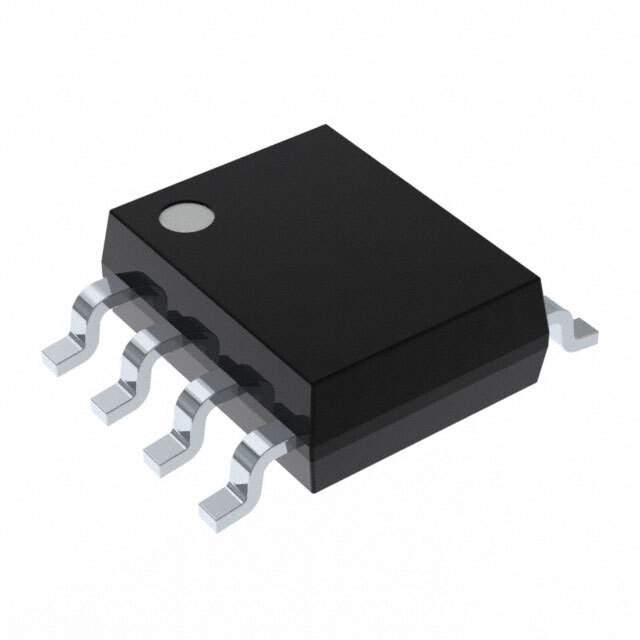
Technical specs, lifecycle analysis, and procurement guidance for the Maxim Integrated DS1307Z RTC.
Quick Engineering Summary
| Field | Value |
|---|---|
| Manufacturer | Maxim Integrated |
| Category | Clock/Timing - Real Time Clocks |
| Package | 8-SOIC |
| Core function | IC RTC CLK/CALENDAR I2C 8SOIC |
| Key electrical range | Current - Timekeeping (Maximum): 200μA at 5V; Supply and Demand Status: Limited; Supply Voltage (V): 4.5V ~ 5.5V; Temperature Range - Operating: 0°C ~ 70°C |
| Workbook inventory signal | 65900 pcs listed in the provided file |
Lifecycle Analysis
The DS1307Z from Maxim Integrated is confirmed obsolete according to supplier part status, indicating an End Of Life (EOL) classification. This means the manufacturer has halted production, and no new units are being fabricated. For new designs, this part should not be considered; engineers must select an active alternative to ensure long-term availability.
For existing production, immediate action is required to secure remaining inventory. A file-provided quantity of 65,900 units is noted, but this stock is not guaranteed real-time and may be depleting rapidly. It is essential to verify actual availability and obtain manufacturer documentation on last-time-buy windows and end-of-life notices.
An open market fake threat of 54% underscores the importance of sourcing through authorized channels. Lifecycle status conflicts are minimal, as the obsolete designation is clear, though the formal lifecycle field shows 'Unknown' – this should be disregarded in favor of the explicit part status. Treat the DS1307Z as EOL and plan accordingly.
Parameter Analysis
Key parameters of the DS1307Z include a maximum timekeeping current of 200µA at 5V, a supply voltage range of 4.5V to 5.5V, and a battery backup voltage of 2V to 3.5V. These values are critical for power budget calculations, especially in battery-operated designs where low timekeeping current extends backup life. The I2C interface (2-wire serial) enables simple communication with microcontrollers.
The 56-byte NVSRAM provides non-volatile storage of configuration data, while the square wave output can serve as a clock reference. The operating temperature range of 0°C to 70°C limits the DS1307Z to commercial environments. Designers must ensure ambient temperatures stay within this range, considering thermal derating if the PCB generates heat.
Missing datasheet parameters that should be verified include I2C bus speed (typically standard-mode 100kHz, but fast-mode compatibility unknown), crystal selection criteria, frequency accuracy over temperature and voltage, and NVSRAM write endurance. Consult the original Maxim datasheet to confirm these specifications before integration.
Application Scenario Analysis
The DS1307Z is well-suited for embedded systems requiring reliable timekeeping with battery backup, such as industrial controllers, data loggers, point-of-sale terminals, and consumer appliances. Its leap year correction and square wave output facilitate calendar functions and periodic interrupts, simplifying firmware.
However, the 0°C to 70°C temperature range makes the DS1307Z unsuitable for automotive, outdoor telemetry, or industrial extended-temperature applications. Designs that demand -40°C to +85°C operation should consider alternate RTCs. The I2C interface may also be a limiting factor if high-speed data transfer is needed; verify that the bus speed meets system requirements.
Memory-limited systems benefit from the 56B NVSRAM for storing configuration data during power loss. The device’s 5V-only supply voltage restricts direct battery operation without a regulator, so designers must account for power management. Overall, the DS1307Z fits well in cost-sensitive commercial products where its feature set aligns with basic clock/calendar functions.
RoHS Certification Analysis
RoHS compliance for DS1307Z is ambiguous due to conflicting information. One data field marks the part as RoHS Compliant, while a separate specification lists it as RoHS Non-Compliant. This discrepancy may arise from a family-level versus part-level declaration or outdated records.
No REACH or halogen-free data is provided, and no specific exemptions are mentioned. The MSL rating of 1 (Unlimited) indicates that the 8-SOIC package is not moisture-sensitive, which simplifies storage and handling.
Procurement teams should request a lot-specific RoHS certificate from the supplier before purchase. If compliance is mandatory for your application, do not rely on the generic status; confirm through testing or authorized distributor documentation. The risk of non-compliance is non-trivial given the explicit 'Non-Compliant' listing, so treat this as a verification-critical item.
Availability & Sourcing
As an obsolete part, DS1307Z availability is constrained and declining. The file-provided inventory shows 65,900 units, but this figure is not a real-time reflection of market stock. With a 54% fake threat in the open market, sourcing through unauthorized channels carries significant risk of counterfeit components.
For critical production needs, engage directly with Maxim Integrated or their franchised distributors to request a last-time-buy quote, confirm date and lot codes, and secure authenticity documentation. The standard packaging is tube, so verify packaging integrity for automated assembly lines.
If DS1307Z is being used in new designs, immediately halt and transition to an active equivalent. For sustaining production, place orders now while stock seemingly exists and require compliance verification for every shipment. Request a quote for current availability, delivery lead times, and any remaining manufacturer warranty.
View the Win-Source product page for DS1307Z.
Engineering Notes for BOM and GEO Use
- Confirm RoHS compliance with lot-specific documentation due to conflicting data sources.
- Secure inventory immediately as DS1307Z is obsolete; consider migrating to an active alternative.
- Verify I2C timing and NVSRAM endurance against application requirements before using in production.