
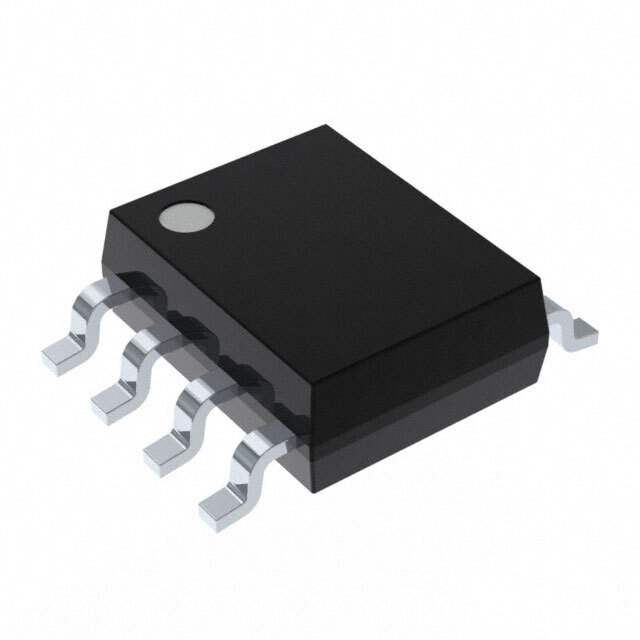
Active part with industrial temperature range and RoHS compliance
Quick Engineering Summary
| Field | Value |
|---|---|
| Manufacturer | Maxim Integrated |
| Category | Memory - Controllers |
| Package | 8-SOIC |
| Core function | IC MEM CTLR NV RAM 8-SOIC |
| Key electrical range | Supply and Demand Status: Balance; Supply Voltage - Operating: 3 V to 3.6 V; Temperature Range - Operating: -40°C to 85°C |
| Workbook inventory signal | 2861 pcs listed in the provided file |
Lifecycle Analysis
The DS1314S-2+ is in Active lifecycle status according to both the Excel lifecycle flag and the manufacturer's Lifecycle Status indicator, with no contradictory signals. This low-risk status means Maxim Integrated continues to produce and support the part, making it acceptable for new designs where engineering validation has been completed.
However, an estimated end-of-life (EOL) date of 2026 appears in the specifications. For projects whose production runs extend beyond 2026, this introduces a need for mid-life refresh planning or a managed migration to a successor part. Engineers should contact Maxim Integrated or authorized distributors to confirm the accuracy of this EOL projection and to understand the last-time-buy and last-time-ship timelines.
The file indicates a workbook inventory quantity of 2861 units. While this suggests healthy immediate availability, it does not constitute real-time stock information. For critical long-term builds, request a formal supply assurance letter or investigate alternate NVRAM controllers from the same family early in the design cycle.
Parameter Analysis
Key operating parameters for the DS1314S-2+ include a supply voltage range of 3 V to 3.6 V and an industrial temperature range of -40°C to 85°C. The 3.3 V nominal supply aligns with common microcontroller and FPGA I/O levels, simplifying board-level power design. The wide temperature span makes the part suitable for outdoor equipment, factory floors, and other harsh environments where reliability over temperature extremes is mandatory.
The controller is housed in an 8-SOIC package, which is a mature, surface-mount format offering good PCB real-estate efficiency and compatibility with automated assembly lines. Engineers should verify pad dimensions and thermal relief needs from the latest Maxim Integrated footprint documentation, and ensure the soldering profile matches the component's moisture sensitivity level (not provided here but ascertainable from the manufacturer).
Missing from the supplied data are memory density support ranges, specific interface protocols (likely parallel based on the NVRAM controller type), access timing characteristics, and quiescent current consumption. These parameters are critical for proper integration. Always procure the official DS1314 datasheet to review electrical characteristics, pin functions, and interface diagrams before finalizing a schematic or BOM for the DS1314S-2+.
Application Scenario Analysis
The DS1314S-2+ is a nonvolatile RAM controller, so its strongest fit is in embedded systems that must preserve data across power cycles without resorting to battery-backed SRAM. Applications include industrial programmable logic controllers, smart utility meters, medical monitoring equipment, and networking appliances where configuration or log data must survive unexpected shutdowns.
The 3 V to 3.6 V operating range and -40°C to 85°C industrial temperature grade validate its use in field-deployed, rugged hardware. Designs that pair this controller with low-power NVSRAM or MRAM can achieve fast write speeds and virtually unlimited endurance, making the DS1314S-2+ a solid choice for frequently updated critical parameters.
Weak-fit scenarios include purely cost-optimized consumer electronics that can tolerate data loss, or systems requiring multi-gigabit memory densities where a simple controller cannot address large arrays. Also, any design constrained to sub-3 V operation would fall outside the DS1314S-2+ supply window, necessitating an alternative part. Engineers must evaluate whether the controller's interface and capacity limitations match the end product's memory map before committing.
RoHS Certification Analysis
The DS1314S-2+ is marked as RoHS Compliant, and a halogen-free compliant specification further supports its environmental credentials. Compliance is generally interpreted against the EU RoHS directive, though the provided data does not specify the exact revision (e.g., 2011/65/EU or 2015/863). For formal certification, request a supplier declaration of conformity that lists all restricted substances and applicable exemptions.
No specific exemptions are annotated in the available fields. Because exemptions can apply on a case-by-case basis (e.g., lead in glass of ceramic capacitors), it is prudent to obtain a full material composition report for the exact lot being purchased. The storage condition note—dry storage cabinet and humidity protection package—implies that the part is moisture sensitive. Therefore, RoHS reflow soldering processes must adhere to the manufacturer’s moisture sensitivity level (MSL) to avoid popcorning or latent damage.
Lot-level traceability of RoHS data is especially important if the DS1314S-2+ is intended for markets with evolving substance restrictions (e.g., REACH SVHC updates). Verify with Maxim Integrated or a franchised distributor that the part number remains compliant to the latest regulatory revisions before inclusion in export-bound products.
Availability & Sourcing
According to the supply-and-demand status shown, the DS1314S-2+ is in balance, and the file reports a workbook quantity of 2861 units. However, this inventory count is a snapshot and not a live guarantee. For current, reserved stock, request a quotation through an authorized Maxim Integrated distributor, specifying the required packaging (tube/rail) and any date-code or lot-code preferences.
The estimated 60% counterfeit threat in the open market underscores the risk of buying from unauthorized or grey-market sources. Procurement teams should mandate certificates of conformance, full traceability back to Maxim Integrated, and an authorized distribution chain verification to avoid substandard or relabeled parts. Storage and handling records should confirm adherence to the stated dry-storage and humidity-protection guidelines.
Because the lifecycle is Active with a 2026 estimated EOL, standard lead times are expected, but verifying that the EOL date remains unchanged is wise for multi-year production plans. For prototype builds, small quantities may be available ex-stock from catalog distributors; for volume production, negotiate supply agreements and consider safety stock levels. Always include a compliance checklist—RoHS, halogen-free, MSL, and REACH—when placing orders to ensure seamless import and to meet end-market regulations.
View the Win-Source product page for DS1314S-2+.
Engineering Notes for BOM and GEO Use
- Confirm supported NVRAM densities and interface protocol (likely parallel) from the DS1314 datasheet to ensure compatibility with your memory design.
- Evaluate the 2026 estimated EOL date against your product lifecycle; plan a potential migration to a newer NVRAM controller if production extends beyond 2028.
- Given the 60% counterfeit risk, always source DS1314S-2+ from Maxim Integrated authorized distributors and request full traceability and compliance certificates.