
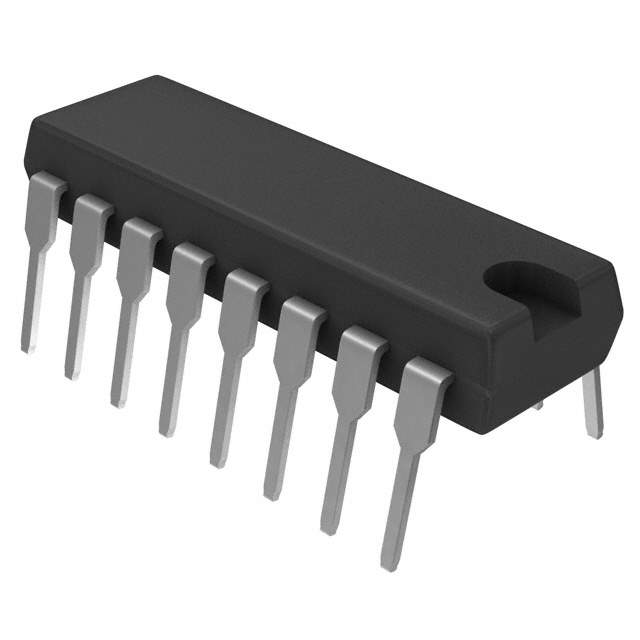
Real-time clock with phantom chip technology, 16-pin DIP, 3.3V parallel interface.
Quick Engineering Summary
| Field | Value |
|---|---|
| Manufacturer | Maxim Integrated |
| Category | Clock/Timing - Real Time Clocks |
| Package | DIP |
| Core function | IC RTC PHANTOM CHIP PAR 16DIP |
| Key electrical range | Max Supply Voltage: 3.6 V; Maximum Operating Temperature: 70 °C; Min Operating Temperature: 0 °C; Min Supply Voltage: 3 V |
| Workbook inventory signal | 113 pcs listed in the provided file |
Lifecycle Analysis
The Maxim Integrated DS1315-33+ has been marked End‑of‑Life (EOL) by the manufacturer, with all available lifecycle signals confirming this status. For new designs, this part is not recommended; it is intended only for sustaining production in existing equipment where redesign is not feasible. Engineers should immediately evaluate alternative RTC solutions for any planned product developments.
EOL status brings a high procurement risk. Availability will decline over time, and last‑time‑buy (LTB) windows may have already closed. The file‑reported inventory quantity of 113 units is a snapshot and must not be taken as a guarantee of real‑time stock. Purchasing teams should verify lead‑time, minimum order quantities, and manufacturer’s obsolescence notices directly.
Given the supply shortage trend, secure any needed stock promptly and plan for a controlled transition to a replacement part. Validate that the date codes are recent and that the stock is from authorized channels to minimize the risk of counterfeit units.
Parameter Analysis
Key parameters for the DS1315-33+ include its 3.3 V operating voltage (3.0–3.6 V supply range), 0 °C to +70 °C commercial temperature rating, and 16‑pin DIP through‑hole package. The parallel interface and phantom chip architecture mean it connects in parallel with a battery‑backed SRAM, appearing transparently to the system bus. This integration demands careful layout to maintain signal integrity across the 16‑bit bus.
The specified date format (YY‑MM‑DD‑dd) and logic clock function point to a classic RTC feature set. The typical current consumption of 1.1 mA at 3.3 V (max) is moderate, but battery backup current during power‑down is a critical missing specification that must be obtained from the original Maxim datasheet. Similarly, the mounting style is ambiguous in the aggregated data—while the official package is 16‑DIP (through‑hole), one parameter lists “SMD (SMT)”; this discrepancy must be resolved before PCB design.
Essential missing parameters to confirm: backup supply voltage and current, oscillator accuracy vs. temperature, crystal specifications, and bus timing waveforms. These directly influence bill‑of‑materials selection and operational reliability.
Application Scenario Analysis
The DS1315-33+ fits best in legacy embedded systems that require a memory‑mapped RTC without a separate I²C or SPI bus. Typical strong‑fit applications include industrial programmable logic controllers (PLCs), telecommunications infrastructure, and avionics or military equipment designed before the shift to small‑form‑factor SMD RTCs. Its DIP package simplifies prototyping and field repairs in through‑hole assemblies.
Weak‑fit scenarios are modern, compact devices where board space is at a premium and a serial‑interfaced RTC (e.g., I²C) in an SMD package would be preferred. The 0–70 °C operating range excludes outdoor or automotive‑grade environments. The lack of radiation hardening also rules out space applications. For any new project, the EOL status alone makes the DS1315-33+ a poor choice; a design using an active, widely‑sourced alternative is strongly advised.
RoHS Certification Analysis
The DS1315-33+ is reported as RoHS Compliant according to the aggregated sourcing data. This suggests conformity with the EU RoHS directive (2011/65/EU) and its amendments, including the EU 2015/863 (RoHS 3) restrictions on lead, mercury, cadmium, and other hazardous substances. The “Lead Free” parameter is marked “Yes,” supporting this designation. No specific exemption notes are provided, but parts of this vintage may utilize exemptions for lead in glass or ceramics, which should be confirmed against the manufacturer’s official declaration.
While the data indicates compliance, it is essential to request a full material composition certificate or RoHS compliance document from the distributor for the specific lot being purchased. REACH status is not indicated and must be obtained separately if required. The phantom chip’s DIP package typically uses lead‑frame materials that are generally compatible with RoHS, but only manufacturer documentation can provide final assurance.
Availability & Sourcing
Procurement of the Maxim Integrated DS1315-33+ must be handled with the EOL status in mind. A file‑based stock quantity of 113 units has been noted, but this is not a live inventory and should be verified via an RFQ. Given the supply shortage indication, immediate action is recommended to secure any remaining production lifetime buys. Authorized distributors are the preferred source to avoid the 47% open‑market counterfeit threat.
Traceability is critical: insist on full date/lot code information and proper humidity‑protected packaging, as indicated in the storage condition (dry storage cabinet). Request RoHS compliance certificates and review the manufacturer’s Product Change Notice (PCN) to confirm the EOL timeline. If extended supply is needed, consider authorized aftermarket sources or last‑time‑buy programs.
For buyers, the primary call to action is to obtain a quote for the required quantity, verify the part’s lifecycle and authenticity, and immediately evaluate migration to an active RTC alternative to de‑risk the bill‑of‑materials.
View the Win-Source product page for DS1315-33+.
Engineering Notes for BOM and GEO Use
- The DS1315-33+ is EOL; secure last-time-buy stock promptly and begin migration to an active RTC alternative.
- Verify critical missing specs—battery-backup current, crystal requirements, and bus timing—from the official Maxim datasheet before final design.
- Counterfeit risk is high (47% open-market threat); source only from authorized distributors with full traceability and RoHS certificates.