
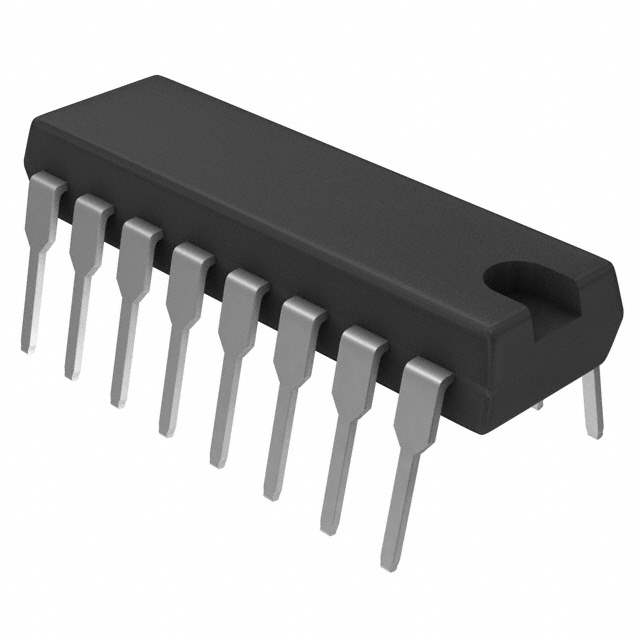
Specifications, lifecycle, and procurement guidance for the Maxim Integrated DS1315-5+.
Quick Engineering Summary
| Field | Value |
|---|---|
| Manufacturer | Maxim Integrated |
| Category | Clock/Timing - Real Time Clocks |
| Package | 16-PDIP |
| Core function | IC RTC PHANTOM CHIP PAR 16DIP |
| Key electrical range | Current - Timekeeping (Max): 1.3mA @ 5V; Supply and Demand Status: Balance; Supply Voltage - Operating: 4.5 V to 5.5 V; Temperature Range - Operating: 0°C to 70°C |
| Workbook inventory signal | 2740 pcs listed in the provided file |
Lifecycle Analysis
The DS1315-5+ is listed as Active by Maxim Integrated, with all examined lifecycle signals consistent. This status indicates that the part remains in full production and is available for new design-in as well as ongoing procurement for existing programs. Active lifecycle typically assures at least several years of continued manufacturing, but buyers should monitor official product change notifications (PCNs) and end-of-life (EOL) announcements from the manufacturer, especially when planning long-lifetime industrial or infrastructure equipment.
Because the open market carries a reported fake threat rate of 62%, lifecycle verification becomes critical. While the file indicates inventory of 2740 units, this figure is a snapshot and not a live stock check. Engineers and purchasers should confirm current availability and lead times directly with authorized distributors. For programs nearing production, securing a forecast and potential buffer stock is advisable to mitigate against allocation or sudden demand spikes.
Parameter Analysis
The DS1315-5+ operates from a 4.5 V to 5.5 V supply and supports a battery backup range of 2.5 V to 3.7 V, making it compatible with common coin cells or supercapacitors for timekeeping retention during power loss. The maximum timekeeping current of 1.3 mA at 5 V is moderate; designers should ensure that the backup source can sustain this draw over the required retention period. The commercial temperature range of 0°C to 70°C restricts the part to indoor or non-extreme environments.
The 16-PDIP through-hole package suits prototyping, legacy boards, or applications where surface-mount rework is not feasible. The phantom interface is a proprietary parallel connection; exact timing and protocol details are absent from the provided data, so consultation of the full datasheet is essential for microcontroller interfacing. Additionally, the date format (YY-MM-DD-dd) and leap year compensation are integrated, reducing software overhead. Verified missing datasheet items include clock accuracy, memory size, and any register map details, all of which must be confirmed before committing to a design.
Application Scenario Analysis
The DS1315-5+ finds strong fit in 5 V embedded systems that need a simple, parallel-interface real-time clock with battery backup. Typical applications include industrial controllers, data loggers, utility meters, and medical devices that operate within 0°C to 70°C and have available board space for a through-hole DIP package. The phantom interface, while proprietary, can simplify address bus sharing in legacy microprocessor designs.
Weak-fit scenarios include battery-powered portable devices, where the 1.3 mA timekeeping current may be excessive for long autonomy, and high-reliability outdoor or automotive systems requiring extended temperature range. Additionally, new designs migrating to smaller form factors or SMT assembly may find the 16-PDIP package a poor fit. Designers should evaluate whether a lower-power, surface-mount RTC with standard I²C or SPI might better serve modern requirements, although the DS1315-5+ remains a viable choice for maintenance of existing platforms and compatible replacement.
RoHS Certification Analysis
The DS1315-5+ is declared RoHS Compliant according to the provided information. This generally means the part meets the restrictions of the EU RoHS directive (2011/65/EU) as amended by (EU) 2015/863, which limits hazardous substances such as lead, mercury, cadmium, and certain phthalates. However, the data does not include a specific certificate or reference to exemptions, so it is advisable to request a full material declaration from Maxim Integrated for the exact lot.
While many semiconductor components are RoHS compliant by design, the through-hole PDIP package traditionally used lead‑finish plating; modern compliant versions often employ matte tin. Engineers should confirm that the lead finish meets the requirements of their assembly process. No REACH or halogen-free information is present in the supplied data; these must be verified separately if needed. For regulated markets like medical or military, obtain the certificate of compliance before design freeze.
Availability & Sourcing
The DS1315-5+ is an active part, and authorized distributors usually stock it in tube/rail packaging. According to the file, there is a reported quantity of 2740 units, but this is a snapshot and may not reflect real-time availability. Interested buyers should request a quotation for current stock, lead time, and pricing through official channels.
Given a 62% fake threat rate in the open market, sourcing only from Maxim Integrated’s authorized network is strongly recommended. Verify date and lot codes upon receipt and request traceability documentation. For production planning, consider volume lead times and the tube packaging format, which may affect automated assembly. A standard RFQ process will confirm compliance documentation, including RoHS certificates and any conflict mineral declarations. For sustained programs, discuss EOL roadmaps with the manufacturer to guard against future obsolescence.
View the Win-Source product page for DS1315-5+.
Engineering Notes for BOM and GEO Use
- Operate within 4.5–5.5 V supply and 0–70 °C; derate for reliability in sustained high-temperature environments.
- Battery backup voltage range 2.5–3.7 V: select a coin cell or supercapacitor that meets the timekeeping current draw of 1.3 mA max.
- Through-hole 16-PDIP package suits prototyping or legacy designs; verify PCB footprint before layout.