
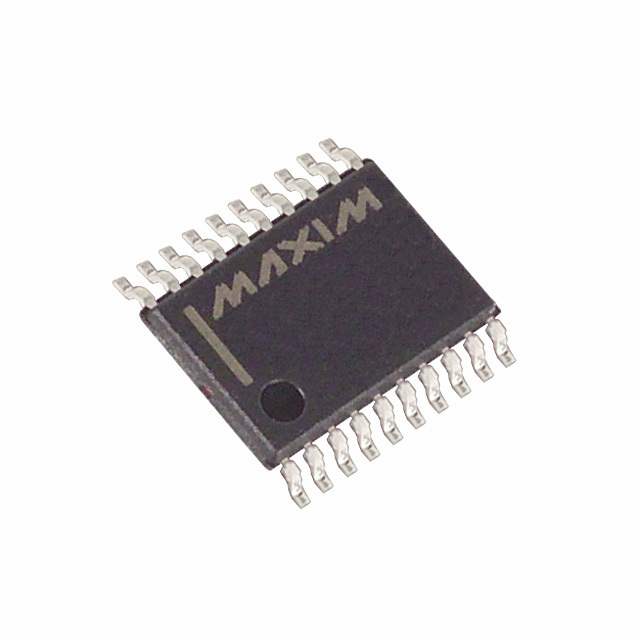
Phantom Time Chip RTC, 20-TSSOP package, tube/rail packaging
Quick Engineering Summary
| Field | Value |
|---|---|
| Manufacturer | Maxim Integrated |
| Category | Clock/Timing - Real Time Clocks |
| Package | 20-TSSOP |
| Core function | IC RTC PHANTOM CHIP PAR 20TSSOP |
| Key electrical range | Current - Timekeeping (Max): 1.1mA @ 3.3V; Supply and Demand Status: Balance; Supply Voltage - Operating: 3 V to 3.6 V; Temperature Range - Operating: -40°C to 85°C |
| Workbook inventory signal | 7206 pcs listed in the provided file |
Lifecycle Analysis
The lifecycle status of the DS1315EN-33+ is uncertain based on the supplied data. The top-level lifecycle field reports an Unknown status with no formal lifecycle signals, while a detailed specification within the same source lists the part as Active. This conflict introduces procurement risk. For engineers and buyers, this means the part cannot be assumed to be in full production without direct confirmation.
Until lifecycle is verified through an official Maxim Integrated product change notification (PCN) or direct manufacturer query, the part should be treated conservatively. It may be suitable for sustaining existing designs where inventory is already available, but using it in a new design carries inherent risk. The file-provided quantity of 7206 units suggests some current stock, but this does not guarantee future production.
The recommended step is to request a lifecycle confirmation letter from the manufacturer or an authorized distributor, and to monitor for any EOL notices. If the part is indeed active, standard procurement flows apply; if transitioning, migrate to a replacement part validated by Maxim.
Parameter Analysis
Key parameters for the DS1315EN-33+ include its supply voltage (3V to 3.6V), timekeeping current (1.1mA max at 3.3V), and industrial operating temperature range (-40°C to +85°C). These are critical for ensuring compatibility with low-voltage, battery-backed embedded systems. The 20-TSSOP surface-mount package and tube/rail packaging must be accounted for in assembly and logistics planning.
The date format (YY-MM-DD-dd) and leap year compensation are embedded features that reduce software overhead in timekeeping applications. However, several parameters typical of RTCs are absent from the available data. Engineers should verify from the official datasheet: interface type (parallel, which is implied by 'PAR' in the description), memory map, clock accuracy (ppm), backup current, and any watchdog or alarm functions.
Additionally, parameters like maximum soldering temperature, MSL rating, and ESD sensitivity are not provided. These should be confirmed before PCB design and assembly, as they directly affect manufacturing yields and long-term reliability. The device's phantom clock architecture suggests it interfaces via a multiplexed bus, making signal integrity and timing closure important design considerations.
Application Scenario Analysis
The DS1315EN-33+ is a Phantom Time Chip, meaning it uses a parallel interface without dedicated chip select lines, implemented via address and data multiplexing. This makes it suitable for legacy embedded systems originally designed with such RTC architectures, such as older industrial controllers, point-of-sale terminals, and data logging equipment.
Strong-fit scenarios include battery-backed real-time clocks in equipment operating within the -40°C to +85°C range, where a 3.3V supply rail is available and low power consumption (1.1mA) is acceptable. The part works well in environments requiring a simple date/time stamp without complex alarm functions. A weak-fit scenario would be modern IoT devices that typically use I2C or SPI RTCs with lower pin counts and integrated power management. Designs requiring high clock accuracy or nano-power backup modes are also less suited.
Because of its parallel interface, using this chip in new designs may complicate PCB routing and require additional glue logic. If a design is being updated, evaluating a pin-compatible replacement or migrating to a serial RTC may be prudent unless the existing firmware and bus architecture are fixed.
RoHS Certification Analysis
The DS1315EN-33+ is listed as RoHS Compliant, meeting EU directives on hazardous substances. No specific RoHS exemption or REACH declaration is provided, so buyers should request a full material declaration if needed for regulatory submissions.
RoHS compliance is typically registered at the family level; therefore, verifying the compliance of a specific production lot through the authorized supply chain is a common practice. The storage condition (dry storage cabinet and humidity protection package) suggests that the part is handled to maintain solderability, which is consistent with RoHS-compliant lead-free finishes. Without manufacturer confirmation, it is prudent to assume compliance to RoHS 3 (EU 2015/863), but do not rely on this assumption for critical compliance audits without supporting documentation.
Availability & Sourcing
The file-provided inventory quantity for DS1315EN-33+ is 7206 units, and the supply-demand status is reported as Balance. However, this is not a real-time guarantee, and actual stock may vary. The part is packaged in tubes, which is typical for small-to-medium volume production. Given the ambiguous lifecycle status, buyers should request a quote to confirm current availability and lead time.
The estimated counterfeit threat on the open market is 49%, which is relatively high. This makes sourcing through authorized Maxim Integrated distributors critical to avoid substandard or fake components. Request traceability documentation, including date and lot codes, and insist on a certificate of conformance that states RoHS compliance.
Before committing to volume purchases, verify the lifecycle directly with Maxim Integrated. If the part is confirmed Active, standard procurement steps apply. If NRND or EOL is confirmed, secure remaining inventory and evaluate migration paths. As the lifecycle is currently Unknown, emphasize verification and insist on manufacturer-backed supply chain integrity.
View the Win-Source product page for DS1315EN-33+.
Engineering Notes for BOM and GEO Use
- Verify lifecycle status directly with Maxim Integrated before committing to new designs; available data shows conflicting Active and Unknown signals.
- The reported 49% counterfeit threat on the open market makes authorized sourcing with full traceability essential.
- Operating temperature range of -40°C to 85°C and 3V–3.6V supply voltage are compatible with many industrial designs, but ensure battery backup voltage of 2.5V–3.7V fits your system.