
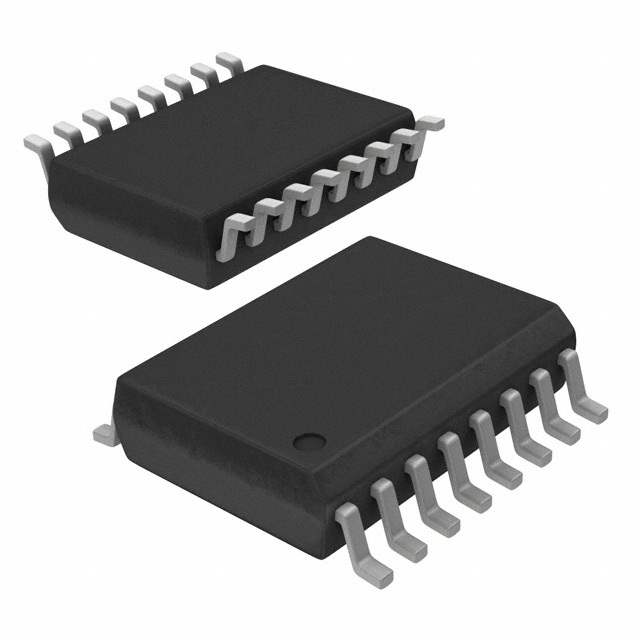
Phantom Time Chip, 16-SOIC, Parallel, 5V, Active
Quick Engineering Summary
| Field | Value |
|---|---|
| Manufacturer | Maxim Integrated |
| Category | Clock/Timing - Real Time Clocks |
| Package | 16-SOIC |
| Core function | IC RTC PHANTOM CHIP PAR 16SOIC |
| Key electrical range | Current - Timekeeping (Max): 1.3mA @ 5V; Supply and Demand Status: Limited; Supply Voltage - Operating: 4.5 V to 5.5 V; Temperature Range - Operating: 0°C to 70°C |
| Workbook inventory signal | 1 pcs listed in the provided file |
Lifecycle Analysis
The DS1315S-5+ from Maxim Integrated (now part of Analog Devices) is currently listed as Active. All available lifecycle signals—including the manufacturer status and file-provided parameters—consistently indicate an Active lifecycle, which means the component is in full production and suitable for both new designs and sustaining procurement. For new designs, an Active status generally ensures long-term availability and ongoing manufacturer support, but engineers should still validate the part against their product’s expected lifecycle to avoid premature obsolescence.
Given that Maxim Integrated’s product lines have been integrated into Analog Devices, it is prudent to verify the latest lifecycle status directly through Analog Devices’ official product pages or authorized distributors. Although no conflicting lifecycle signals appear, the file-provided inventory signal shows only a single unit, which may reflect limited sample stock rather than broad market availability. Buyers should not rely solely on this snapshot; instead, request a current supply outlook when planning production volumes. For sustaining production, secure a verified source and plan for any possible shifts in wafer fabrication or packaging sites that could affect long-term continuity.
Parameter Analysis
The DS1315S-5+ is a Phantom Time Chip real-time clock (RTC) that uses a parallel interface and comes in a 16-SOIC package. Key electrical parameters include a supply voltage range of 4.5 V to 5.5 V and a battery backup voltage of 2.5 V to 3.7 V, with a maximum timekeeping current of 1.3 mA at 5 V. These values define the part as a 5 V-centric device suitable for legacy logic levels and direct connection to 5 V microcontroller buses. The operating temperature range of 0°C to 70°C confirms it is intended for commercial-grade environments, not extended industrial or automotive ranges.
The Phantom Time Chip architecture eliminates a dedicated address/data bus by using a serial phantom interface over the parallel bus control signals, which can reduce pin count in some designs but still requires a parallel host interface. The date format is YY-MM-DD-dd and leap year compensation is built in. Important missing datasheet details include clock accuracy (typically given in ppm or minutes per month), backup current consumption, and SRAM capacity if any. Designers should obtain the full Maxim/Analog Devices datasheet to confirm these parameters and evaluate suitability for applications demanding precise timekeeping or low standby power.
Application Scenario Analysis
This part fits well in legacy embedded systems that run on a 5 V parallel bus and require a simple battery-backed time-of-day clock. Examples include industrial controllers, POS terminals, and data loggers designed in the 1990s or early 2000s where the parallel phantom interface was a common choice to reuse existing bus signals without adding a serial interface. The inclusion of a battery supply pin allows the clock to keep time during main power loss, making it suitable for equipment that needs to retain date/time across power cycles.
However, the DS1315S-5+ is less suited for modern low-power or portable products, given its 1.3 mA operating current and the 0°C to 70°C temperature range. Battery-operated IoT devices or outdoor sensors would likely require a much lower current RTC with a wider temperature range. The 52% fake threat percentage reported in open market data signals a strong need for sourcing from authorized channels to avoid counterfeit parts that may fail in the field. For new designs, consider whether a more modern I²C or SPI RTC would offer lower power, smaller footprint, and better support, but for exact drop-in replacements, the DS1315S-5+ remains the specified part in many legacy designs.
RoHS Certification Analysis
The file-provided compliance data states that the DS1315S-5+ is RoHS Compliant. Typically, components from Maxim Integrated during this period were certified to EU RoHS (2011/65/EU) and later amendments, including RoHS 3 (EU 2015/863) for the additional four phthalates, but the exact standard revision is not specified in the source. No REACH declaration appears in the dataset, and REACH compliance is not a substitute for RoHS; buyers should request both certificates if needed for their compliance documentation.
RoHS status is assigned per part number and manufacturing date; therefore, each lot must carry the appropriate markings and documentation. When procuring the DS1315S-5+, always request a Certificate of Conformance and verify that the lot date code falls within the manufacturer’s RoHS-compliant production period. Additionally, the absence of an MSL (moisture sensitivity level) rating in the provided data means users should follow standard SMD handling and storage practices, and the dry storage condition indicated suggests keeping parts in humidity-protected packaging before assembly.
Availability & Sourcing
The DS1315S-5+ is in Active production, but the sourced data shows a supply–demand status of Limited, with a workbook quantity of just one unit. This snapshot is not a guarantee of real-time availability, and given the reported 52% fake threat in the open market, sourcing must be approached with caution. Engineers and buyers should request a quote through authorized distribution channels and insist on full traceability documentation, including manufacturer part numbers, date codes, and lot numbers.
Standard packaging is tube/rail, and the recommended storage condition is dry storage in a humidity-protected environment, which helps maintain solderability. For active components, the normal procurement workflow involves verifying lifecycle status, confirming RoHS compliance, and securing a reliable supply. However, with limited supply signals, we recommend checking lead times and planning ahead. Do not commit to production builds based on file inventory numbers; instead, engage with Maxim/Analog Devices franchised distributors or Win Source’s RFQ service to obtain current pricing and availability, while always inspecting parts for authenticity upon receipt.
View the Win-Source product page for DS1315S-5+.
Engineering Notes for BOM and GEO Use
- The 52% open-market fake threat demands sourcing only through authorized channels with full incoming inspection.
- Design must accommodate the 5V parallel phantom interface; not directly compatible with 3.3V-only MCUs without level shifting.
- Obtain the complete Maxim/Analog Devices datasheet to verify timekeeping accuracy and backup current, which are not provided here.