
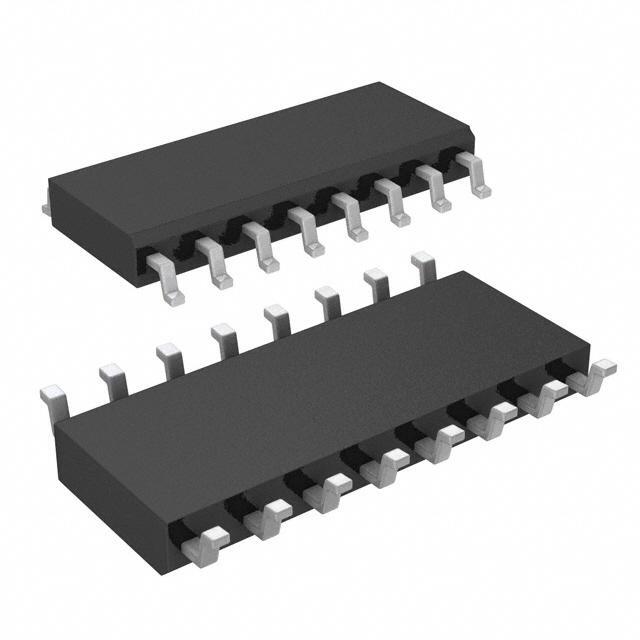
EOL I2C clock/calendar IC with alarm, leap year, and square wave output. Verify availability before design-in.
Quick Engineering Summary
| Field | Value |
|---|---|
| Manufacturer | Maxim Integrated |
| Category | Integrated Circuits (ICs) |
| Package | 16-SOIC (0.295", 7.50mm Width) |
| Core function | IC RTC CLK/CALENDAR I2C 16SOIC |
| Key electrical range | Current - Timekeeping (Max): 0.6μA @ 1.3V ~ 1.8V; Operating Temperature: -40°C ~ 85°C; Voltage - Supply: 1.8V ~ 5.5V |
| Workbook inventory signal | 41120 pcs listed in the provided file |
Lifecycle Analysis
The DS1337C is confirmed End-of-Life (EOL) by the manufacturer, with all lifecycle signals aligning to EOL status. This means Maxim Integrated has discontinued production, and no new orders are being accepted for this part number. For new designs, engineers must avoid basing BOMs on the DS1337C, as long-term availability cannot be guaranteed. For existing production lines, it is critical to assess remaining inventory and initiate a last-time buy if still possible through authorized distribution channels.
The supplied file-based inventory indicates approximately 41,120 units available, but this figure is not a real-time guarantee and may represent total available stock across various sources, including non-authorized channels. Procurement teams should verify actual stock levels and date codes directly with suppliers. Since the part is EOL, there is a risk that remaining inventory is limited or of mixed date codes, which can affect shelf life and reliability in sensitive applications.
Designers should consider functional replacements or pin-compatible alternatives from Maxim Integrated or other manufacturers. However, no direct substitutes are provided here, so re-evaluation of the RTC subsystem will be necessary. Always check manufacturer PCN and EOL notices for the official last buy date and any recommended migration paths.
Parameter Analysis
Key parameters for the DS1337C include its wide supply voltage range of 1.8V to 5.5V, which allows operation from a variety of system power rails, including directly from a Li-Ion battery. The maximum timekeeping current of 0.6µA at 1.3V to 1.8V indicates extremely low power consumption in battery-backed mode, making it suitable for always-on clock applications where power efficiency is critical. The I2C/2-wire serial interface simplifies integration with microcontrollers, but designers must verify bus capacitance and pull-up resistor values for reliable communication at the desired clock speed.
Additional features such as an alarm function, leap year compensation, and square wave output add utility for periodic wake-up events or system time synchronization. The device operates over the industrial temperature range of -40°C to 85°C, which covers most embedded and commercial environments. However, if extended temperature performance is needed, engineers should verify if an equivalent grade exists.
Critical missing datasheet parameters that should be confirmed from the original Maxim datasheet include: I2C timing specifications (rise/fall times, clock frequency limits), crystal oscillator characteristics (load capacitance, drive level), and accuracy over temperature. These details are essential for proper circuit design and should be validated before integrating this device.
Application Scenario Analysis
The DS1337C fits well in applications requiring a basic real-time clock with I2C interface and low standby current. Strong-fit scenarios include battery-backed RTC functions in microcontroller-based systems, data loggers, network-attached devices, and industrial automation equipment where accurate timekeeping is needed even during power loss. The built-in alarm can generate periodic interrupts for time-based events, while the square wave output can serve as a clock reference or heartbeat.
Weak-fit scenarios include applications that demand high timing accuracy over wide temperature ranges without external calibration, as no onboard temperature compensation is mentioned. Also, designs requiring high-speed I2C (above 400 kHz) or those needing non-volatile RAM may find the DS1337C lacking. The 16-SOIC package is surface-mount, so it is not suitable for through-hole prototyping without an adapter.
Given the EOL status, this part should only be considered for sustaining existing products where a last-time buy has been executed or where exact replacements are not yet required. For new designs, selecting an active RTC from the manufacturer’s current portfolio is strongly recommended.
RoHS Certification Analysis
The DS1337C is listed as RoHS Compliant according to the supplier data. This indicates that the part meets the requirements of the EU Restriction of Hazardous Substances directive. However, the specific directive version (e.g., 2011/65/EU or EU 2015/863) is not provided, so assume general compliance with the applicable directive at the time of manufacture. Since the part is EOL, it is likely that the compliance certificate corresponds to the original production era and may not explicitly cover later directive amendments unless the manufacturer has updated its certification.
For procurement purposes, it is advisable to request a full material declaration or RoHS certificate of conformance from the distributor, especially if the part is intended for markets requiring RoHS 3 (EU 2015/863) compliance, which adds four phthalates. Lot-level documentation may be available for recently manufactured units, but older stock may only have family-level certifications.
REACH status is not mentioned in the source data, so if REACH compliance is needed, this must be verified separately. Similarly, no MSL (moisture sensitivity level) rating is provided; for surface-mount assembly, confirm MSL and recommend appropriate storage and baking procedures to avoid moisture-related reflow defects.
Availability & Sourcing
As an EOL component, the DS1337C requires careful sourcing to avoid counterfeit or substandard parts. The file-provided inventory indicates a quantity of 41,120 units, but this is not a real-time figure and may aggregate stocks from multiple sources. Buyers should request a quote to confirm current availability, packaging (tube), and date/lot code information. Given the EOL status, quantities may be limited, and lead times are unpredictable.
It is essential to obtain traceability documentation and a certificate of conformance to verify authenticity and compliance. For critical applications, additional incoming inspection such as visual checks and functional testing of samples may be warranted. Since the part is no longer manufactured, consider sourcing from authorized distributors with verified excess stock programs or directly from Maxim Integrated’s remaining inventory if available.
Engineers and buyers should also evaluate the total cost of ownership, including the risk of future shortages. For production runs, securing a one-time buy of the required quantity plus spares is advised. Explore migration to an active pin-compatible or functional replacement to ensure long-term supply continuity. Contact a sourcing specialist to assist in locating stock or suggesting alternatives that meet your system requirements.
View the Win-Source product page for DS1337C.
Engineering Notes for BOM and GEO Use
- The DS1337C is End-of-Life: do not use in new designs. Secure existing stock and plan a migration to an active replacement.
- Verify the exact voltage supply range and I2C timing compatibility with your system; timekeeping current is only 0.6µA at low voltage, making it suitable for battery-backed applications.
- Confirm RoHS compliance and request a certificate of conformance when procuring, especially for international shipments.