
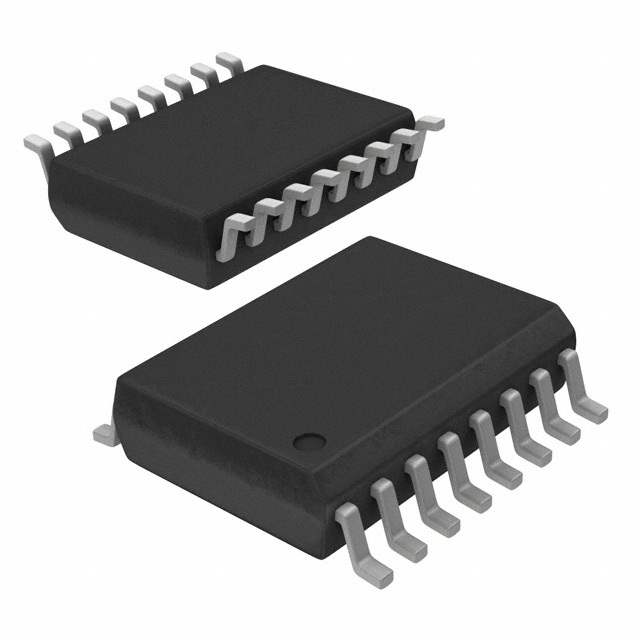
I2C clock/calendar RTC from Maxim Integrated, 16-SOIC, low-power timekeeping.
Quick Engineering Summary
| Field | Value |
|---|---|
| Manufacturer | Maxim Integrated |
| Category | Clock/Timing - Real Time Clocks |
| Package | 16-SOIC |
| Core function | IC RTC CLK/CALENDAR I2C 16SOIC |
| Key electrical range | Current - Timekeeping (Max): 0.6μA @ 1.3V to 1.8V; Supply and Demand Status: Limited; Supply Voltage - Operating: 1.8 V to 5.5 V; Temperature Range - Operating: -40°C to 85°C |
| Workbook inventory signal | 41120 pcs listed in the provided file |
Lifecycle Analysis
The DS1337C# is reported as Active with all lifecycle signals aligned. This status indicates the part is in full production, supported for new designs, and maintained for sustaining production. Engineers and buyers can integrate it into long-life programs with low risk of unexpected discontinuation. However, as with any component, it is good practice to monitor manufacturer notifications and consider second sources for critical paths.
Distributor data lists a file-provided inventory quantity of 41,120 units, suggesting ready availability in the channel. This figure is not a real-time live stock promise, so design planning should include lead time confirmation through an RFQ process. Since the part is popular with high demand, securing allocation early may help avoid line-down situations.
For high-reliability or regulated applications, request an up-to-date production lifecycle certificate from Maxim Integrated (now part of Analog Devices) at procurement gate. No lifecycle conflicts are present in the source data, but documentation revalidation before volume orders remains a prudent step.
Parameter Analysis
The DS1337C# combines a clock/calendar function with I2C serial interface in a 16-SOIC package. The most decision-critical parameters include the wide supply voltage range of 1.8 V to 5.5 V and the extremely low timekeeping current of 0.6 µA max at 1.3 V to 1.8 V. These make the IC suitable for battery-backed systems where a coin cell must maintain time for years during power loss. The operating temperature range of -40°C to 85°C covers many industrial and outdoor environments.
Equally important are the integrated features: an alarm function, automatic leap year compensation, and a programmable square wave output. The date format (YY-MM-DD-dd) and I2C interface simplify firmware integration. However, the source data does not specify RTC accuracy (ppm) or the clock frequency stability over temperature, which must be verified directly from the manufacturer datasheet for timing-critical designs. I2C bus speed and capacitive loading limits should also be confirmed.
Before committing to layout, verify the 16-SOIC land pattern and moisture sensitivity level (MSL). The maximum timekeeping current at the upper end of the supply range is not listed; it is prudent to request the datasheet or characterize this if operating near 5.5 V. The lack of a dedicated battery input pin suggests that the device manages power from the main supply and external switching, so review the reference design closely.
Application Scenario Analysis
This RTC fits best in embedded systems that must maintain a time-of-day calendar through power cycles and brownouts. Typical strong-fit applications include smart meters, industrial automation controllers, medical monitors, point-of-sale terminals, and data loggers where low backup power consumption is critical. The 0.6 µA timekeeping current makes it suitable for designs powered by a small backup battery for years.
The part is less suited for systems requiring sub-second synchronization to network time or high immunity to temperature-induced drift. Without a stated frequency accuracy specification, precision timing applications such as telecommunication line cards or GPS-based reference designs may require an external temperature-compensated oscillator. Also, the 16-SOIC form factor, though widely used, may not suit ultra-compact wearables or space-constrained PCBs where WLCSP or DFN packages are preferred.
When evaluating this part for portable consumer devices, note the high counterfeit risk reported (47% in open market). Prototyping and first-article inspection should include functional testing of the I2C interface, alarm output, and oscillator startup at temperature extremes to mitigate the risk of non-genuine units entering the production cycle.
RoHS Certification Analysis
The DS1337C# is listed as RoHS Compliant, which under typical interpretations means it meets the EU RoHS Directive for the restriction of hazardous substances. The source data does not indicate a specific RoHS revision, but current procurement should assume compliance to RoHS 3 (EU 2015/863) unless older documentation proves otherwise. Because the compliance status is presented at the part-number level rather than with individual lot data, it is wise to request a certificate of compliance for each shipment.
No explicit REACH statement appears in the supplied data. Buyers must note that RoHS compliance does not automatically cover REACH SVHC obligations; if European Union distribution is planned, a full material declaration should be obtained from the manufacturer or authorized distributor. Halogen-free status and moisture sensitivity level (MSL) are not provided, so these should be clarified during the RFQ process.
For defense or high-reliability sectors, verify that the RoHS compliance includes lead-free termination finish suitable for your assembly process (e.g., tin plating vs. NiPdAu). The storage condition noted—dry storage cabinet and humidity protection package—suggests handling per standard SMD moisture precautions; ask the supplier to confirm the MSL rating and bake requirements before reflow.
Availability & Sourcing
The DS1337C# is available through channel partners like Win Source, with a file-reported stock quantity of 41,120 units. The supply-and-demand status is noted as Limited, so procurement teams should treat availability as dynamic and request current lead times when planning production schedules. Packaging is reel (TR), standard for automated assembly, but confirm with the distributor whether partial reels or cut tape options exist for prototyping.
A significant sourcing concern for this RTC is the open-market counterfeit threat rated at 47%. Mitigation strategies include sourcing only from manufacturer-authorized distributors or trusted resellers, requiring full traceability documentation, and performing incoming inspection that verifies date/lot codes against the manufacturer’s shipment records. Visual inspection of SOIC marking consistency and I2C functional screening can further protect the supply chain.
To obtain current availability and formal compliance certificates, buyers should submit an RFQ specifying the needed quantity, target price for reference (without guaranteed pricing), and any additional requirements such as RoHS/REACH certifications, MSL documentation, and country of origin. Since the lifecycle is Active, the primary sourcing action is to quote, secure allocation, and validate compliance documentation before the first production run.
View the Win-Source product page for DS1337C#.
Engineering Notes for BOM and GEO Use
- Verify timekeeping current at your operating voltage to ensure battery life meets system requirements.
- Counterfeit risk is high (47%); use traceable sourcing and request date/lot codes.
- Confirm operating temperature range alignment with your end equipment, especially outdoor or industrial deployments.