
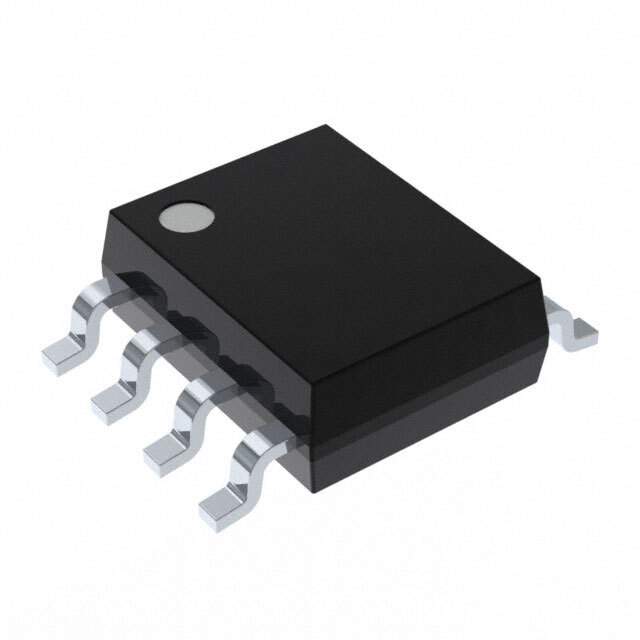
EOL status with high risk level — verify authenticity and secure inventory for existing designs.
Quick Engineering Summary
| Field | Value |
|---|---|
| Manufacturer | Maxim Integrated |
| Category | Clock/Timing - Real Time Clocks |
| Package | 8-SOIC |
| Core function | IC RTC CLK/CALENDAR I2C 8SOIC |
| Key electrical range | Current - Timekeeping (Maximum): 0.6μA at 1.3V ~ 1.8V; Supply and Demand Status: Limited; Supply Voltage (V): 1.8V ~ 5.5V; Temperature Range - Operating: -40°C ~ 85°C |
| Workbook inventory signal | 100000 pcs listed in the provided file |
Lifecycle Analysis
The DS1337S from Maxim Integrated is in the EOL (End Of Life) lifecycle stage, confirmed by multiple signals. This status means the part is no longer manufactured, and authorized supply channels are depleted. Engineers must avoid using the DS1337S in new designs, as long‑term availability cannot be guaranteed, and no new orders will be accepted by the manufacturer.
For sustaining production, immediate action is required. The risk level is high due to the complete cessation of production and the significant counterfeit threat (72 pct.) in the open market. Any existing inventory must be secured quickly, but even file‑provided quantities should be treated with caution—they are not real‑time and may already be allocated.
Before committing to a last‑time buy or long‑term sourcing arrangement, re‑validate lifecycle status directly with Maxim Integrated and confirm that the stock being purchased comes from a traceable, authorized source. This step is critical to avoid procuring non‑functional or non‑compliant parts that can disrupt production and compromise product reliability.
Parameter Analysis
Key parameters for the DS1337S include its wide supply voltage range of 1.8V to 5.5V, which supports both legacy 5V and modern 1.8V systems, reducing the need for level shifters. The maximum timekeeping current of 0.6µA at 1.3V–1.8V is crucial for battery‑backed applications, enabling long battery life in portable or always‑on equipment.
The I2C (2‑Wire Serial) interface is standard for embedded designs, simplifying integration with microcontrollers while offering multi‑device bus capability. The operating temperature range of -40°C to 85°C guarantees reliable operation in industrial environments. Built‑in features such as alarm, leap year compensation, and square wave output cover common timekeeping needs without external components.
However, several critical parameters are missing from the provided data and must be verified in the official Maxim DS1337S datasheet. These include backup battery input voltage and switchover behavior, timekeeping accuracy (ppm), and the detailed register map. Additionally, confirm the exact 8‑SOIC package dimensions and footprint to ensure PCB compatibility before placing orders.
Application Scenario Analysis
The DS1337S is suitable for applications requiring a basic serial real‑time clock with low‑power operation. A strong fit includes industrial controllers and data loggers that need accurate time‑stamping with battery backup, where the 0.6µA timekeeping current and -40°C to 85°C range are decisive. Consumer electronics like set‑top boxes or white goods also benefit from the I2C interface and alarm functions.
In medical or critical infrastructure equipment, the part could serve as a secondary time reference, but the lack of published accuracy figures and the EOL status make it a weak fit for new designs there. High‑precision timing systems such as network servers or GPS‑disciplined clocks typically require better than typical crystal‑based accuracy, making the DS1337S unsuitable without additional precision verification.
Designs that depend on extended temperature ranges beyond 85°C or that need non‑volatile RAM (NVSRAM) integrated with the RTC should look to alternative parts, as the DS1337S lacks these extended specifications. Always confirm the exact feature set with the datasheet, especially regarding the alarm interrupt output configuration and square‑wave frequency options.
RoHS Certification Analysis
The RoHS compliance status of the DS1337S is inconsistent. The top‑level compliance record states RoHS Compliant, but one specification entry explicitly lists RoHS Non‑Compliant. This conflict likely stems from data source discrepancies or mixed inventory from different production periods, a common challenge with EOL parts obtained from multiple channels.
With MSL Level 1 (unlimited), the device has no special moisture sensitivity handling requirements, but RoHS certification must be clarified before procurement. The manufacturer’s original compliance documentation should be requested for the specific date/lot code to ensure adherence to EU RoHS directive 2015/863 (RoHS 3) or the applicable regulation at the time of manufacture.
Given the high counterfeit threat, RoHS verification becomes even more important. Non‑compliant parts can lead to regulatory failures and rework costs. Buyers should insist on a certificate of compliance from the distributor and, ideally, cross‑check with Maxim Integrated’s environmental compliance records for the DS1337S product family.
Availability & Sourcing
Sourcing the Maxim Integrated DS1337S requires a cautious, verification‑heavy procurement strategy due to its EOL status and 72% fake threat in the open market. The file‑provided inventory quantity of 100,000 pieces is a point‑in‑time figure and must not be considered a real‑time guarantee. Availability can change rapidly, and these numbers may include non‑returnable or allocated stock.
Begin by requesting a formal quote to confirm current stock and lead time. Insist on full traceability, including manufacturer date/lot codes and original packaging (tube) details. Since the part is obsolete, ensure that the supplier can provide a manufacturer‑issued EOL notice and evidence of authorized distribution to mitigate counterfeit risk. Packaging type (8‑SOIC) and MSL Level 1 simplify logistics, but visual inspection and sample testing are recommended before full‑scale purchase.
For long‑term production, evaluate migration to a recommended replacement from Maxim Integrated as soon as possible. While securing remaining DS1337S inventory may bridge the gap, continued reliance on an EOL part carries escalating cost, availability, and counterfeit risks. Contact an authorized distributor for both the current stock check and alternative part consultation.
View the Win-Source product page for DS1337S.
Engineering Notes for BOM and GEO Use
- Verify EOL notice from Maxim Integrated and consider migration path for new designs.
- High fake threat (72%) in open market requires authorized source traceability and batch testing.
- RoHS compliance inconsistency: declared non‑compliant in specs but compliant in summary; verify with manufacturer for current certification.