
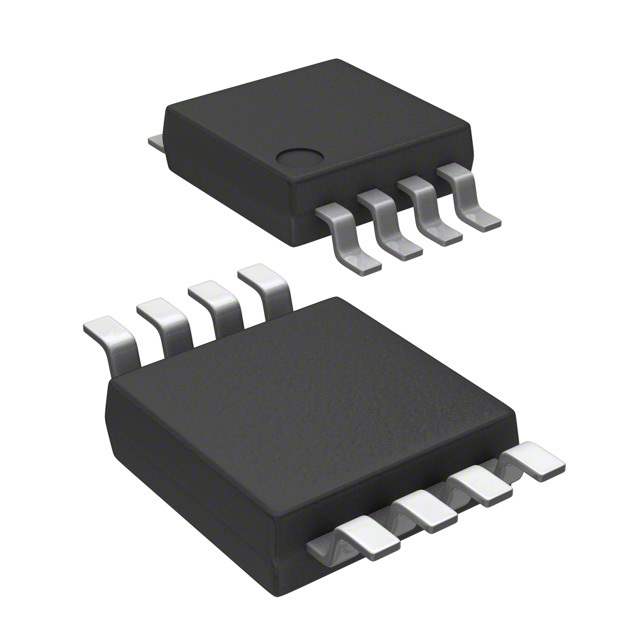
I2C Clock/Calendar with Alarm, Leap Year, and Square Wave Output in 8-uMAX Package
Quick Engineering Summary
| Field | Value |
|---|---|
| Manufacturer | Maxim Integrated |
| Category | Clock/Timing - Real Time Clocks |
| Package | 8-uMAX |
| Core function | IC RTC CLOCK/CALENDAR I2C 8UMAX |
| Key electrical range | Current - Timekeeping (Max): 0.6μA @ 1.3V to 1.8V; Supply and Demand Status: Limited; Supply Voltage - Operating: 1.8 V to 5.5 V; Temperature Range - Operating: -40°C to 85°C |
| Workbook inventory signal | 26308 pcs listed in the provided file |
Lifecycle Analysis
The DS1337U+ is in Active lifecycle status, according to all available signals from Maxim Integrated. This means the part is currently in full production and supported for both new designs and ongoing production. Engineers can incorporate the DS1337U+ into new projects with confidence, but should still obtain official product change notifications (PCNs) from the manufacturer to monitor any future changes.
Procurement risk is low for this part because lifecycle data is consistent and shows no indication of approaching NRND or EOL. The file-provided inventory quantity of 26,308 units suggests a healthy supply base, though it is not a real-time guarantee. When planning for production, verify current availability directly with authorized distributors and consider the part's popularity and limited supply-demand status.
For long-term programs, it is advisable to periodically revalidate the lifecycle status with Maxim Integrated and maintain a second-source strategy if possible. Since the DS1337U+ is a common-used part, alternative supply channels are likely available, but always prioritize authorized sources to avoid counterfeit risks.
Parameter Analysis
Key parameters for the DS1337U+ include its wide operating voltage range of 1.8V to 5.5V, which allows direct connection to a variety of system supplies without level translation. The maximum timekeeping current of 0.6µA at 1.3V to 1.8V makes it suitable for low-power and battery-backed applications where long battery life is critical. The I2C interface simplifies communication with most microcontrollers, and the integrated alarm, leap year compensation, and square wave output reduce external component count.
The -40°C to +85°C industrial temperature range covers most embedded and consumer applications, but designers must verify that the external crystal and oscillator circuit maintain accuracy across this range. The 8-uMAX (MSOP-8) surface-mount package offers a small footprint, but thermal and layout considerations should follow the manufacturer’s guidelines. Important missing datasheet details include I2C bus timing specifications, clock accuracy versus temperature, and required crystal parameters. These must be confirmed from the official datasheet before design finalization.
The part’s 38% fake threat rating in the open market emphasizes the need to source from authorized channels to guarantee parameter integrity. Counterfeit devices may deviate in current consumption, timing accuracy, or temperature range, leading to field failures.
Application Scenario Analysis
The DS1337U+ is well suited for battery-operated devices such as wearable health monitors, portable data loggers, and IoT sensor nodes that require accurate timekeeping with minimal power drain. Its I2C interface and small package make it ideal for space-constrained designs where a separate RTC is needed alongside a microcontroller. The alarm and square wave output features enable periodic wake-up from low-power states in systems that must log data or communicate on a schedule.
In industrial automation, the DS1337U+ can serve as a timebase for controllers that need to stamp events or schedule operations within a -40°C to +85°C environment. However, it is a weaker fit for applications demanding high-precision timekeeping (better than ±2ppm) or those requiring integrated non-volatile RAM, which this device does not offer. If the system must withstand extreme shock or vibration, designers should evaluate whether the crystal and package meet the required mechanical robustness.
For automotive or safety-critical applications, verify that the temperature range and long-term reliability align with mission profiles, and consider whether ASIL or similar qualifications are necessary, which the DS1337U+ likely does not provide.
RoHS Certification Analysis
The DS1337U+ is listed as RoHS Compliant, indicating it meets the restrictions on hazardous substances under the EU RoHS Directive. This status is typically at the component family level and based on manufacturer declarations. For complete assurance, especially in regulated industries, it is advisable to request a full material declaration and a certificate of compliance for the specific production lot.
No explicit exemptions are noted for this part in the source data, but standard RoHS exemptions (such as lead in glass of electronic components) may apply. The presence of a dry storage and humidity protection requirement hints at moisture sensitivity level (MSL) concerns, which should be factored into the assembly process. While RoHS compliance addresses lead-free and hazardous substance restrictions, it does not automatically cover REACH SVHC obligations. If REACH compliance is required, confirm with Maxim Integrated that the part does not contain substances of very high concern above the threshold.
For military, medical, or aerospace applications, additional environmental compliance (e.g., China RoHS, WEEE) may be necessary. Request full compliance documentation from the manufacturer or an authorized distributor before final component qualification.
Availability & Sourcing
The DS1337U+ from Maxim Integrated is a high-popularity, common-used part with an Active lifecycle status, indicating regular production. The file-provided inventory shows 26,308 units, but this is not a live quantity and must be verified by requesting a current quote. The supply-demand status is noted as limited, so plan procurement lead times accordingly and avoid relying on a single distribution channel.
When sourcing the DS1337U+, prioritize authorized distributors to mitigate the 38% open-market counterfeit risk. Request traceability documentation including date and lot codes, and ensure packaging matches the specified reel (TR) format for automated pick-and-place assembly. For prototype builds, tube or cut tape options may be available; verify with distributors. Because the part is Active, the primary sourcing action is to request a quote for the required volume and confirm lead time and compliance certificates.
For production programs, consider negotiating a supply agreement or safety stock with your distributor. Monitor any manufacturer notifications regarding lifecycle changes, as even Active parts can face allocation or end-of-life notifications with short notice. If availability tightens, alternative RTCs with similar I2C interfaces and packages may be evaluated, but verify pin compatibility and software drivers.
View the Win-Source product page for DS1337U+.
Engineering Notes for BOM and GEO Use
- Verify timekeeping current of 0.6µA at low voltage for battery-backed systems; ensure supply decoupling per datasheet.
- The 8-uMAX SMD package suits space-constrained designs; confirm footprint against manufacturer drawing before layout.
- With a 38% fake threat rating in open market, source only from authorized distributors and request full traceability documentation.