
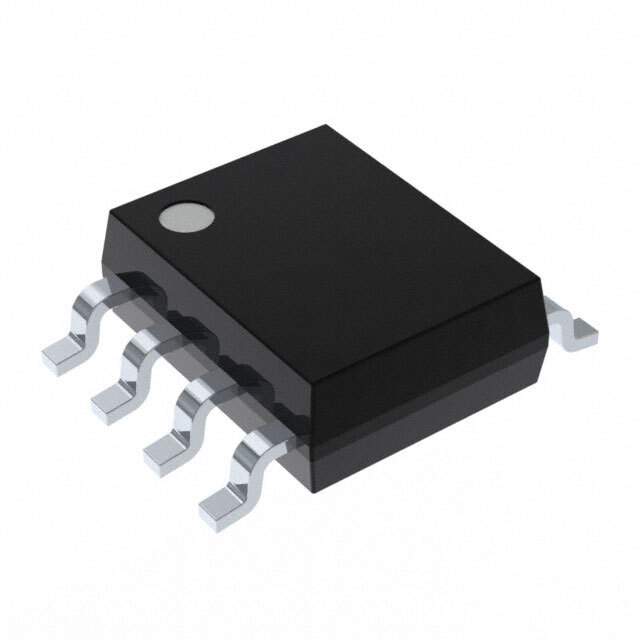
I2C clock/calendar with NVSRAM from Maxim Integrated – Active lifecycle, 8-SOIC package
Quick Engineering Summary
| Field | Value |
|---|---|
| Manufacturer | Maxim Integrated |
| Category | Clock/Timing - Real Time Clocks |
| Package | 8-SOIC |
| Core function | IC RTC CLK/CALENDAR I2C 8SOIC |
| Key electrical range | Current - Timekeeping (Max): 200μA @ 3.3V; Supply and Demand Status: Balance; Supply Voltage - Operating: 2.7 V to 5.5 V; Temperature Range - Operating: -40°C to 85°C |
| Workbook inventory signal | 25620 pcs listed in the provided file |
Lifecycle Analysis
The Maxim Integrated DS1338Z-3+ is classified as Active in all available lifecycle records, with no reported end-of-life signals. This status confirms that the device is in full production and supported for new designs. For high-reliability or long-lifecycle projects, we recommend requesting a formal lead-time and lifecycle commitment from authorized distributors.
The supply signals align with the Active status, showing a supply-demand balance and indicating that the part is commonly used with high popularity. File-provided inventory data suggests robust channel stock, but these figures are not real-time and should be validated at the time of sourcing. When integrating the DS1338Z-3+ into new production, design teams should still monitor any manufacturer notices and secure alternate sources as standard supply chain risk management.
Parameter Analysis
Key parameters for the DS1338Z-3+ include its wide main supply range of 2.7V to 5.5V and a separate battery backup voltage of 1.3V to 3.7V, enabling flexible power architecture. The maximum timekeeping current is specified at 200µA at 3.3V, which is critical for battery life estimation. The device offers 56 bytes of NVSRAM, allowing storage of system configuration or logged data even when main power is removed. Supporting features like leap year compensation and a programmable square wave output add integration flexibility.
The I2C interface, industrial temperature range (-40°C to 85°C), and surface-mount 8-SOIC package make this RTC suitable for a wide variety of designs. However, the datasheet does not itemize specific I2C speed modes, clock accuracy drift over temperature, or power-on reset characteristics. Engineers should obtain the full Maxim Integrated datasheet to verify protocol timing and internal oscillator stability before finalizing layout and firmware. Cross-check the maximum I2C bus capacitance and pull-up resistor requirements as they are not listed here.
Application Scenario Analysis
The DS1338Z-3+ excels in applications that require a simple, battery-backed time-of-day clock with modest non-volatile data storage. Typical uses include embedded systems, portable instruments, consumer electronics, and industrial controllers where calendar functions and scheduled events are needed. The square wave output can serve as a periodic wake-up or system clock reference, and the small 56B NVSRAM is sufficient for storing a few parameters or error codes.
Scenarios where this device is a weaker fit include systems demanding high-accuracy timekeeping without external calibration, as the provided data does not specify internal oscillator drift or temperature compensation. High-speed data logging that requires sub-second timestamp resolution may also overrun the standard I2C clock/calendar update rate. For such cases, compare the DS1338Z-3+ against RTCs with integrated temperature-compensated crystal oscillators (TCXOs) or SPI interfaces for faster data transfer.
RoHS Certification Analysis
According to the supplied data, the DS1338Z-3+ is RoHS Compliant, meeting EU directives for hazardous substance restrictions. Additionally, the part is flagged as halogen-free compliant, which addresses bromine and chlorine content for environmentally sensitive applications. These certifications facilitate use in products sold in EU and other regulated markets.
It is important to note that compliance status is often granted at the device family level and may not reflect lot-specific variations. Engineers should request a certificate of conformity from the distributor for each production batch. The storage recommendation — dry cabinet with humidity protection — implies the 8-SOIC package is moisture-sensitive; verify the actual moisture sensitivity level (MSL) on the packaging label to avoid soldering issues.
Availability & Sourcing
The DS1338Z-3+ from Maxim Integrated is widely distributed and has a balanced supply-demand profile, indicating steady availability. File-provided inventory shows quantities in the tens of thousands, but these numbers are snapshots and not live stock commitments. To secure parts for production, submit an RFQ to vetted distributors, specifying required dates and quantities. Standard packaging is tube/rail, suitable for automated SMT assembly.
Because the open-market fake threat for this part is estimated at 43%, sourcing from unauthorized channels carries significant risk. Insist on full traceability, date codes within your approved window, and factory-sealed packaging. For Active parts like the DS1338Z-3+, the primary action is to obtain a competitive quote alongside compliance documentation. Also confirm that the manufacturer’s lifecycle status has not changed at the time of order due to any unforeseen product updates.
View the Win-Source product page for DS1338Z-3+.
Engineering Notes for BOM and GEO Use
- Confirm I2C bus and battery voltage compatibility within the 2.7V-5.5V operating and 1.3V-3.7V backup ranges before board design.
- Evaluate timekeeping current of 200µA max for battery runtime in portable applications and consider external crystal accuracy.
- Insist on lot-level RoHS and halogen-free certificates to mitigate the 43% open-market fake threat.