
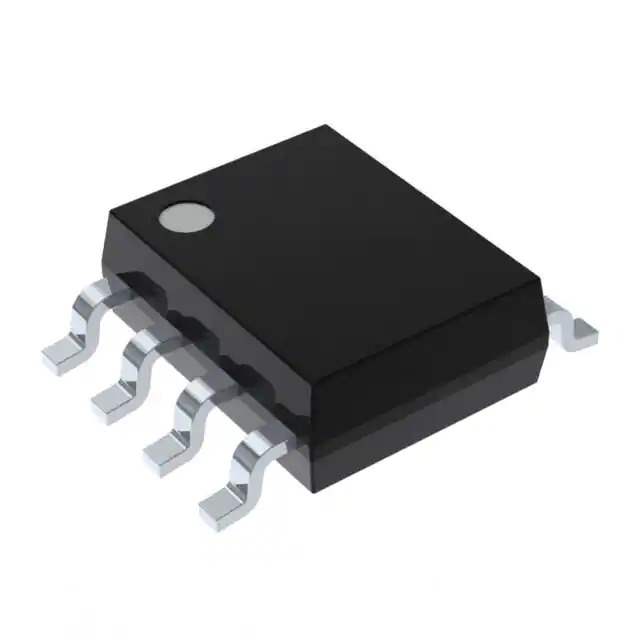
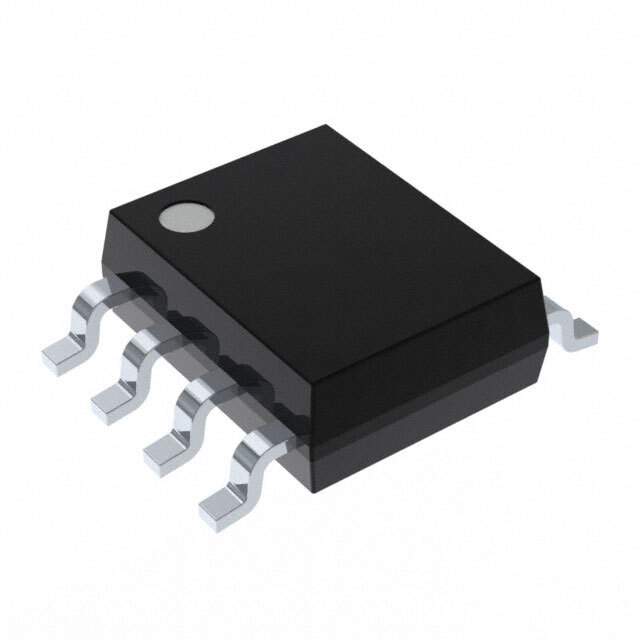
Discontinued I2C RTC with NVSRAM in 8-SOIC — verify availability and compliance before design-in or procurement.
Quick Engineering Summary
| Field | Value |
|---|---|
| Manufacturer | Maxim Integrated |
| Category | Clock/Timing - Real Time Clocks |
| Package | Tube |
| Core function | IC RTC CLK/CALENDAR I2C 8SOIC |
| Key electrical range | Current - Timekeeping (Max): 125µA ~ 200µA @ 3.63V ~ 5.5V; Temperature Range - Operating: -40°C ~ 85°C; Voltage - Supply: 3V ~ 5.5V; Voltage - Supply, Battery: 1.3V ~ 3.7V |
| Workbook inventory signal | 20228 pcs listed in the provided file |
Lifecycle Analysis
The DS1338Z-33 is officially listed as Discontinued by Maxim Integrated. This lifecycle status means the part is no longer in active production and is not recommended for new designs. The provided data includes conflicting signals, with an Excel lifecycle parameter indicating "EOL" while the primary lifecycle and product status fields both show "Discontinued". Using a conservative interpretation, the part should be treated as Discontinued. Engineering teams should avoid designing this component into new products and must assess remaining inventory for sustaining existing systems.
For sustaining production, procurement must verify current stock levels and authenticity. The file-provided inventory count of 20,228 units suggests some availability, but this figure is not a real-time guarantee. Given the high risk of counterfeit devices—a reported 50% fake threat in the open market—buyers must source through authorized channels and request date/lot code traceability. Manufacturer documentation may be required to confirm final discontinuance notices and last-time buy dates. Without such verification, the part's long-term viability is uncertain.
Parameter Analysis
The DS1338Z-33 is a clock/calendar RTC with an I2C/2-Wire Serial interface, supporting a main voltage supply of 3V to 5.5V and a battery backup voltage from 1.3V to 3.7V. Timekeeping current draw ranges from 125µA to 200µA at 3.63V to 5.5V, which is critical for low-power system budgeting. The integrated 56-byte NVSRAM provides non-volatile memory for configuration data, while features like leap-year compensation and a programmable square-wave output add functionality. The device operates over an industrial temperature range of -40°C to 85°C and is housed in an 8-SOIC surface-mount package.
Key parameters for design integration include the I2C bus timing compatibility, the exact battery switchover voltage thresholds, and the frequency accuracy of the internal oscillator. The datasheet should be consulted for details on clock accuracy (often given in ppm) and the square-wave output frequencies, as these are not specified in the provided data. Additionally, the “Programmable” field is marked as “Not Verified,” so engineers should confirm that any programmable features meet their requirements. The surface-mount package requires standard SOIC-8 PCB footprint; the MSL Level 1 rating indicates no special moisture sensitivity handling during assembly.
Application Scenario Analysis
The DS1338Z-33 is suited for embedded systems requiring a battery-backed real-time clock with simple I2C communication. Typical applications include data loggers, industrial controllers, point-of-sale terminals, medical devices, and IoT gateways where accurate timekeeping is needed during power loss. The integrated NVSRAM is useful for storing small configuration parameters or event timestamps. The industrial temperature range makes it viable for outdoor and factory-floor equipment.
However, due to its discontinued status, the DS1338Z-33 is no longer appropriate for new designs. It may still be used in sustaining production for existing products that have already qualified the part, provided reliable stock can be sourced. The conflicting RoHS data further complicates new product integration in markets requiring strict environmental compliance. Engineers evaluating replacements should consider active RTCs with similar footprints and features, such as the DS1339 (with alarms) or the high-accuracy DS3231. These alternatives offer pin-compatibility or functional upgrades while avoiding the supply chain risks of a discontinued component.
RoHS Certification Analysis
RoHS compliance for the DS1338Z-33 is contradictory in the source data. The primary compliance section lists a status of "RoHS Compliant," but a specification field lists "RoHS Non-Compliant." This discrepancy may stem from different manufacturing lots or data-aggregation errors. In addition, REACH status is recorded as "REACH Unaffected," but this does not substitute for RoHS certification. The part's MSL Level of 1 indicates unlimited floor life, which is unrelated to RoHS material content.
Procurement teams cannot rely on a blanket compliance claim and must verify RoHS status on a lot-by-lot basis when ordering. The non-compliant label in the specifications suggests that some production runs may contain restricted substances above RoHS thresholds. For products destined for the European Union or other regulated markets, this part should be treated as potentially non-compliant until proven otherwise by valid certification documents from the supplier. Exemptions are not specified, so full compliance must be confirmed. If RoHS compliance is mandatory, sourcing may need to switch to an alternative part with a clear, consistent compliance record.
Availability & Sourcing
The DS1338Z-33 is a discontinued Maxim Integrated real-time clock, and its availability is limited to residual distributor stock. The provided workbook indicates an inventory quantity of 20,228 units, but this figure is not a real-time guarantee. Procurement should issue an RFQ to confirm current stock levels, package condition (Tube, standard 100 pcs), and lead times. Given the part's lifecycle, buyers must proactively secure inventory for any sustained production needs and explore last-time-buy programs if still active.
Sourcing carries a high counterfeit risk, with a reported 50% fake threat in the open market. To mitigate this, require authorized distribution or manufacturer-direct sourcing, and insist on documentation including date codes, lot codes, and provenance. The RoHS compliance conflict demands lot-specific certification. For new designs, the recommended path is to select an alternative active RTC from Maxim Integrated or others, thereby avoiding the redesign risks and compliance uncertainties of continued reliance on a discontinued component. Quote and compliance verification are essential steps before committing this part to production.
View the Win-Source product page for DS1338Z-33.
Engineering Notes for BOM and GEO Use
- Discontinued status with high fake threat (50%) mandates careful authentication and lot-code verification from authorized sources.
- Contradictory RoHS signals require lot-specific compliance documentation before purchase for EU market shipments.
- For new designs, consider active alternatives like DS1339 or DS3231 to avoid supply chain risks.