
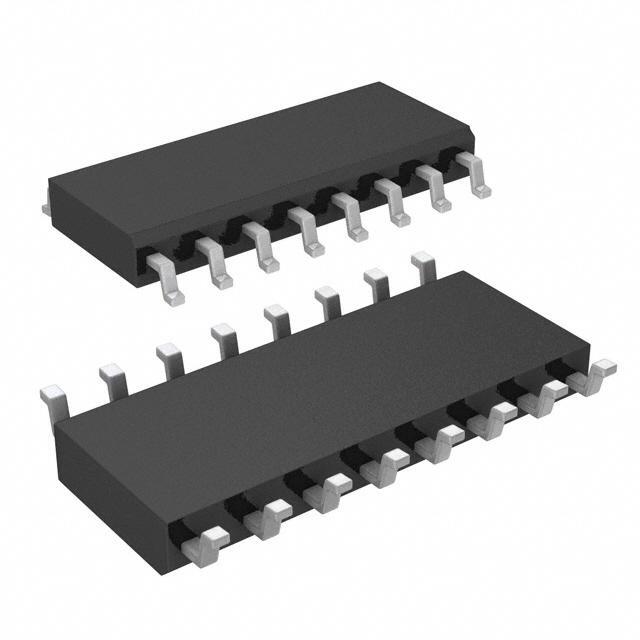
EOL Real-Time Clock with I2C Interface – Inventory and Compliance Check
Quick Engineering Summary
| Field | Value |
|---|---|
| Manufacturer | Maxim Integrated |
| Category | Integrated Circuits (ICs) |
| Package | 16-SOIC (0.295", 7.50mm Width) |
| Core function | IC RTC CLK/CALENDAR I2C 16SOIC |
| Key electrical range | Current - Timekeeping (Max): 200μA @ 5.5V; Operating Temperature: -40°C ~ 85°C; Voltage - Supply: 2.97V ~ 5.5V; Voltage - Supply, Battery: 1.3V ~ 3.7V |
| Workbook inventory signal | 80000 pcs listed in the provided file |
Lifecycle Analysis
The DS1339C-33 is classified as End-of-Life (EOL) with a part status of Obsolete. All lifecycle signals provided confirm this designation. For new designs, this part should not be considered; instead, engineers should evaluate active alternatives from Maxim Integrated or other manufacturers. In sustaining production, existing stocks may be used, but long-term availability is not guaranteed.
The workbook indicates a stock quantity of 80,000 units. This figure is a file-provided snapshot and does not reflect real-time inventory levels. Procurement teams should contact authorized distributors to verify actual availability and obtain date/lot codes. EOL components carry a high risk of counterfeit or mixed-date-code batches, so supply chain diligence is critical.
Given the high risk, a migration plan to a recommended replacement should be initiated immediately. Any purchase of remaining DS1339C-33 stock should be accompanied by full traceability documentation and manufacturer origin certificates to mitigate quality risks.
Parameter Analysis
Key parameters for the DS1339C-33 include its I2C (2-Wire Serial) interface, supply voltage range of 2.97V to 5.5V, and battery backup voltage range of 1.3V to 3.7V. The timekeeping current is specified at a maximum of 200µA with a 5.5V supply, which influences battery life in backup mode. The operating temperature range of -40°C to +85°C suits industrial applications. The 16-SOIC surface-mount package enables automated assembly.
These parameters are critical for integration. The wide supply voltage allows use in both 3.3V and 5V systems. The battery input supports a trickle charger for rechargeable cells or supercapacitors, simplifying backup circuit design. The I2C interface requires proper pull-up resistor selection and bus capacitance management. The alarm and square wave output can be used for periodic interrupts or time-stamping.
Important missing parameters that must be verified from the official datasheet include timekeeping accuracy (typically ±1–2 minutes per month), battery-backed current consumption (often lower than operating current), clock drift over temperature, alarm output drive strength, and trickle-charger resistor settings. Additionally, check the recommended crystal oscillator specifications and layout guidelines to ensure reliable start-up and frequency accuracy.
Application Scenario Analysis
The DS1339C-33 is well-suited for embedded systems requiring a battery-backed real-time clock with basic alarm and square wave output. Typical applications include industrial controllers, data loggers, utility meters, point-of-sale terminals, and medical devices. Its industrial temperature range and trickle-charger feature make it convenient for designs that need to maintain time during power loss using a small battery or supercap.
Less appropriate applications involve high-precision timekeeping where a temperature-compensated crystal oscillator (TCXO) or network synchronization is required. The DS1339 lacks an integrated crystal and relies on an external 32.768 kHz crystal, so overall accuracy depends on the crystal’s ppm rating. For designs demanding ultra-low power consumption, alternative RTCs with sub-µA timekeeping current may be more suitable. Additionally, systems requiring SPI or multiple alarm outputs would need a different part.
When considering remaining stock of this EOL device, ensure that the operating voltage, battery charger settings, and I2C address are compatible with the host system. The device’s I2C address is fixed, so bus conflicts must be avoided. Engineering teams should verify that the clock’s power-on reset and battery switchover behavior match the system’s power sequencing requirements.
RoHS Certification Analysis
The DS1339C-33 is listed as RoHS Compliant. Typically, this indicates conformance to EU RoHS Directive (2011/65/EU as amended by 2015/863), restricting lead, mercury, cadmium, hexavalent chromium, PBB, and PBDE, along with four phthalates. The 16-SOIC package is commonly available in RoHS-compliant lead-free finishes, and no exemptions are noted in the provided data.
However, the compliance status is often declared at the part family or manufacturing site level. For high-reliability procurement, it is advisable to request lot-specific RoHS certificates from the distributor. This is especially important when sourcing from surplus or broker channels, where older non-compliant batches might occasionally surface. Additionally, REACH status is not provided, so if SVHC disclosure is required, it must be obtained separately from Maxim Integrated.
Given the EOL status, any remaining stock should be assumed to be from older production runs. Verify that the date code corresponds to a period when RoHS compliance was enforced. For EU market products, a Declaration of Conformity or full material declarations can be requested to ensure no non-compliant substances are present.
Availability & Sourcing
As an EOL product with an Obsolete part status, the DS1339C-33 should be procured only for sustaining existing products or last-time-buy requirements. The provided workbook shows a quantity of 80,000 units, but this is not a guarantee of real-time stock. Engineering and purchasing teams must reach out to authorized distributors and request current availability and pricing (prices are not listed here).
When sourcing, insist on full traceability: manufacturer part number, date code, lot code, and country of origin. The part is supplied in tube packaging, which is standard for manual assembly or small-volume runs. For larger volumes, verify whether re-reeling or tape-and-reel alternatives exist. Request a Certificate of Conformance and RoHS compliance statement for each batch.
Because this is an EOL component, mitigation of supply chain risks is paramount. Secure inventory from authorized sources or reputable independent distributors with inspection processes. For new production, actively migrate to a recommended replacement from Maxim Integrated or cross-compatible device. To check current DS1339C-33 availability and receive a quote, contact our sales team with the exact quantity and delivery requirements.
View the Win-Source product page for DS1339C-33.
Engineering Notes for BOM and GEO Use
- Prioritize migration to an active RTC replacement; DS1339C-33 is obsolete and not suitable for new designs.
- Verify datasheet parameters such as backup current, timekeeping accuracy, and crystal requirements before committing to existing stock.
- Request lot-specific RoHS documentation and date/lot codes to ensure compliance and traceability when purchasing remaining units.