
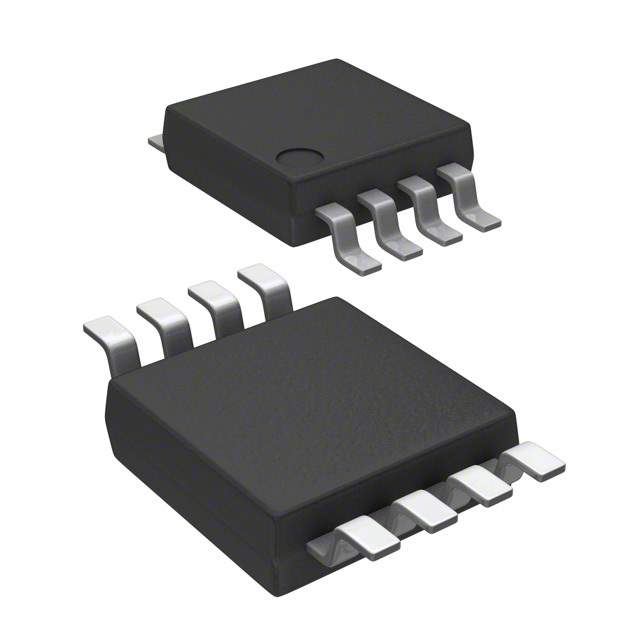
Obsolete I2C clock/calendar IC with industrial temperature range – verify availability and authenticity before use.
Quick Engineering Summary
| Field | Value |
|---|---|
| Manufacturer | Rochester Electronics |
| Category | Clock/Timing - Real Time Clocks |
| Package | 8-uMax-EP |
| Core function | IC RTC CLOCK/CALENDAR I2C 8UMAX |
| Key electrical range | Operating Temperature Range: -40°C ~ 85°C; Supply and Demand Status: Limited |
| Workbook inventory signal | 6000 pcs listed in the provided file |
Lifecycle Analysis
The DS1340U-33’s lifecycle assessment is complicated by conflicting signals. While the supplied data initially reports an ‘Unknown’ status, the part status field clearly states ‘Obsolete’. This discrepancy indicates that the original manufacturer, Maxim Integrated (now part of Analog Devices), has discontinued the device. As a result, the DS1340U-33 is no longer recommended for new designs and should only be considered for sustaining existing products where a drop-in replacement is unavoidable.
Because no formal lifecycle documentation (such as a product change notice or end-of-life announcement) is provided in the source data, procurement teams must contact Rochester Electronics or the manufacturer directly to confirm the obsolescence timeline and any last-time-buy opportunities. The risk level for this part is high, since continued availability depends entirely on residual distributor stock, and no active production is expected.
For new design projects, engineers should migrate to an alternative RTC IC with active lifecycle support. Relying on the DS1340U-33 without verified lifecycle clarity could lead to production stoppages and costly redesigns.
Parameter Analysis
Key parameters for the DS1340U-33 include its I2C serial interface, industrial operating temperature range (-40°C to 85°C), and compact 8-uMax-EP surface-mount package. The I2C bus allows easy integration with most microcontrollers, while the wide temperature range suits factory automation, outdoor equipment, and other rugged applications. The 8-uMax-EP package (essentially an 8-MSOP) saves board space but requires careful PCB layout for reliable soldering and thermal performance.
However, the provided specification list is incomplete. Critical parameters such as supply voltage range, timekeeping current, backup battery input, clock accuracy, and I2C slave address are missing. Without these, engineers cannot perform proper derating or validate the part against system requirements. The original Maxim/Analog Devices datasheet must be consulted to obtain these values.
An additional procurement parameter is the open-market fake threat level, reported at 63%. This unusually high figure makes electrical verification and visual inspection of purchased units essential. Buyers should request X‑ray or decapsulation testing from authorized distributors to rule out counterfeit devices before approving any shipment of the DS1340U-33.
Application Scenario Analysis
The DS1340U-33 is a dedicated real-time clock/calendar, making it a strong fit for legacy embedded systems that require accurate timekeeping even during power loss. Typical use cases include industrial data loggers, point-of-sale terminals, medical devices, and networking equipment that rely on an I2C-connected RTC to timestamp events. Its industrial temperature range expands its applicability to harsh environments, provided the rest of the system can support the package and interface.
Conversely, this part is a weak fit for new designs. The obsolete lifecycle status introduces unacceptable supply chain risk for volume production. Furthermore, modern microcontrollers often integrate more capable RTC peripherals with lower power consumption, reducing the need for a standalone IC. Even when an external RTC is justified, active alternatives with better accuracy (e.g., temperature-compensated oscillators) and smaller packages are readily available.
For systems originally designed around the DS1340U-33, the I2C protocol and 8‑MSOP footprint may allow a form‑, fit‑, and function‑equivalent replacement from another vendor, but no such substitute is identified in the supplied data. Any migration candidate must be validated against the full electrical and timing specifications from the original component’s datasheet.
RoHS Certification Analysis
The DS1340U-33 is listed as RoHS Compliant, meeting EU restrictions on hazardous substances. This status likely reflects the original manufacturing process at Maxim/Analog Devices, as Rochester Electronics generally maintains the compliance levels of the components they distribute. However, because the part is obsolete, the basis of the RoHS declaration may date back several years and could refer to a specific lot or family rather than every individual unit.
No other environmental compliance data is provided – no REACH statement, halogen-free designation, or moisture sensitivity level (MSL). The absence of REACH information does not affect RoHS conformity, but it means that SVHC compliance cannot be confirmed without additional investigation. For applications where full substance documentation is mandatory (e.g., automotive or medical), the buyer must request a detailed material declaration from Rochester Electronics.
Given the risk of counterfeit or long‑stored stock, even a RoHS-compliant label should be treated cautiously. Old inventory may have been subjected to non‑compliant repair or remarking. A trustworthy sourcing channel will offer up‑to‑date RoHS certificates that include the specific date and lot code, ensuring the parts still meet the required directive.
Availability & Sourcing
File-provided data suggests a limited inventory of 6,000 units of the DS1340U-33, but this is not a real‑time commitment. Because the part is obsolete, actual availability may be considerably lower, and stock may be concentrated at a single distributor. The supply and demand status is described as ‘Limited,’ reinforcing the need for immediate action if you depend on this component.
To source the DS1340U-33, submit a request for quotation (RFQ) specifying required quantity, target date codes, and packaging preferences. Given the 63% fake threat rating, insist on traceability back to the original manufacturer and request detailed inspection reports. Authorized distribution channels should provide certificates of conformance and full RoHS documentation for each lot.
Procurement teams must weigh the cost of securing and testing remaining inventory against the cost of redesigning the end product to accept a modern, active RTC. For short‑term bridge buys, negotiate a firm last‑time‑buy transaction with a reputable distributor. For any longer‑term requirement, begin evaluating alternative real‑time clocks from Analog Devices, Microchip, or NXP that offer pin‑compatible or functionally similar options.
View the Win-Source product page for DS1340U-33.
Engineering Notes for BOM and GEO Use
- Part status is Obsolete: confirm last-time-buy and EOL notices from Maxim/Analog Devices before committing to production.
- Reported 63% fake threat in the open market requires strict traceability and authentication when sourcing this DS1340U-33.
- Missing datasheet parameters (supply voltage, I2C address, timekeeping current) must be verified against original manufacturer documentation.