
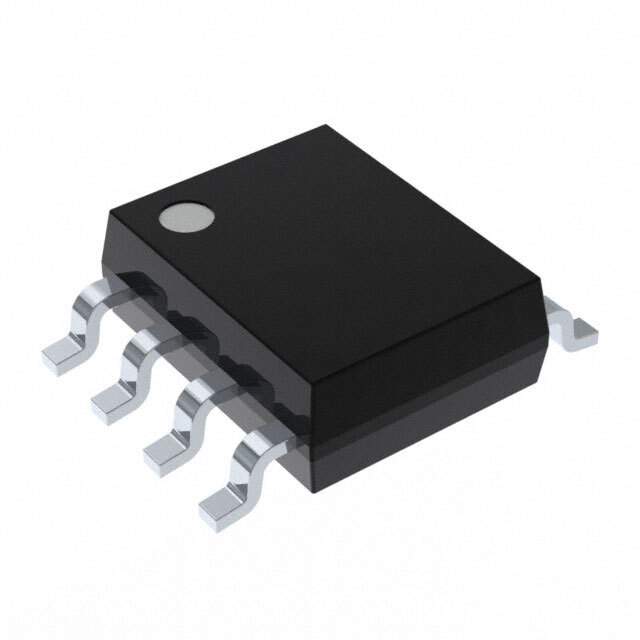
I2C clock/calendar with trickle charger, industrial temperature range, active lifecycle and RoHS compliant.
Quick Engineering Summary
| Field | Value |
|---|---|
| Manufacturer | Maxim Integrated |
| Category | Clock/Timing - Real Time Clocks |
| Package | 8-SOIC |
| Core function | IC RTC CLK/CALENDAR I2C 8SOIC |
| Key electrical range | Current - Timekeeping (Max): 125μA @ 3.3V; Supply and Demand Status: Balance; Supply Voltage - Operating: 2.7 V to 5.5 V; Temperature Range - Operating: -40°C to 85°C |
| Workbook inventory signal | 36 pcs listed in the provided file |
Lifecycle Analysis
The Maxim Integrated DS1340Z-3+ is listed as Active in all available lifecycle data. An active lifecycle status indicates that the part is in full production, with no manufacturer notice of end-of-life or not-recommended-for-new-design status. This supports its use in both new designs and ongoing production builds. However, lifecycle classifications can change, so for high-volume or long-lifecycle products it is wise to revalidate status directly with the manufacturer and to monitor product change notifications (PCNs).
The supplied file inventory shows a quantity of 36 units, but this snapshot may not reflect real-time stock. When planning procurement, obtain current availability and lead times through a formal quote. As with any semiconductor component, it is prudent to factor in potential supply constraints and to reserve safety stock if the DS1340Z-3+ is critical to your assembly schedule.
Parameter Analysis
This I2C real-time clock operates from a wide main supply voltage of 2.7 V to 5.5 V and supports a battery backup range of 1.3 V to 3.7 V. The maximum timekeeping current at 3.3 V is 125 µA, an important number for battery-life calculations. The built-in trickle charger simplifies charging a backup supercapacitor or rechargeable cell, and leap-year compensation ensures accurate long-term date tracking. The device uses an 8‑SOIC SMD package, which is easy to handle in standard reflow processes.
The supplied data lacks several parameters that may influence a design decision. Critical missing specifications include timekeeping accuracy (ppm), I2C bus speed and voltage thresholds, and any internal power-on reset behavior. Engineers should obtain the full datasheet from Maxim Integrated (now Analog Devices) to verify these details, and consider derating the timekeeping current for elevated temperatures or extended battery life requirements. The industrial temperature range of –40 °C to +85 °C suggests suitability for rugged environments, but confirmation of parameter drift over temperature should be checked against your application margins.
Application Scenario Analysis
Typical applications for the DS1340Z-3+ include any embedded system that requires accurate time and date maintenance, such as data loggers, metering equipment, portable medical devices, and consumer electronics. The trickle charger feature makes it particularly attractive for battery-backed designs that need to preserve time during power loss. Its I2C interface and wide voltage range allow integration with a variety of microcontrollers and power architectures.
In applications where precise short-term timing or very low drift is essential, this device may be less suitable without additional verification of its long-term accuracy. The part’s description as a clock/calendar rather than a high-resolution timestamp unit suggests it is intended for general-purpose timekeeping rather than sub-second event stamping. For safety-critical or medical-grade designs, additional qualification may be required, and the end-user should confirm the device’s reliability data and any relevant certifications beyond the datasheet.
RoHS Certification Analysis
According to the supplied data, the DS1340Z-3+ is RoHS Compliant. This classification implies compliance with EU Directive 2011/65/EU and its amendments, including the restriction of hazardous substances such as lead, mercury, and cadmium. However, the specific RoHS standard version (e.g., RoHS 3) is not explicitly stated, so it is advisable to request a full material declaration or certificate of compliance from the manufacturer or an authorized distributor for your procurement records.
Compliance is typically certified at the component-family level, meaning that individual lots may carry the same compliance status, but for projects that require documentation beyond the standard RoHS scope—such as REACH or halogen-free declarations—additional certificates should be obtained. When sourcing the DS1340Z-3+, verify that any compliance documents are dated and reference the specific lot or date code to ensure they apply to the parts you receive.
Availability & Sourcing
The Maxim Integrated DS1340Z-3+ is supplied in tube/rail packaging. A file-provided quantity of 36 units is noted, but this should not be considered a real-time inventory commitment. To obtain current availability, pricing, and lead times, buyers should request a formal quote. Given the active lifecycle status, the part is normally available through authorized distribution, but supply may vary depending on foundry allocation and demand.
Because the DS1340Z-3+ carries a reported open-market fake threat of 55%, it is critical to purchase through vetted, traceable channels. Insist on lot traceability and consider requesting photographic documentation or third-party authentication if sourcing from non-franchised sources. Standard storage conditions recommend a dry environment and humidity-protective packaging. For production orders, verify that all compliance and lifecycle documentation is up-to-date and that the parts match the manufacturer’s current specification.
View the Win-Source product page for DS1340Z-3+.
Engineering Notes for BOM and GEO Use
- Verify the trickle-charger configuration against your battery specs to prevent overcharge or undercharge conditions.
- Given the 55% reported open-market fake threat, source only through authorized distributors and require lot traceability.
- Confirm timekeeping current and I2C timing details in the manufacturer datasheet for your specific supply voltage.