
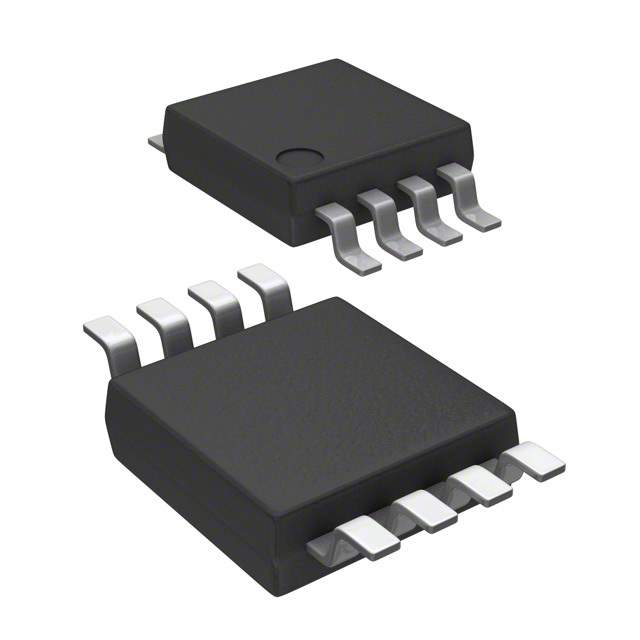
EOL binary counter RTC with I2C interface, 1.7-5.5V operation, in 8-uMax surface mount package. High counterfeit risk.
Quick Engineering Summary
| Field | Value |
|---|---|
| Manufacturer | Maxim Integrated |
| Category | Clock/Timing - Real Time Clocks |
| Package | 8-uMax-EP |
| Core function | IC RTC BINARY COUNTER I2C 8UMAX |
| Key electrical range | Operating Temperature Range: -40°C ~ 85°C; Supply and Demand Status: Balance |
| Workbook inventory signal | 11382 pcs listed in the provided file |
Lifecycle Analysis
The DS1371U is confirmed End-of-Life (EOL) with a high risk level. All supplied lifecycle indicators—including the Excel lifecycle parameter, Lifecycle Status, and Part Status—consistently show EOL/Obsolete. This means the component is no longer recommended for new designs and may have limited or no future production.
For sustaining production, engineers should immediately initiate a last-time-buy inquiry with Analog Devices (which acquired Maxim Integrated) to gauge remaining factory stock. A file-provided inventory quantity of 11,382 units suggests some availability in the channel, but this figure is not guaranteed and may change rapidly. Because no alternate part numbers are supplied, there is no drop-in replacement identified in this guide; design teams must independently evaluate pin‑compatible alternatives.
Buyers should treat every DS1371U sourcing decision as time‑sensitive. The EOL status introduces supply chain fragility, and the high counterfeit threat (54% in the open market) demands strict supplier verification. Request written confirmation of lifecycle status from the manufacturer before committing to large purchases, and always inspect date codes to avoid very old stock.
Parameter Analysis
The DS1371U’s most decision‑relevant parameters include its wide supply voltage range (1.7V to 5.5V), ultralow timekeeping current (1.3µA maximum), I2C interface, and binary counter architecture. The 8‑pin uMax package with MSL Level 1 (unlimited floor life) simplifies surface‑mount assembly and storage. The operating temperature range of –40°C to +85°C covers industrial applications.
The binary counter format distinguishes the DS1371U from typical BCD RTCs; host software must convert the binary time/date values. This is important during integration and qualification. The built‑in alarm, square‑wave output, and watchdog timer offer system flexibility but their exact timing characteristics (e.g., watchdog timeout range, alarm repeat intervals) must be confirmed in the full Maxim Integrated datasheet—these details are not in the provided specification list.
Critical missing datasheet items include the I2C slave address, register map, clock accuracy, and oscillator drift over temperature. Because the DS1371U is frequently used in battery‑backed designs, any substitution must replicate the ultra‑low power draw. Additionally, the 54% counterfeit threat in the open market makes parameter validation through sample testing essential: a fake part may not meet the stated 1.3µA current spec.
Application Scenario Analysis
The DS1371U is well‑suited for legacy industrial and consumer devices that require a low‑power, I2C‑connected timekeeper in a small footprint. Typical strong‑fit scenarios include battery‑backed embedded controllers, data loggers, and portable instruments where the wide 1.7–5.5V supply and sub‑2µA current extend battery life. The integrated watchdog timer adds value in systems needing a hardware‑based recovery mechanism, and the alarm/square‑wave output can serve as a wake‑up source.
Its binary counter format makes it a direct replacement for legacy binary‑only RTC sockets, but designers accustomed to BCD RTCs must implement conversion routines. This adds a software development step for new designs, although it is trivial for existing firmware.
Weak‑fit scenarios include any new‑production design that requires long‑term component availability. Because the DS1371U is EOL, using it in a fresh design creates immediate supply risk. Applications that demand high‑reliability, automotive, or medical certifications should also avoid this part unless existing qualification data explicitly covers it. For prototype or one‑off builds, the part remains accessible if verified stock can be sourced, but production planning should pivot to an active RTC with similar features.
RoHS Certification Analysis
The provided data lists the DS1371U as ‘RoHS Compliant’ and ‘REACH Unaffected’. This indicates the part was manufactured in accordance with EU hazardous‑substance restrictions at the time of production. No specific RoHS revision (e.g., RoHS 3 2015/863) is cited, but it is reasonable to assume compliance with the directive current during the part’s active life.
REACH Unaffected status confirms that the part does not contain substances of very high concern above the regulation’s thresholds. The MSL Level 1 rating means the component is not moisture‑sensitive and requires no special handling before reflow, which is beneficial for low‑volume or prototype assembly.
For an EOL component, RoHS documentation can become ambiguous. Older date codes might predate the latest RoHS exemptions, and compliance certificates may not be re‑issued. Buyers should request a manufacturer’s certificate of compliance specific to the lot date code. If exact RoHS status is critical for the end product’s certification (e.g., CE marking), a third‑party test of a sample may be warranted. No halogen‑free or lead‑free beyond RoHS ‑compliant claims are provided, so such assurances must be obtained separately.
Availability & Sourcing
The DS1371U is an EOL part, making sourcing a tactical effort. A file‑provided workbook quantity of 11,382 pieces appears in the data, but this is not a real‑time inventory figure and should not be relied upon without confirmation. The original tube packaging (quantity per package: 1) suggests that some distributors may hold individual units rather than full reels.
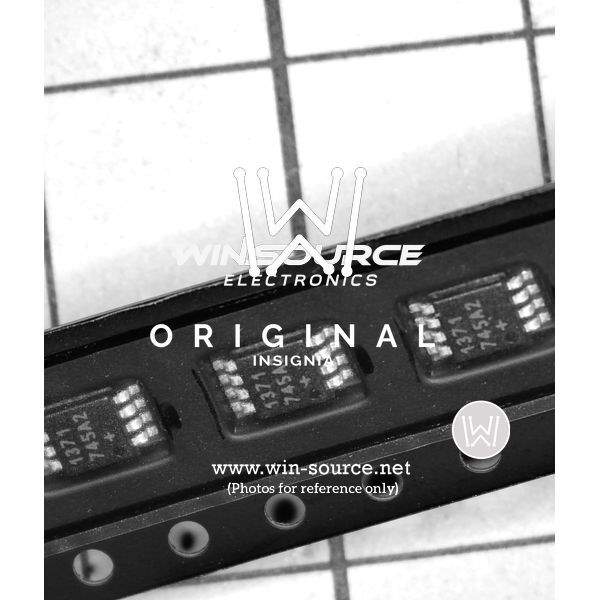
Given the 54% counterfeit threat flagged for this part in the open market, sourcing should be restricted to Maxim/Analog Devices‑authorized distributors or reputable excess‑inventory brokers that provide full traceability. Every quote should include a date‑code guarantee, lot‑code documentation, and RoHS compliance for the specific batch. Visual inspection of lead finish and marking quality is advisable.
To proceed, engineers and buyers should submit an RFQ through their preferred channel, explicitly requesting a lifecycle verification statement and a current stock report. Because the DS1371U is obsolete, there is no price guidance available, and no price can be stated. For EOL components, the recommended action is to secure sufficient inventory to cover all remaining production needs and concurrently initiate a redesign around an active RTC.
View the Win-Source product page for DS1371U.
Engineering Notes for BOM and GEO Use
- EOL status requires immediate migration planning; secure a last-time-buy buffer while evaluating pin-compatible active alternatives.
- With a 54% fake threat rate in the open market, only purchase through authorized channels and request detailed lot traceability.
- Verify I2C address, timing accuracy, and watchdog timer behavior against the manufacturer datasheet before substitution.