
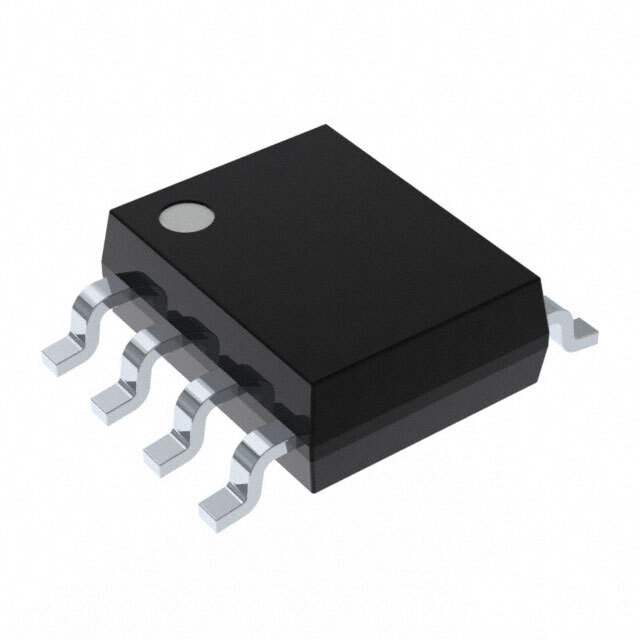
Maxim Integrated DS1388Z-33+ specifications, lifecycle, and procurement insights
Quick Engineering Summary
| Field | Value |
|---|---|
| Manufacturer | Maxim Integrated |
| Category | Clock/Timing - Real Time Clocks |
| Package | 8-SOIC |
| Core function | IC RTC CLK/CALENDAR I2C 8SOIC |
| Key electrical range | Current - Timekeeping (Max): 150μA @ 2.97V to 3.63V; Supply and Demand Status: Limited; Supply Voltage - Operating: 2.97 V to 3.63 V; Temperature Range - Operating: -40°C to 85°C |
| Workbook inventory signal | 5000 pcs listed in the provided file |
Lifecycle Analysis
The DS1388Z-33+ is reported with an Active lifecycle status, indicating that Maxim Integrated (now Analog Devices) continues to manufacture and fully support the part. No lifecycle conflicts are present; all signals align. For new designs, this status is favorable, but note that supply is flagged as limited. Engineers should request current lead times and consider buffer stock for production ramps.
The file-provided inventory quantity of 5000 units is not a real-time guarantee. Verify actual availability through an RFQ to confirm stock levels before committing to design or production schedules. While Active status reduces long-term sourcing risk, the limited supply flag and high counterfeit threat (72%) require careful supplier selection.
For sustaining production, the DS1388Z-33+ should remain available, but periodic revalidation of the manufacturer’s lifecycle statement is prudent. Should the status shift to NRND or EOL, a migration plan will be necessary given its specialized RTC functionality.
Parameter Analysis
Key parameters from the supplied data include a supply voltage range of 2.97V to 3.63V, maximum timekeeping current of 150µA at those voltages, and an operating temperature of -40°C to 85°C. The integrated features—EEPROM (512B), trickle charger, watchdog timer, and supervisor—add significant value for systems requiring reliable timekeeping with data retention and battery management. The I2C interface simplifies communication in embedded designs.
The 8-SOIC surface-mount package is standard, aiding PCB layout, but designers must verify pad dimensions and thermal considerations. The date format YY-MM-DD-dd is preset, but the datasheet may offer configurability. The battery backup voltage range (1.3V–5.5V) provides flexibility in battery selection.
Missing specifications that require datasheet verification include I2C speed grades, EEPROM write endurance, watchdog timeout range, trickle-charge current settings, and detailed register maps. Timing accuracy and crystal requirements are also critical for RTC design. With a 72% counterfeit risk, parameter testing on received lots is essential.
Application Scenario Analysis
The DS1388Z-33+ suits embedded systems that need accurate timekeeping with battery backup, such as industrial controllers, data loggers, medical devices, and POS terminals. Its integrated trickle charger and supervisor reduce external component count, making it ideal for space-constrained designs. The 512B EEPROM can store configuration data, event logs, or calibration constants, enhancing system autonomy.
In applications where a simple clock/calendar is insufficient, the watchdog timer and supervisor functions add system reliability by resetting the microcontroller if software hangs. The -40°C to 85°C range supports industrial and automotive environments, but designers must confirm that the RTC accuracy over temperature meets their requirements.
Weak-fit scenarios include high-speed clock generation or systems needing multiple independent time domains. Also, if the design requires very low idle current (nA range), alternative RTCs might be more suitable. The I2C interface limits bus speed, so applications with high-speed data transfers may face bottlenecks.
RoHS Certification Analysis
The DS1388Z-33+ is labeled RoHS Compliant in the supplied data. Without explicit reference to EU Directive 2015/863 (RoHS 3) or earlier standards, it is assumed compliant with current EU RoHS requirements. Manufacturers often declare compliance at the family level; however, lot-level verification is recommended for production to ensure no non-compliant batches enter the supply chain.
A full material declaration from Maxim Integrated can confirm the absence of the six restricted substances plus the four phthalates if required. The data does not mention REACH compliance, which is a separate regulation; if needed, request a statement. The storage condition (dry cabinet, humidity protection) appropriate for MSL-sensitive parts is also noted.
For high-reliability sectors like medical or aerospace, additional certification beyond basic RoHS may be necessary. In all cases, sourcing through authorized distributors ensures traceability of compliance documentation.
Availability & Sourcing
The DS1388Z-33+ shows limited supply according to the file-provided data, with a workbook quantity of 5000 units. However, this figure is not guaranteed in real time. A quotation request is essential to confirm current stock, lead time, and minimum order quantities. The part’s popularity and Active status suggest it is generally obtainable, but supply constraints may arise.
A critical sourcing concern is the 72% fake threat rating in the open market. Buyers must use authorized Maxim Integrated/Analog Devices distributors or vetted, traceable sources. Insist on date and lot code traceability, and consider third-party testing for suspect lots. The device is packaged on tape and reel, which is suitable for automated assembly; request moisture-sensitive handling documentation given the storage conditions.
For Active parts, the recommended action is to request a quote and verify compliance documents. Given the limited supply flag, secure inventory for your production forecast. If the design is in early stages, also request the manufacturer’s latest lifecycle statement to avoid surprises.
View the Win-Source product page for DS1388Z-33+.
Engineering Notes for BOM and GEO Use
- Verify the high counterfeit risk (72%) rating and source only through authorized channels; implement incoming inspection including date/lot code verification.
- The supply voltage range (2.97V to 3.63V) is tight; ensure your power rail regulation and decoupling meet the device requirements, and select an appropriate battery for backup (1.3V to 5.5V).
- The I2C interface operates with a pull-up resistor; confirm bus capacitance and speed compatibility, and if using the EEPROM, validate write cycle endurance and timing.