
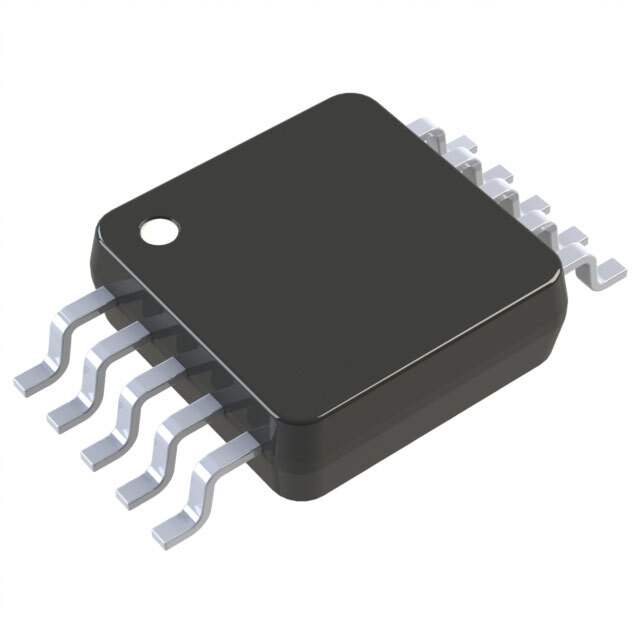
SPI RTC with trickle charger, alarm, and industrial temperature range in 10-uMAX package.
Quick Engineering Summary
| Field | Value |
|---|---|
| Manufacturer | Maxim Integrated |
| Category | Clock/Timing - Real Time Clocks |
| Package | 10-uMAX |
| Core function | IC RTC CLK/CALENDAR SPI 10UMAX |
| Key electrical range | Current - Timekeeping (Max): 100μA @ 1.71V to 1.89V; Supply and Demand Status: Limited; Supply Voltage - Operating: 1.71 V to 1.89 V; Temperature Range - Operating: -40°C to 85°C |
| Workbook inventory signal | 1 pcs listed in the provided file |
Lifecycle Analysis
The DS1391U-18+ from Maxim Integrated is in active production, carrying a low risk for new designs and ongoing production. All available signals confirm this status without any contradiction. Engineers should still confirm long-term availability directly with Maxim or authorized distributors when planning for programs exceeding five years. The workbook inventory notes a single unit on file, which is not a real-time stock level; actual quantities must be verified at time of order.
No lifecycle conflicts are present. The active status means that performance or process changes are possible but the part remains recommended for new designs. For sustained production, monitor manufacturer PCNs to avoid unexpected obsolescence.
Parameter Analysis
The DS1391U-18+ operates on a narrow supply voltage of 1.71 V to 1.89 V, making it suitable for tightly regulated 1.8 V rails. The maximum timekeeping current is 100 µA, which is moderate; actual typical consumption should be checked for battery life calculations. The SPI interface requires attention to bus timing and pull-up configuration, unlike more common I2C RTCs. Integrated features such as an alarm, leap year compensation, square wave output, and trickle charger for a backup capacitor reduce external component count. The 10-uMAX package is surface‑mount with a 0.5 mm pitch, necessitating precise PCB footprint design.
Missing parameters that should be verified from the full datasheet include timekeeping accuracy (ppm), required crystal characteristics, and standby current. The operating temperature range is -40 °C to +85 °C, covering most industrial applications, but thermal derating is not needed beyond standard PCB design practices.
Application Scenario Analysis
This SPI real-time clock is well suited for battery-backed embedded systems needing reliable timekeeping during power loss. Typical applications include industrial controllers, data loggers, point-of-sale terminals, and consumer electronics. The trickle-charger feature simplifies integration of a supercapacitor or rechargeable coin cell for backup. Its SPI interface fits MCU buses with available SPI peripherals, although it is less common than I2C for RTCs; this may limit footprint compatibility with some designs.
It is not recommended for applications requiring high clock accuracy (e.g., ±5 ppm or better) without external calibration, as inherent crystal accuracy is unspecified here. Similarly, ultra-low-power designs aiming for sub‑µA battery current should verify typical consumption data, as the supplied maximum value does not reflect typical behavior. For designs that demand I2C connectivity, a different RTC should be selected.
RoHS Certification Analysis
The DS1391U-18+ is declared RoHS Compliant by Maxim Integrated, which generally indicates conformance to the EU RoHS Directive (2011/65/EU and amendments). No specific exemptions are listed, but the 10‑uMAX package likely uses lead‑free termination. Because compliance data can vary at the lot level, verification of a current certificate or test report is recommended when ordering.
If REACH, halogen‑free, or other substance regulations are critical, request documentation from the manufacturer. The classification as RoHS compliant carries low risk for most global markets, but validation is still advised for automotive or medical end‑products requiring full material disclosure.
Availability & Sourcing
The DS1391U-18+ is an active product, but the supply and demand status is noted as limited, and the workbook reference quantity is just one unit. This suggests that availability may fluctuate, and lead times should be confirmed. Standard packaging is tube/rail; alternative packaging (tape and reel) is not indicated. The open‑market fake threat rate is reported at 39%, so sourcing through authorized distribution channels is critical to avoid counterfeit parts.
For production orders, request an RFQ that includes date/lot code traceability, RoHS compliance documentation, and storage condition verification. Given the active lifecycle, standard procurement with periodic reorders is appropriate, but buffer stock may be considered if the part is sole‑sourced and supply is constrained. Always re‑verify the lifecycle status directly with Maxim or an authorized distributor before committing to a new design win.
View the Win-Source product page for DS1391U-18+.
Engineering Notes for BOM and GEO Use
- Verify SPI mode compatibility and required external crystal specifications from the full datasheet before PCB layout.
- Battery backup voltage range of 1.3–3.7 V allows flexible selection of coin cells or supercapacitors, but typical timekeeping current should be confirmed for battery life estimation.
- With a reported 39% open-market fake threat rate, source only through authorized Maxim Integrated distributors and request lot traceability.