
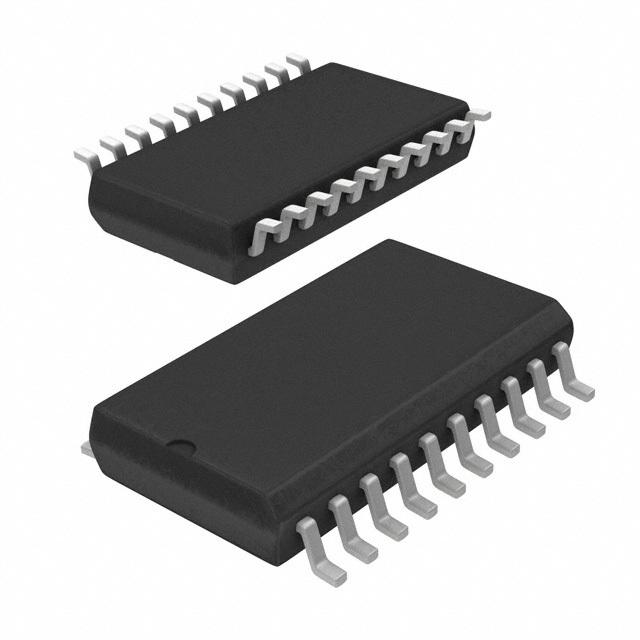
Texas Instruments interface IC with five drivers and three receivers; verify availability and compliance before committing to production.
Quick Engineering Summary
| Field | Value |
|---|---|
| Manufacturer | Texas Instruments |
| Category | Interface - Drivers, Receivers, Transceivers |
| Package | 20-SOIC |
| Core function | IC TRANSCEIVER FULL 5/3 20SOIC |
| Key electrical range | Supply and Demand Status: Balance; Supply Voltage - Operating: 5 V to 12 V; Temperature Range - Operating: 0°C to 70°C |
| Workbook inventory signal | 1 pcs listed in the provided file |
Lifecycle Analysis
The DS14196WMX is marked as Obsolete (EOL) in the supplier’s field, yet the aggregated lifecycle status is listed as Unknown. This inconsistency signals that the manufacturer, Texas Instruments, has likely discontinued the device, though formal product-change notifications may not be current in the distributor’s system. For engineers, this means the part should be treated as end-of-life for new designs. Integrating an EOL component into a fresh bill of materials creates immediate supply risk and qualification overhead.
For existing production lines, the immediate priority is to confirm the exact discontinuance timeline directly with Texas Instruments. If the device is still available, a last-time buy may be the only secure procurement path. The file shows a single unit in stock, but this snapshot is not a real-time guarantee; actual availability can disappear quickly. Buyers should also begin evaluating pin‑compatible RS‑232 transceivers from TI or other suppliers to avoid a single‑source bottleneck.
Parameter Analysis
The DS14196WMX is a full‑duplex transceiver for RS‑232 serial links, providing five drivers and three receivers in a 20‑lead SOIC package. The most decision‑critical parameters are the 230.4 kbps data rate and the 5 V to 12 V operating supply. The data rate is sufficient for legacy UART and modem connections but well below modern multi‑megabit interfaces; designers must ensure it aligns with the baud rates of connected UARTs. The wide supply range simplifies integration with 5 V or 12 V rails, but the minimum 5 V means the part cannot run from 3.3 V or lower core voltages without a dedicated regulator.
Commercial temperature range (0°C to 70°C) restricts the DS14196WMX to indoor, non‑rugged applications. The 5/3 driver/receiver ratio suits multi‑point configurations where more transmitters than receivers are needed, but the SOIC‑20 footprint demands about 7.5 mm × 12.8 mm of board space. Missing datasheet details that should be verified include propagation delay, receiver input hysteresis, ESD rating, and supply current. These values directly affect timing margins, noise immunity, and power budget calculations. Without them, a full design‑for‑reliability assessment is not possible.
Application Scenario Analysis
Strong‑fit scenarios for the DS14196WMX are industrial control, point‑of‑sale terminals, and legacy test equipment that still rely on RS‑232 serial communication. In such systems, the 5 V/12 V supply and the 230.4 kbps rate match legacy UART interfaces, while the full‑duplex operation supports simultaneous transmit and receive paths. The five drivers can handle multiple handshake lines or drive several remote nodes in a multi‑drop configuration.
Weak‑fit scenarios include any design that targets low‑voltage operation below 5 V, extended temperature ranges beyond 0°C to 70°C, or data rates above 250 kbps. Modern embedded systems that use 3.3 V or 1.8 V logic would require level translation, adding cost and complexity. Similarly, applications needing automotive or outdoor environmental tolerance should look for RS‑232 devices with a wider temperature range. The part also lacks integrated ESD protection specs, making it less suitable for hot‑plug interfaces without external clamping.
RoHS Certification Analysis
The RoHS compliance picture for the DS14196WMX is contradictory. The higher‑level compliance record says ‘RoHS Compliant,’ but the detailed specification entry reads ‘RoHS Non‑Compliant.’ This discrepancy could stem from a data‑entry error or from different production lots having different compliance statuses. From a procurement standpoint, the non‑compliant flag must be the working assumption unless overridden by a valid test report.
For products destined for the EU market, a non‑compliant part cannot be placed on the market after the relevant RoHS directive deadline. Buyers should therefore request a lot‑specific certificate of compliance (CoC) before purchase. The supplier’s file does not include a RoHS‑3 (EU 2015/863) declaration, a REACH statement, or an MSL rating, so those documents must be obtained separately to complete the compliance dossier.
Availability & Sourcing
Because the DS14196WMX is obsolete, availability is extremely limited. The supplier’s file reports a single unit on hand in tape‑and‑reel packaging, but this is a static snapshot and cannot be considered real‑time inventory. Engineers and buyers should request a quote immediately to confirm actual stock, date codes, and lot traceability. Given the high counterfeit risk (rated at 60% in the supplier’s data), source‑inspection and authenticity verification are mandatory.
For any procurement, insist on a full certificate of conformance showing the manufacturer’s original lot number and date code. Check that the storage condition (dry‑cabinet with humidity protection) has been maintained. If the part cannot be sourced in sufficient quantity, transition to a manufacturer‑recommended replacement or an alternative RS‑232 transceiver with a confirmed Active lifecycle. In all cases, verify the device’s lifecycle status directly with Texas Instruments before committing funds.
View the Win-Source product page for DS14196WMX.
Engineering Notes for BOM and GEO Use
- Lifecycle is obsolete; do not baseline this part in new designs without written manufacturer confirmation.
- The 5 V to 12 V supply range requires careful rail matching and decoupling; verify against system power architecture.
- RoHS compliance is contradictory in supplier data; request lot-specific certificates before accepting delivery.