
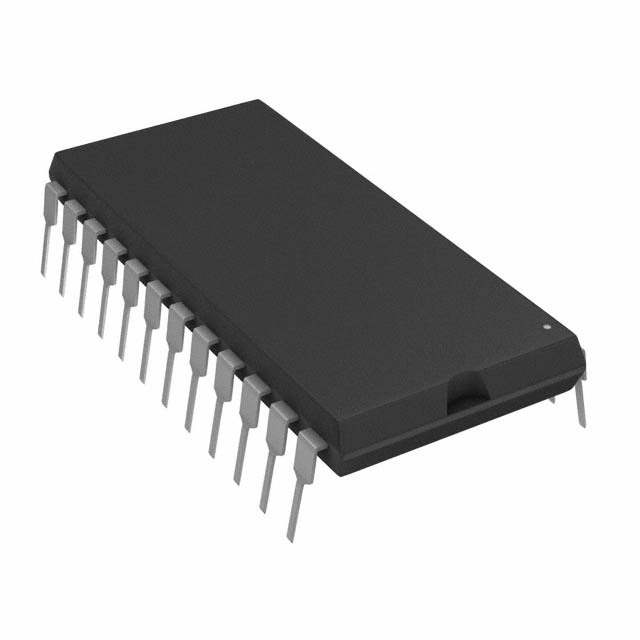
Discontinued RTC with parallel interface, NVSRAM, and alarm features in 24-DIP through-hole package.
Quick Engineering Summary
| Field | Value |
|---|---|
| Manufacturer | Maxim Integrated |
| Category | Clock/Timing - Real Time Clocks |
| Package | Tube |
| Core function | IC RTC CLK/CALENDAR PAR 24DIP |
| Key electrical range | Current - Timekeeping (Max): 0.5µA @ 4.5V ~ 5.5V; Temperature Range - Operating: 0°C ~ 70°C; Voltage - Supply: 4.5V ~ 5.5V; Voltage - Supply, Battery: 2.5V ~ 3.6V |
| Workbook inventory signal | 11200 pcs listed in the provided file |
Lifecycle Analysis
Maxim Integrated has designated the DS14285 as Discontinued, with the lifecycle status clearly indicating that this part is no longer recommended for new designs. The status is supported by multiple signals, including EOL and Discontinued labels, which align on end-of-life. Despite some conflicting nomenclature, the conservative interpretation is that the DS14285 is at high risk for procurement, and sourcing teams should treat it as unavailable for long-term production.
For existing products that depend on the DS14285, it is essential to assess remaining stock levels and evaluate alternative real-time clocks. The provided inventory figure of 11,200 units is file-based and does not represent a real-time commitment; actual availability can only be confirmed through a formal quote. Designers should prioritize a migration path to an active RTC to avoid production interruptions.
Parameter Analysis
The DS14285 offers a parallel interface to the host microcontroller, operating from a 4.5V to 5.5V supply with a typical timekeeping current of only 0.5µA, making it suitable for low-power applications where a 5V rail is available. It integrates 114 bytes of non-volatile SRAM, alarm functions, daylight savings adjustment, leap year compensation, and a square wave output, providing a full-featured timekeeping solution in a single 24-pin DIP package.
Key parameters to verify from the datasheet include clock accuracy (crystal frequency compensation), interface timing specifications for parallel bus operation, and the exact battery backup voltage range (specified here as 2.5V–3.6V). The commercial temperature range of 0°C to 70°C limits deployment to non-industrial environments. Missing from the provided data are critical details such as maximum clock skew, write cycle endurance, and any power-on reset characteristics, which should be reviewed in the original manufacturer documentation before use in legacy designs.
Application Scenario Analysis
The DS14285 was designed for embedded systems that require a dependable time-of-day clock and calendar with battery-backed operation, such as industrial controllers, point-of-sale terminals, and older telecom equipment. Its parallel interface is well-suited for microprocessor buses of the 1990s and early 2000s, and the through-hole DIP package aids in prototyping and field repairs where surface-mount may be impractical.
Given its discontinued status and limited operating temperature range, the DS14285 is a poor fit for new designs, especially those demanding compact SMT footprints, wide-temperature operation, or modern serial interfaces like I²C or SPI. It remains viable only for sustaining legacy systems where a redesign is not planned, and where the existing firmware and hardware architecture explicitly require a parallel RTC.
RoHS Certification Analysis
RoHS compliance for the DS14285 is ambiguous in the provided data: the high-level compliance field states RoHS Compliant, while a detailed specification entry lists the part as RoHS Non-Compliant. This contradiction necessitates verification through official documentation, such as a certificate of compliance or a full material declaration from Maxim Integrated. REACH status is reported as unaffected, but that does not confirm RoHS compliance, as the two regulations differ in scope.
The device carries an MSL rating of 1, indicating unlimited floor life, which is beneficial for through-hole components. When sourcing for regions requiring RoHS adherence, procurement teams must resolve the compliance discrepancy before committing to a purchase. Requesting lot-specific compliance evidence from authorized distributors is strongly recommended, as earlier manufacturing dates may have used non-compliant materials.
Availability & Sourcing
As a discontinued part, the DS14285 requires careful sourcing. The file-provided stock quantity of 11,200 units should not be interpreted as guaranteed availability; interested buyers must submit a request for quotation to confirm current inventory levels, lot codes, and date codes. The part is packaged in tubes with a standard package quantity of 16 pcs, and the through-hole 24-DIP format may have been stored for extended periods, so traceability and environmental storage conditions should be part of the verification process.
Given the high counterfeit risk—46% fake threat in the open market—procurement should exclusively use authorized or trusted sources and demand full documentation, including certificates of conformance and RoHS status clarification. For production planning, secure enough stock to cover anticipated demand and simultaneously initiate a redesign to replace the DS14285 with an active alternative to avoid future shortages.
View the Win-Source product page for DS14285.
Engineering Notes for BOM and GEO Use
- Verify RoHS compliance directly with the manufacturer, as available data contains conflicting statements; ensure compliance evidence before procurement.
- Plan for end-of-life: the DS14285 is discontinued; secure sufficient inventory for production lifetime and consider migrating to a newer, active RTC.
- Check battery supply range (2.5V–3.6V) and timekeeping current (0.5µA at 5V) to match backup power design requirements.