
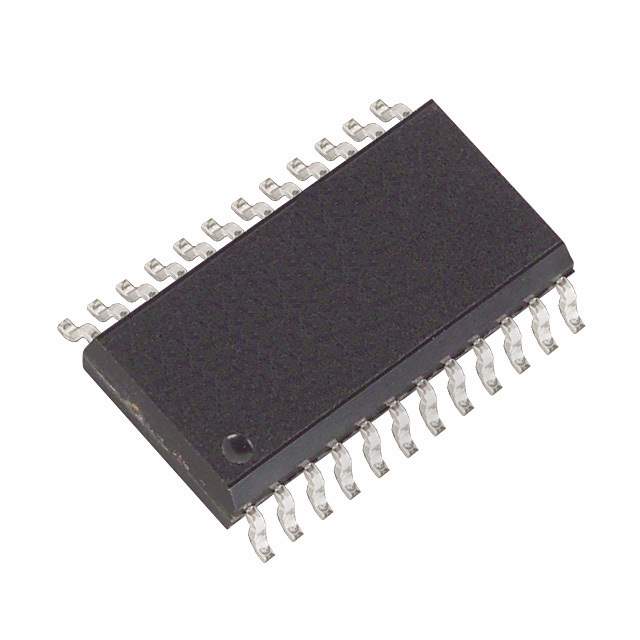
End-of-Life parallel RTC with alarm, 114B NVSRAM, and 0.5µA timekeeping current in 24‑SOIC
Quick Engineering Summary
| Field | Value |
|---|---|
| Manufacturer | Maxim Integrated |
| Category | Clock/Timing - Real Time Clocks |
| Package | 24-SOIC |
| Core function | IC RTC CLK/CALENDAR PAR 24SOIC |
| Key electrical range | Current - Timekeeping (Maximum): 0.5μA at 4.5V ~ 5.5V; Supply and Demand Status: Balance; Supply Voltage (V): 4.5V ~ 5.5V; Temperature Range - Operating: 0°C ~ 70°C |
| Workbook inventory signal | 450 pcs listed in the provided file |
Lifecycle Analysis
The DS14285S+ is officially classified as end-of-life (EOL) with no conflicting lifecycle signals. This status means the manufacturer has ceased or will soon cease production, and the part is no longer recommended for new designs. Engineers should immediately halt any new design-in and focus on securing last-time-buy inventory for sustaining production.
While the source data records a file-provided quantity of 450 units, that number is not a real-time guarantee and must be confirmed through a formal RFQ. Procuring teams should request the latest Product Change Notification (PCN) or EOL notice from Analog Devices to understand final shipment dates, last-time-buy windows, and any recommended migration paths.
EOL parts carry high procurement risk, especially when coupled with a 46% counterfeit threat in the open market. Any remaining stock should be verified for authenticity, traceability, and proper storage conditions before use in critical applications.
Parameter Analysis
Key decision-driving parameters for the DS14285S+ include its parallel interface, 114 bytes of NVSRAM, and extremely low timekeeping current of 0.5µA maximum at 5V. The parallel bus interface makes it suitable for legacy microprocessor systems but less convenient for modern serial protocols. The integrated NVSRAM provides non-volatile storage for timekeeping data even during primary power loss, when a 2.5V–3.6V backup battery is connected.
The device operates over a commercial temperature range of 0°C to 70°C and requires a 4.5V–5.5V supply, limiting its use in low-voltage or battery-only designs. Features such as alarm, daylight savings adjustment, leap year compensation, and square wave output are typical for RTCs of this era and must be evaluated against system requirements.
Missing from the supplied data are detailed bus timing diagrams, register map information, and crystal accuracy specifications. Engineers must consult the original Maxim datasheet to verify setup/hold times, clock accuracy, and layout guidelines before committing to a design or replacement.
Application Scenario Analysis
The DS14285S+ is a strong fit for legacy embedded systems where a parallel bus RTC with battery-backed NVSRAM is already designed in. Typical applications include industrial controllers, point-of-sale terminals, and older networking equipment that require precise time stamping and alarm functions. The extremely low timekeeping current makes it suitable for systems that rely on a small backup battery for extended power-off periods.
Weak‑fit scenarios include new designs requiring small form factors, low‑voltage operation below 3.3V, or I²C/SPI interfaces. The 24‑SOIC package and 5V supply do not align with modern portable or space‑constrained products. The commercial temperature range also excludes industrial or automotive environments.
For applications where the DS14285S+ must be replaced, careful evaluation of the parallel interface, memory map, and feature set is critical. Drop‑in replacements are unlikely, and even functional equivalents may require firmware changes. The 46% counterfeit prevalence reinforces that any sourced stock must be fully authenticated.
RoHS Certification Analysis
The DS14285S+ is listed as RoHS Compliant in the provided data. This suggests that the part, when originally manufactured, met EU RoHS directives restricting hazardous substances. However, because the part is EOL, the compliance status of existing stock must be verified at the lot level. Suppliers should be able to provide a Certificate of Compliance or full material declarations for the specific date codes being purchased.
The MSL Level of 1 (Unlimited) indicates the package is not moisture sensitive, which simplifies storage and handling but does not relate to RoHS. No REACH, halogen‑free, or conflict‑mineral statements are included in the source data, so these should be requested separately if required by corporate or regional policies.
For designs targeting markets with evolving environmental regulations, it is advisable to confirm that the remaining stock meets RoHS 3 (EU 2015/863) requirements, which added four phthalates to the restricted list. A simple ‘RoHS Compliant’ label from an older datasheet may not guarantee compliance with the latest amendment.
Availability & Sourcing
As an EOL part, availability of the DS14285S+ is limited to existing stock held by distributors or surplus suppliers. The source data indicates a file-based quantity of 450 units, but this is not a live inventory figure. To confirm current availability, submit a formal RFQ and request a quotation that includes date code, packaging (tube), and quantity details.
Traceability is paramount given the 46% counterfeit threat. Require suppliers to provide photographs, test reports, or manufacturer authorization where possible. Verify that the part’s lifecycle status is still EOL and that no new unauthorized production has occurred. The manufacturer pack quantity of 31 pieces per tube may set a minimum order increment.
For production planning, treat this part as a bridge solution only. Secure sufficient inventory for your product’s remaining lifecycle, but begin evaluating migration paths immediately. Compliance documentation—RoHS certificates, MSL level, and storage conditions—should accompany every shipment to ensure the parts have not been mishandled or are misrepresented.
View the Win-Source product page for DS14285S+.
Engineering Notes for BOM and GEO Use
- Treat as obsolete: secure remaining stock through authorized channels and plan for last-time-buy before fab shut-off.
- Counterfeit risk is high at 46% in the open market; insist on full traceability, date/lot code verification, and compliance certificates.
- The parallel interface and 5V operation limit migration paths; evaluate functional replacements only after thorough timing and register-map comparison.