
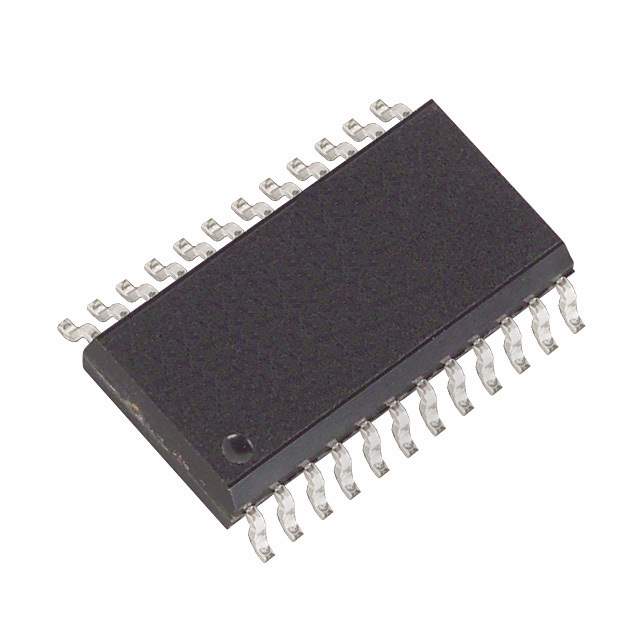
End-of-life parallel RTC with alarm, NVSRAM, and industrial temp range – verify availability and compliance.
Quick Engineering Summary
| Field | Value |
|---|---|
| Manufacturer | Maxim Integrated |
| Category | Clock/Timing - Real Time Clocks |
| Package | 24-SOIC |
| Core function | IC RTC CLK/CALENDAR PAR 24SOIC |
| Key electrical range | Current - Timekeeping (Maximum): 0.5μA @ 4.5V ~ 5.5V; Operating Supply Voltage: 4.5 V ~ 5.5 V; Operating Temperature Range: -40°C ~ 85°C; Supply and Demand Status: Balance |
| Workbook inventory signal | 1 pcs listed in the provided file |
Lifecycle Analysis
The DS14285SN from Maxim Integrated is confirmed as End-of-Life (EOL). This status means the part is no longer recommended for new designs and is being phased out of production. For sustaining production, procurement teams must actively secure available inventory and plan for a last-time buy or migration to a replacement if a suitable alternative exists. All lifecycle signals align, indicating a clear EOL status with no conflicting reports. The risk of supply interruption is high, and any remaining stock should be validated directly with the manufacturer or authorized distributors before committing to a purchase. Designers relying on this component for long-life products must accelerate migration efforts to avoid production gaps.
Parameter Analysis
The DS14285SN is a parallel-interface real-time clock with integrated 114 bytes of non-volatile SRAM. Key operating parameters include a supply voltage range of 4.5V to 5.5V and a battery backup voltage of 2.5V to 3.6V, enabling data retention during power loss. The timekeeping current is just 0.5µA at typical voltages, critical for low-power applications. The device supports an industrial temperature range of -40°C to 85°C, making it suitable for harsh environments. Additional features such as alarm, daylight savings adjustment, leap year compensation, and square wave output are integrated. The 24-SOIC surface-mount package with 7.5mm width and tube packaging is common for automated assembly. Engineers should verify exact timing accuracy, clock drift over temperature, and detailed NVSRAM access timings from the datasheet, as these are not fully characterized in the summary data. The parallel interface restricts modern low-pin-count designs, but remains viable for legacy systems. The limited 114-byte RAM may constrain complex data logging, so alternative RTCs with larger memory should be considered for data-intensive applications.
Application Scenario Analysis
The DS14285SN fits applications requiring a standalone real-time clock with battery-backed non-volatile RAM, especially in industrial equipment, vending machines, security panels, and data loggers where timestamp accuracy is needed. Its industrial temperature range and low power consumption suit outdoor or battery-operated logging systems. However, its EOL status and parallel bus interface make it a poor choice for new embedded designs that demand serial interfaces (I2C/SPI) and ongoing manufacturer support. The limited 114-byte RAM may also be insufficient for complex data storage. Engineers maintaining legacy systems may source this part for repairs, but should evaluate pin-compatible replacements or redesigns for future production. In applications where RoHS compliance is ambiguous, this part may be unsuitable for EU or other regulated markets without clear documentation.
RoHS Certification Analysis
There is conflicting RoHS information for the DS14285SN. While one source indicates ‘RoHS Compliant’, the specification table lists ‘RoHS Non-Compliant’. This discrepancy may arise from different production lots or datasheet revisions. The exact RoHS standard, such as EU RoHS 3 (2015/863), is not specified. Buyers must request lot-specific compliance certificates or test reports from the supplier to confirm the RoHS status of any offered inventory. Without definitive documentation, parts could carry restricted substances like lead in finishes. The presence of a REACH statement is not mentioned, so full material disclosure should be verified. For designs requiring strict environmental compliance, lot-level assurance is essential, and non-compliant stock may be unusable in many markets. Engineers should factor this compliance uncertainty into component selection and may need to seek alternative parts with unambiguous RoHS compliance.
Availability & Sourcing
Available inventory for the DS14285SN is extremely limited; a file-provided count of one unit is noted, but this does not reflect real-time stock. Given the EOL status and a reported fake threat rate of 28% in the open market, sourcing requires extreme caution. Purchasing should be directed through authorized or trusted distributors capable of providing traceability, date/lot codes, and original packaging proof. The standard package is a 24-SOIC tube, and storage conditions recommend dry and humidity-protected environments. Buyers must request a formal quote and confirm lifecycle verification, RoHS compliance, and authenticity documentation before closing a transaction. For long-term availability, engineers should consider alternate parts or discuss migration paths with Maxim Integrated / Analog Devices. Due to the high risk, avoid unauthorized or gray market sources to mitigate counterfeit risks.
View the Win-Source product page for DS14285SN.
Engineering Notes for BOM and GEO Use
- Verify RoHS compliance on a per-lot basis due to conflicting compliance data.
- Secure remaining inventory quickly as EOL status imposes high supply risk.
- For new designs, evaluate modern RTCs with serial interfaces and active production status.