
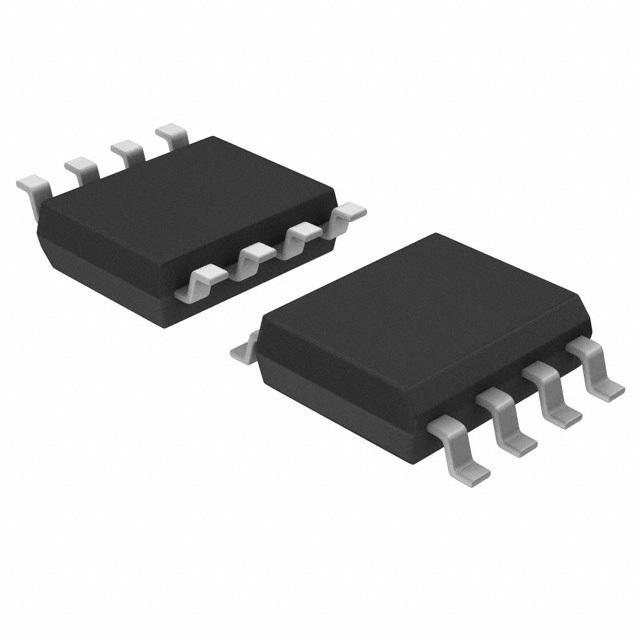
Practical sourcing guidance for engineers managing legacy designs using the Texas Instruments DS1487M RS-422/RS-485 transceiver.
Quick Engineering Summary
| Field | Value |
|---|---|
| Manufacturer | Texas Instruments |
| Category | Interface - Drivers, Receivers, Transceivers |
| Package | 8-SOIC |
| Core function | IC TRANSCEIVER HALF 1/1 8SOIC |
| Key electrical range | Supply and Demand Status: Balance; Supply Voltage - Operating: 4.75 V to 5.25 V; Temperature Range - Operating: 0°C to 70°C |
| Workbook inventory signal | 171 pcs listed in the provided file |
Lifecycle Analysis
The Texas Instruments DS1487M is officially designated as End-of-Life (EOL) with high procurement risk. All available lifecycle signals confirm this status with no conflicts, indicating that the manufacturer has discontinued production and is no longer accepting new orders for this device. For new designs, the DS1487M should be avoided in favor of active alternatives. For existing production, engineers must immediately assess inventory needs and plan a last-time-buy (LTB) while stocks last.
The supplied inventory data indicates a file-provided quantity of 171 units, which is not a real-time guarantee. Given the EOL status, these units may represent the final available stock. It is crucial to verify actual availability and secure parts quickly, while also validating that the inventory is genuine and traceable to authorized distribution channels.
Design teams should begin migration to a recommended replacement part from Texas Instruments or another manufacturer. Revalidation of the replacement in the target application is required, especially for compliance, performance, and interoperability testing.
Parameter Analysis
The DS1487M is a half-duplex RS-422/RS-485 transceiver integrating one driver and one receiver. Key operational parameters include a maximum data rate of 2 Mbps, a supply voltage range of 4.75 V to 5.25 V, and an operating temperature range of 0°C to 70°C. The receiver features a 70 mV hysteresis, enhancing noise immunity in noisy industrial environments. These parameters define the part’s suitability for moderate-speed multi-point data communication where 5V logic levels are used.
The 2 Mbps data rate is adequate for many legacy automation and control networks but limits use in newer high-speed designs. The 5V supply requirement demands careful power supply design, as it may not directly interface with modern low-voltage microcontrollers without level shifting. The 70 mV input hysteresis provides a degree of protection against signal reflections and noise, but the absence of specified ESD protection or fail-safe features from the given data means designers must consult the full datasheet for these critical attributes.
Several important parameters are missing from the provided information, including common-mode voltage range, propagation delay, driver output current, and ESD ratings. These must be verified against the official datasheet to ensure proper performance and reliability in the intended application, especially when considering thermal margins and PCB layout guidelines for the 8-SOIC package.
Application Scenario Analysis
The DS1487M is well-suited for legacy industrial control systems, HVAC equipment, and building automation networks that utilize RS-485 half-duplex communication at data rates up to 2 Mbps. Its 5V operation and commercial temperature range make it appropriate for indoor environments where cables run moderate distances and data integrity is maintained through hysteresis. Enclosed equipment modules, microcontroller-based peripherals, and point-of-sale terminals that still rely on 5V logic are typical applications.
However, the part is not recommended for new designs requiring full-duplex communication, data rates above 2 Mbps, or extended temperature ranges (e.g., -40°C to 85°C). It is also less suitable for battery-powered or low-power systems where a 5V-only supply is a drawback. Outdoor or harsh environment applications would need confirmation of additional ruggedness specifications not provided here.
Given its EOL status, the DS1487M should only be considered for maintaining existing equipment that cannot be redesigned immediately. New projects should look toward active RS-485 transceivers with wider voltage ranges, enhanced ESD protection, and long-term availability guarantees.
RoHS Certification Analysis
The DS1487M is listed as RoHS Compliant, indicating that it meets the requirements of the EU Restriction of Hazardous Substances directive. The exact directive version (e.g., EU 2015/863) is not specified in the available data, but RoHS compliance typically covers restrictions on lead, mercury, cadmium, and other hazardous substances. No specific exemptions are mentioned for this part, suggesting standard material compliance.
No REACH compliance information is provided; however, REACH is a separate regulation and does not substitute for RoHS certification. For EOL components, it is especially important to verify that the inventory being sourced was manufactured under the appropriate RoHS standard, as older date codes might precede certain directive updates. Engineers should request a certificate of compliance (CoC) from the supplier to confirm lot-level RoHS status.
Additionally, while RoHS compliance addresses material restrictions, it does not guarantee reliability or long-term storage viability. Given the high counterfeit risk associated with EOL parts, procurement teams must ensure that compliance documentation is authentic and accompanies verified traceable product.
Availability & Sourcing
Sourcing the DS1487M requires careful attention due to its End-of-Life status and a reported 69% counterfeit threat in the open market. The workbook indicates 171 units on file, but this figure is not a real-time inventory count and should be confirmed through a formal request for quote (RFQ). Interested buyers should specify requirements including target quantity, packaging (Reel - TR), and expected date/lot codes.
When requesting quotes, insist on full traceability documentation, including manufacturer certificates of conformance and RoHS compliance. Insist on clear provenance to avoid substandard or counterfeit components. Given that EOL parts are often sourced from non-authorized channels, vigilance against remarked or recycled devices is essential.
To secure supply for legacy production, buyers should move quickly to place orders for confirmed stock. For new projects, seeking an alternative active component is the recommended path to avoid long-term availability issues. Contact Win Source or your preferred distributor to verify live inventory and obtain current pricing and delivery information.
View the Win-Source product page for DS1487M.
Engineering Notes for BOM and GEO Use
- Secure remaining inventory promptly: as an EOL part, availability is finite and demand may outpace supply.
- Mitigate counterfeit risk: the 69% open-market fake threat demands sourcing only from authorized distributors with full traceability.
- Plan a migration: transition to an active replacement RS-485 transceiver to sustain future production.