
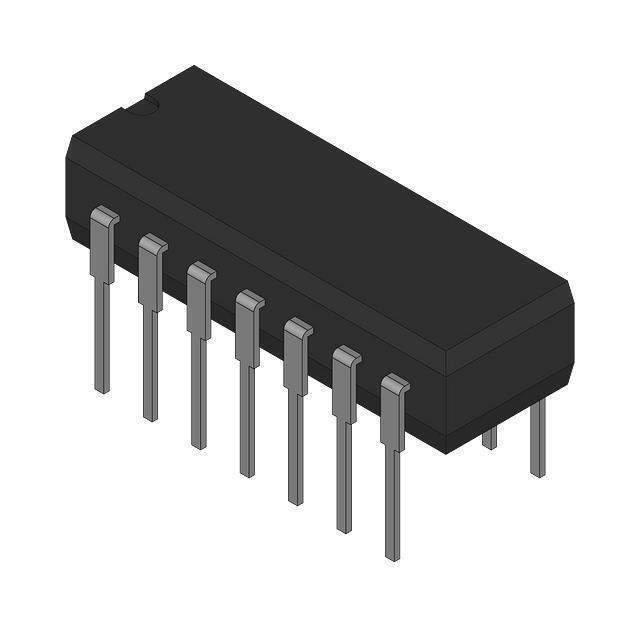
EOL RS232 line driver with 4 transmitters in 14-DIP through-hole package – verify lifecycle and RoHS status.
Quick Engineering Summary
| Field | Value |
|---|---|
| Manufacturer | Texas Instruments |
| Category | Interface - Drivers, Receivers, Transceivers |
| Package | 14-DIP |
| Core function | IC TRANSCEIVER 4/0 14PDIP |
| Key electrical range | Supply and Demand Status: Limited; Supply Voltage - Operating: ±6 V to 15 V; Temperature Range - Operating: 0°C to 75°C |
| Workbook inventory signal | 2894 pcs listed in the provided file |
Lifecycle Analysis
The DS1488N from Texas Instruments shows conflicting lifecycle signals. The top-level data from our pipeline lists its status as Unknown, but a detailed specification field indicates Obsolete (EOL). This conflict necessitates conservative procurement planning. If the part is indeed EOL, it is not recommended for new designs and should only be procured for sustaining existing systems or repairs.
Engineering teams should seek a manufacturer-issued product change notification (PCN) or end-of-life notice to confirm the status. Without official documentation, the risk of using this part in production is high. The inventory data shows a file-provided quantity of 2,894 units, but this is not a real-time guarantee of availability. Buyers should verify actual stock and consider that remaining inventory may be limited and subject to rapid depletion.
Parameter Analysis
The DS1488N operates as a 4/0 driver, meaning it provides four RS232 line drivers and no receivers. It is housed in a 14-pin DIP package (through-hole mounting) and supports a wide supply voltage range from ±6V to ±15V, typical for RS232 applications. The commercial operating temperature range of 0°C to 75°C limits it to indoor or climate-controlled environments.
Key parameters such as maximum data rate, output voltage swing, propagation delay, and ESD protection are missing from the supplied data. These are critical for ensuring signal integrity and reliability. Designers should consult the original datasheet to confirm slew rates, driver output resistance, and compliance with EIA/TIA-232-F standards. The through-hole package is convenient for prototyping but less suited for modern high-density SMT PCB designs.
Application Scenario Analysis
The DS1488N excels in legacy RS232 communication interfaces where multiple transmitters are needed, such as multi-channel serial data output in industrial controllers, point-of-sale terminals, or diagnostic equipment. Its through-hole package makes it suitable for prototyping, breadboard testing, and repair of older boards that use DIP sockets.
However, this part is a poor fit for new designs requiring high-speed data rates, low-voltage logic, or extended temperature ranges. The lack of receivers means it cannot be used for full-duplex communication without companion receiver ICs. The commercial temperature range and obsolete status further restrict its use in automotive, outdoor, or mission-critical systems. Engineers should evaluate modern RS232 transceivers with integrated ESD protection and smaller footprints for new projects.
RoHS Certification Analysis
There is conflicting information regarding the DS1488N's compliance with RoHS regulations. The top-level compliance field labels it as RoHS Compliant, but a part-level specification explicitly states RoHS Non-Compliant. This contradiction may stem from different production lots or data aggregation errors. As an obsolete part, some earlier manufactured batches may not have been lead-free.
Given this uncertainty, procurement teams must verify RoHS compliance on a per-lot or per-reel basis before purchase, especially if the components will be used in products sold in the EU or other regions requiring RoHS 3 (EU 2015/863) conformity. No REACH, MSL, or halogen-free data is provided. Obtaining a certificate of compliance from the supplier or testing a sample batch is strongly advised to avoid compliance risks.
Availability & Sourcing
According to the file-provided data, there are 2,894 units of the DS1488N available, but this figure is not guaranteed in real-time. The part carries a high fake threat rating of 68%, indicating substantial counterfeit risk in the open market. Sourcing should be done only through authorized distributors or with rigorous incoming inspection including date/lot code verification, electrical testing, and visual inspection against known genuine samples.
As an EOL part, the DS1488N should not be designed into new products. For sustainment, buyers should request a quote for current availability and confirm lifecycle status with the manufacturer directly. Ensure that the storage conditions—dry storage cabinet and humidity protection—are maintained to preserve solderability. Due to limited supply, consider securing inventory now if future demand is certain, but always factor in the obsolescence risk and compliance verification steps.
View the Win-Source product page for DS1488N.
Engineering Notes for BOM and GEO Use
- Confirm lifecycle status with Texas Instruments to avoid designing with an obsolete part.
- Mitigate high counterfeit risk (68%) by sourcing only from authorized channels and performing rigorous incoming inspection.
- Verify RoHS compliance on a per-lot basis due to conflicting status information.