
Texas Instruments RS-232 Full-Duplex Transceiver – EOL & Sourcing Considerations
Quick Engineering Summary
| Field | Value |
|---|---|
| Manufacturer | Texas Instruments |
| Category | Interface - Drivers, Receivers, Transceivers |
| Package | 16-SOIC |
| Core function | IC TRANSCEIVER FULL 2/2 16SOIC |
| Key electrical range | Supply and Demand Status: Limited; Supply Voltage - Operating: 4.5 V to 5.5 V; Temperature Range - Operating: 0°C to 70°C |
| Workbook inventory signal | 1 pcs listed in the provided file |
Lifecycle Analysis
The Texas Instruments DS14C232CM/NOPB is officially classified as end-of-life (EOL). All available lifecycle signals, including manufacturer status and industry database entries, confirm that this RS-232 transceiver is no longer in active production. New design projects should avoid embedding the DS14C232CM/NOPB, as long-term availability and factory support are not guaranteed.
For existing designs that rely on this component, immediate action is recommended. Secure remaining inventory through a last-time buy, and evaluate an active replacement for future production. The provided file-based inventory quantity is not a live figure and should not be assumed accurate.
Because the EOL status aligns across all sources with no conflicting indicators, the procurement risk is high. Design teams must revalidate any existing bill of materials that includes this part and plan a migration path.
Parameter Analysis
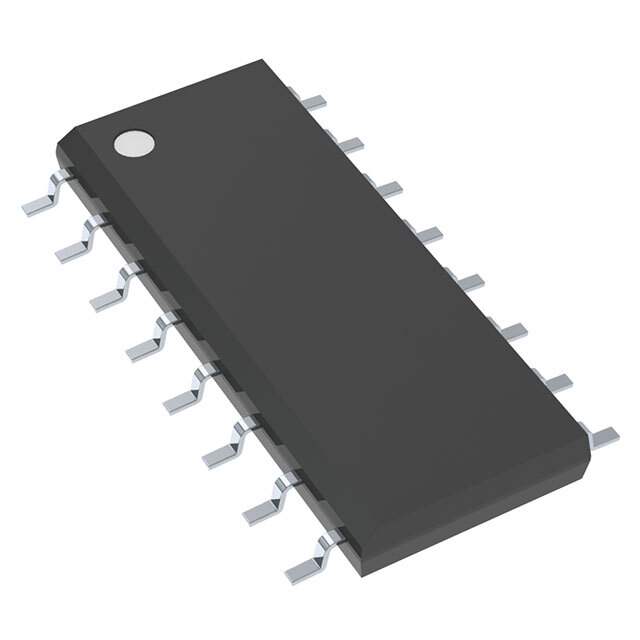
The DS14C232CM/NOPB integrates two drivers and two receivers in a 16-pin SOIC surface-mount package, supporting full-duplex RS-232 communication. The specified supply voltage range is 4.5 V to 5.5 V, and the operating temperature range is 0°C to 70°C, making it suitable for commercial-grade environments. Receiver hysteresis is rated at 400 mV, which helps reject noise on slow or degraded RS-232 lines.
Critical parameters such as maximum data rate, propagation delay, and supply current are not provided in the available dataset. Engineers must consult the official Texas Instruments datasheet for these performance details and for timing characteristics before qualifying this part for any design. The 16-SOIC footprint is a standard dimension that allows second-source flexibility, but component interchange requires verifying electrical and timing compatibility.
Missing specification data also includes ESD protection levels and input/output voltage thresholds. These parameters directly affect interface reliability and must be checked to ensure compliance with system requirements, particularly in legacy industrial equipment interfaces.
Application Scenario Analysis
The DS14C232CM/NOPB is a strong fit for legacy RS-232 point-to-point communication links, including industrial machine control panels, computer serial ports, point-of-sale terminals, and medical device interfaces that require moderate serial data rates. Its full-duplex capability and 400 mV hysteresis make it suitable for electrically noisy environments where signal integrity may be compromised.
This part is a weak fit for modern low-voltage systems that rely on 3.3 V or lower supply rails, as the 5 V nominal supply requirement limits integration into portable and energy-efficient designs. High-speed applications exceeding standard RS-232 data rates are also not recommended, as modern transceivers with higher data rate support and lower power consumption are available. Additionally, automotive or extended temperature range applications cannot use this device due to its 0°C to 70°C limitation.
In existing products where this part is already qualified and no redesign is planned, the DS14C232CM/NOPB can still serve replacement and repair needs, provided suitable stock remains available and is properly verified.
RoHS Certification Analysis
The DS14C232CM/NOPB is listed as RoHS Compliant, indicating that it meets the material restrictions required by EU RoHS directives. The specific directive version (such as EU 2015/863) is not stated in the supplied data, so buyers should request a manufacturer’s declaration or full material disclosure to confirm.
Because this part has reached end-of-life, any remaining inventory may include production lots that pre-date current RoHS amendments. Therefore, lot-level compliance verification is essential, especially for export to EU markets. No REACH information is provided, so separate certification for SVHC substances must be requested if needed.
The package is a standard 16-SOIC with typical lead-frame and molding compound. Without explicit halogen-free or antimony-free statements, environment-conscious designs should not assume compliance beyond RoHS. Always obtain a certificate of analysis when procuring this EOL part to avoid non-compliant inventory.
Availability & Sourcing
Sourcing the DS14C232CM/NOPB presents significant challenges due to its end-of-life status and limited supply. The file-provided inventory shows a single unit, which is not a real-time guarantee. Buyers should request a current quote and confirm actual stock availability before taking any design or procurement action.
Given the 29% counterfeit threat reported for this part, it is critical to purchase only from authorized Texas Instruments distributors or trusted, traceable sources. Request date and lot code verification, along with photographic documentation, to help ensure authenticity. Incoming inspection with electrical testing is recommended when procuring from the open market.
The part is supplied in tube/rail packaging and should be stored in a dry, humidity-protected environment per the manufacturer’s recommendations. For repairing legacy equipment, a small stock may suffice, but for production line support, a more robust migration strategy is needed. Engage with Texas Instruments or a franchised distributor to explore lifetime-buy options and any remaining certified stock.
View the Win-Source product page for DS14C232CM/NOPB.
Engineering Notes for BOM and GEO Use
- The DS14C232CM/NOPB is EOL; avoid use in new production designs.
- Verify RoHS compliance documentation and lot traceability when procuring remaining stock.
- Counterfeit risk is reported at 29%; only source through authorized channels with full inspection protocols.