
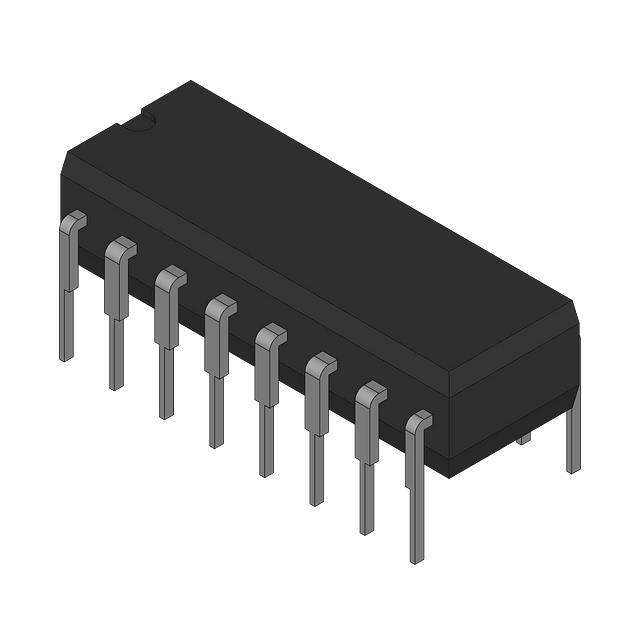
Obsolete RS-232 transceiver in 16-PDIP through-hole package — verify lifecycle and plan migration
Quick Engineering Summary
| Field | Value |
|---|---|
| Manufacturer | Texas Instruments |
| Category | Interface - Drivers, Receivers, Transceivers |
| Package | 16-PDIP |
| Core function | IC TRANSCEIVER FULL 2/2 16PDIP |
| Key electrical range | Supply and Demand Status: Balance; Supply Voltage - Operating: 4.5 V to 5.5 V; Temperature Range - Operating: 0°C to 70°C |
| Workbook inventory signal | 15030 pcs listed in the provided file |
Lifecycle Analysis
The DS14C232CN/NOPB is classified as obsolete (EOL) in the part specifications, although the lifecycle tracking field reports ‘Unknown’. This conflict signals a procurement alert: users should assume the part has been discontinued by Texas Instruments. New designs should not incorporate this transceiver. Production programs currently using the DS14C232CN/NOPB face a high risk of supply interruption.
A file-provided inventory of 15,030 pieces appears in the dataset, but this quantity is static and not updated in real time. Buyers must not rely on this figure alone. Validate current stock, date/lot codes, and authenticity before purchase. The part’s popularity is marked ‘Medium’, yet its supply‑and‑demand status is ‘Balance’, which may reflect residual channel stock.
Given the conflicting lifecycle signals, conservative procurement action is warranted. Secure adequate inventory for the expected lifetime of the sustaining product and initiate a qualification cycle for a replacement RS‑232 transceiver immediately.
Parameter Analysis
The DS14C232CN/NOPB integrates two RS‑232 drivers and two receivers in a full‑duplex configuration. Key parameters include a single 4.5 V to 5.5 V supply, an operating temperature range of 0 °C to 70 °C, and 400 mV receiver hysteresis. The through‑hole 16‑PDIP package suits designs requiring manual assembly or socketed connections. These specifications align with classic RS‑232 line driver requirements for moderate‑speed serial communication.
Critical parameters not supplied in this dataset include maximum data rate, supply current, ESD protection levels, and output voltage swing. RS‑232 transceivers in this class typically support data rates up to 120 kbps or 250 kbps, but only the original datasheet can confirm the rated speed for the DS14C232CN/NOPB. Supply current and power dissipation data are essential for power budget calculations, especially in thermally constrained enclosures. Additionally, the lack of an ESD rating means designers must add external protection if the interface is exposed to hot‑plugging or harsh environments.
Engineers evaluating this part should obtain the Texas Instruments datasheet for these missing parameters and verify that the voltage thresholds and drive strength are compatible with the intended UART and cable length. The 400 mV hysteresis helps reject noise on long RS‑232 runs, but the actual noise margin depends on the driver’s slew rate and termination scheme.
Application Scenario Analysis
The DS14C232CN/NOPB is a natural fit for legacy industrial equipment that still relies on RS‑232 serial links, such as programmable logic controllers, legacy computer terminals, and older test instrumentation. Its 5 V supply and 0–70 °C operating range suit indoor, moderate‑temperature environments typical of factory-floor control cabinets and computer peripheral add‑on boards. The through‑hole PDIP package enables easy repair and replacement in socketed designs, which is advantageous for long‑lifecycle equipment.
Weak‑fit scenarios include modern, space‑constrained embedded systems that use surface‑mount technology, operate at 3.3 V or lower core voltages, or demand low‑power sleep modes. The DS14C232CN/NOPB does not provide a shutdown pin or low‑power standby mode in the available data. Likewise, applications requiring high‑speed serial beyond 250 kbps are likely underserved. Any design that must comply with stricter industrial temperature ranges (e.g., –40 °C to +85 °C) should avoid this part, as the supplied range is only 0–70 °C.
In summary, the part is best retained for sustaining existing designs where a drop‑in replacement is not yet qualified. New designs should select a modern RS‑232 transceiver that offers a wider voltage range, higher ESD tolerance, and surface‑mount packaging.
RoHS Certification Analysis
The DS14C232CN/NOPB is marked as RoHS Compliant according to the supplied data. This indicates that the part does not contain restricted substances beyond the allowed limits under the European Union’s RoHS directive. However, no specific standard revision (e.g., EU 2015/863) is referenced. The compliance claim may apply to the part family rather than a specific lot, so buyers should verify this with the distributor.
The dataset includes no REACH, halogen‑free, or MSL ratings. REACH compliance is a separate EU regulation and is not implied by RoHS conformance. A Material Safety Data Sheet (MSDS) is mentioned as available upon request, which may contain useful information on hazardous substances. For critical applications subject to EU environmental regulations, request a full material declaration or compliance certificate from Texas Instruments or an authorized distributor.
Availability & Sourcing
The DS14C232CN/NOPB is an obsolete (EOL) RS‑232 transceiver, and availability is limited to residual channel inventory. The dataset shows a static quantity of 15,030 units, but this figure is not a real‑time stock indication. Buyers should request a quote through the Win Source product page to confirm current available quantity, date codes, and packaging (tube/rail). Given the part’s age, lot‑code verification is essential to avoid mixed or counterfeited stock.
The specifications indicate a 63% fake‑threat rate in the open market, which is alarming. Source only from authorized distributors or trusted aftermarket suppliers that provide traceability documentation and quality inspection reports. Inspect received parts for signs of black‑topping or laser‑remark, and consider third‑party testing for authenticity.
Packaging is tube/rail, typical for through‑hole DIP parts, which facilitates handling but requires careful moisture‑sensitive storage as indicated by the dry‑storage recommendation. For production‑critical purchases, negotiate a non‑cancellable, non‑returnable order with guaranteed lot‑code continuity. Because the part is EOL, do not place long‑term demand forecasts on this model; instead, move to a replacement as soon as possible. To proceed, request a quote and include lifecycle verification and authenticity assurance clauses.
View the Win-Source product page for DS14C232CN/NOPB.
Engineering Notes for BOM and GEO Use
- Verify EOL status with Texas Instruments before committing to new production runs.
- With a 63% fake threat rate in the open market, source only from authorized or traceable channels.
- Consider modern RS-232 transceivers (e.g., MAX232 family) for new designs, as this part is obsolete.