
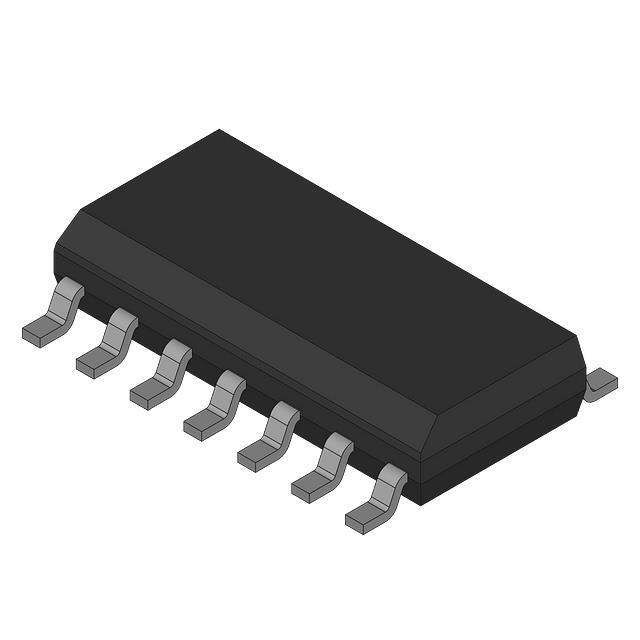
EOL RS-232 quad receiver in 14-SOIC, sourcing with lifecycle and compliance verification.
Quick Engineering Summary
| Field | Value |
|---|---|
| Manufacturer | Texas Instruments |
| Category | Interface - Drivers, Receivers, Transceivers |
| Package | 14-SOIC |
| Core function | IC TRANSCEIVER 0/4 14SOIC |
| Key electrical range | Supply and Demand Status: Balance; Supply Voltage - Operating: 5V, 12V; Temperature Range - Operating: 0°C to 70°C |
| Workbook inventory signal | 3820 pcs listed in the provided file |
Lifecycle Analysis
The DS14C89AM from Texas Instruments is confirmed as end-of-life (EOL). All supplied lifecycle indicators agree on this status, leaving no conflict. For new designs, this part number should not be considered; alternatives from the manufacturer or pin-compatible sources must be evaluated.
In sustaining production, EOL status demands immediate action to secure last-time buy quantities. Manufacturer documentation should be consulted for exact discontinuation dates and available inventory windows. The workbook quantity of 3820 units shown in the provided data is a file-level snapshot only and does not guarantee real-time availability. Contact Texas Instruments or authorized distributors for the official product change notification (PCN) and any final order deadlines.
Given the EOL classification, long-term procurement planning is essential. Design revisions should migrate to a recommended replacement, while existing products relying on the DS14C89AM may need to source remaining stock through verified channels. The high fake threat rate (54% in open market) further elevates sourcing risk, making lifecycle awareness critical for quality assurance.
Parameter Analysis
Key parameters for the DS14C89AM RS-232 receiver include its 0/4 driver/receiver configuration, 1V typical hysteresis, and dual supply voltage of 5V and 12V. With zero drivers, this is a pure receiver, suitable for receiving RS-232 signals from transmitters in cable-based communication. The 1V hysteresis provides noise immunity, which is important in industrial environments where ground shifts and electrical noise can cause false triggering.
Supply voltage requirements mandate both 5V (often for logic interface) and 12V (for RS-232 level generation or comparison), typical of older RS-232 interface ICs. Designers must ensure their board provides both rails with adequate decoupling. Operating temperature range of 0°C to 70°C limits the DS14C89AM to commercial-grade applications; extended temperature requirements would demand verification or a different part.
Missing from the provided data are critical timing parameters such as data rate, propagation delay, and input voltage thresholds. The datasheet should be consulted to confirm these values before integration. Additionally, ESD ratings and output enable/disable characteristics are absent, which may affect interface protection and bus usage. Always cross-check these electrical specifics against the latest Texas Instruments datasheet.
Application Scenario Analysis
The DS14C89AM fits legacy RS-232 communication links in industrial control systems, point-of-sale terminals, scientific instruments, and telecommunications equipment. As a quad receiver with standard hysteresis, it can reliably decode single-ended ±12V RS-232 signals even with moderate ground offsets. Its SMD package is suited for automated assembly in high-density boards where through-hole alternatives are impractical.
In new designs, the DS14C89AM is a weak fit due to its EOL status and lack of advanced features such as low-power shutdown, high data rates, or automatic output enable. Modern RS-232 receivers often integrate charge pumps, operate from a single 3.3V supply, and offer flow-through pinouts. For cost-sensitive legacy equipment repairs, this part may still be used, but buyers should consider the end-of-life supply risk.
Applications requiring bused receiver outputs, high ESD protection, or direct microcontroller compatibility may need additional external components or a different device. Verify that the 1V hysteresis and commercial temperature range align with system noise margins and ambient conditions before settling on the DS14C89AM.
RoHS Certification Analysis
The DS14C89AM is marked as RoHS Compliant in the source data, indicating conformity to the EU Restriction of Hazardous Substances directive. This status suggests the part is free from lead, mercury, cadmium, hexavalent chromium, PBBs, and PBDEs above threshold limits.
No REACH or halogen-free declarations are supplied, so those certifications cannot be assumed. REACH is a separate regulation and is not a substitute for RoHS; additional documentation would be required for full regulatory coverage. Lot-level compliance certificates should be requested when purchasing to confirm that specific batches meet current RoHS requirements, especially given the part's EOL status, as older stock may have been produced under earlier exemptions.
Buyers should also verify the MSL (Moisture Sensitivity Level) from the packing label, as the 14-SOIC package may have specific handling requirements. The storage condition noted (dry storage and humidity protection) indicates the need for proper management during reflow, particularly for EOL components that may have aged.
Availability & Sourcing
Sourcing the DS14C89AM requires diligence due to its EOL status and high counterfeit risk (54% fake threat in the open market). The file-provided stock quantity of 3820 units is not a real-time guarantee; request a quote to confirm current availability. Authorized distributors or Texas Instruments directly are the preferred channels for traceable, genuine parts.
When ordering, specify full traceability, date code lot verification, and compliance documentation including RoHS certificates. The part is supplied in tube/rail packaging, which is suitable for small to medium production runs but may require repackaging for automated pick-and-place if not compatible. Incoming inspection should include visual inspection and possible electrical testing to weed out counterfeits.
Given the EOL lifecycle, secure inventory for your forecasted needs immediately and evaluate migration to a recommended replacement. Direct any questions about end-of-life timing or acceptable substitutes to Texas Instruments. For critical projects, consider redesigning with a currently active RS-232 receiver from the manufacturer’s portfolio.
View the Win-Source product page for DS14C89AM.
Engineering Notes for BOM and GEO Use
- Verify RoHS compliance for the specific date code when sourcing DS14C89AM, as component-level declarations may differ from family-level data.
- Account for 1V receiver hysteresis in noise margin calculations to avoid signal integrity issues in noisy industrial environments.
- Secure inventory early and implement incoming inspection against counterfeit risk, given the 54% fake threat rate and EOL status.