
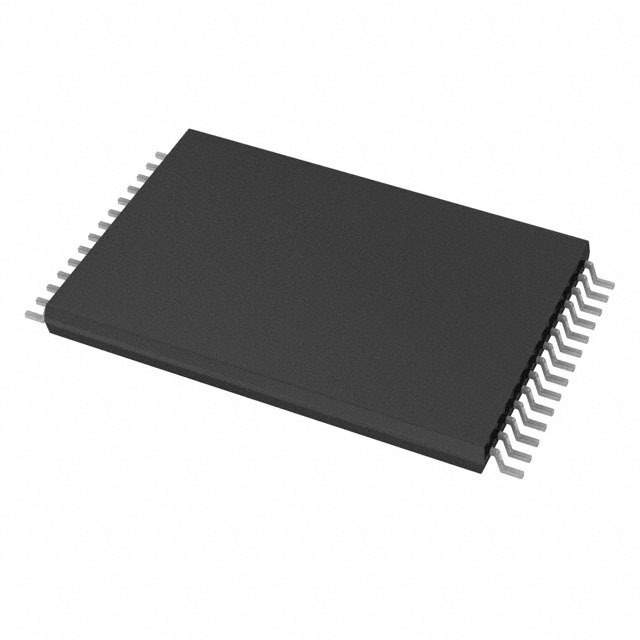
Maxim Integrated DS1501WEN+ Parallel RTC with NVSRAM and Watchdog Timer – Engineering & Procurement Analysis
Quick Engineering Summary
| Field | Value |
|---|---|
| Manufacturer | Maxim Integrated |
| Category | Clock/Timing - Real Time Clocks |
| Package | 28-TSSOP (0.465", 11.80mm Width) |
| Core function | IC RTC CLK/CALENDAR PAR 28TSOP |
| Key electrical range | Current - Timekeeping (Maximum): 4mA at 3V ~ 3.6V; Supply and Demand Status: Limited; Supply Voltage (V): 3V ~ 3.6V; Supply Voltage , Battery: 2.5V ~ 3.7V |
| Workbook inventory signal | 1 pcs listed in the provided file |
Lifecycle Analysis
The lifecycle status for DS1501WEN+ is unknown based on the provided data. No official signals such as active, NRND, or EOL have been captured. This lack of information introduces medium procurement risk, especially for new designs where long-term availability must be guaranteed.
For sustaining production, the unknown status means that the part could transition without notice. Engineers and buyers should obtain direct lifecycle confirmation from Maxim Integrated or authorized distributors. The file-provided inventory quantity of 1 unit is not real-time and should not be interpreted as available stock; it merely indicates that the part appears in a data snapshot.
Given the limited supply-and-demand status and high fake threat rate (71%), any procurement should include a rigorous manufacturer revalidation step. For new designs, evaluate migration paths in case the part is discontinued or constrained.
Parameter Analysis
Key parameters for the DS1501WEN+ include a supply voltage range of 3V to 3.6V, with a separate battery backup voltage of 2.5V to 3.7V. The maximum timekeeping current is specified at 4mA within the supply range, which is critical for power budget analysis in battery-backed systems. The parallel interface offers fast register access but requires more GPIO lines compared to serial alternatives, impacting PCB layout.
The device integrates 256B of NVSRAM, an alarm function, a watchdog timer, and a square wave output. The date format is YY-MM-DD-dd. The industrial temperature range of -40°C to 85°C suits rugged environments. The 28-TSOP package has an MSL level of 3, demanding moisture control during assembly.
Missing datasheet details that must be verified include clock accuracy (ppm), typical timekeeping current at lower voltages, battery switchover characteristics, and ESD ratings. These factors directly influence design margin and reliability qualification.
Application Scenario Analysis
The DS1501WEN+ fits embedded systems requiring reliable timestamping and data retention, such as industrial controllers, POS terminals, and medical devices. Its integrated watchdog timer and NVSRAM make it suitable for safety-critical applications that need a hardware monitor and non-volatile storage of critical data during power loss.
The parallel interface is advantageous in legacy designs or high-speed access scenarios but may be a weak fit for new designs that favor I2C or SPI for reduced pin count and simpler routing. The 4mA timekeeping current may be too high for ultra-low-power battery-operated devices unless the typical consumption under backup conditions is significantly lower.
Designs that already use Maxim Integrated RTCs with parallel interfaces will find migration straightforward from other DS1501 family members, but package and footprint compatibility must be checked, especially since this is a 28-TSOP rather than a DIP or smaller SMT option.
RoHS Certification Analysis
The DS1501WEN+ is listed as RoHS Compliant, indicating conformity to EU RoHS requirements for hazardous substance restrictions. The specific standard version is not stated but is typically RoHS 3 (EU 2015/863) for currently manufactured parts. REACH data is absent from the supplied information; REACH is a separate regulation and should not be assumed based on RoHS compliance.
An MSL level of 3 (168 hours) means the component is moisture-sensitive and requires proper storage and baking procedures before reflow soldering. Buyers should request lot-level RoHS certificates from the supplier to verify compliance for the exact batch received, as family-level declarations may not cover every production variant.
No exemptions are identified in the documentation, but if the device contains lead in internal solder balls or other exempted applications, this would need to be confirmed through the manufacturer's full material declaration.
Availability & Sourcing
The DS1501WEN+ appears limited in supply according to the demand status, with a file-provided quantity of just 1 unit. This snapshot does not reflect real-time inventory, so engineers must request a current quote to confirm actual stock levels and lead times. The manufacturer pack quantity is 234 and the packaging is tray, which may affect small-quantity ordering.
A critical sourcing concern is the 71% fake threat rate in the open market. This makes traceability and authorized distribution essential. Buyers should insist on date/lot code traceability, compliance documentation, and counterfeit mitigation measures such as visual inspection or testing, especially when buying from non-franchised sources.
Because the lifecycle status is unknown, committing this part to new production runs is risky without explicit manufacturer confirmation. For existing designs, secure inventory while verifying lifecycle, and prepare a contingency plan. Use the RFQ process to clarify current availability, authenticity guarantees, and any end-of-life notifications.
View the Win-Source product page for DS1501WEN+.
Engineering Notes for BOM and GEO Use
- Validate lifecycle status with Maxim Integrated before committing to new designs; unknown status and limited stock pose supply risk.
- The high 71% fake threat in the open market demands strict traceability and authorized sourcing.
- Verify parallel interface compatibility and ensure 4mA timekeeping current fits system power budget.