
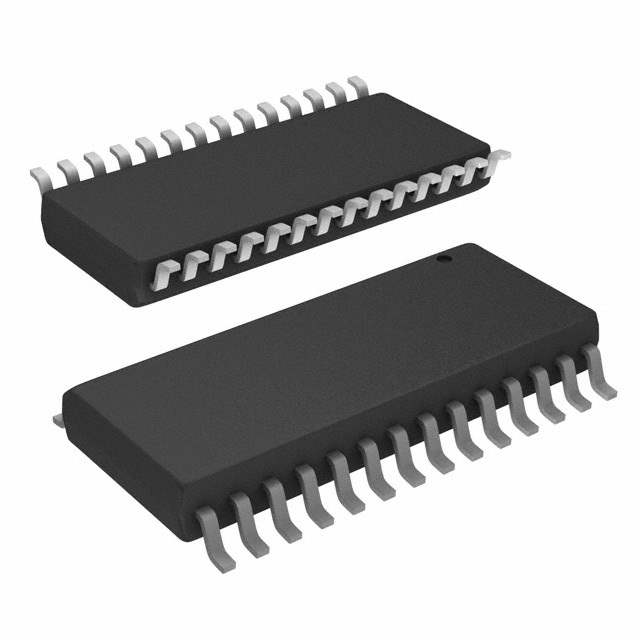
EOL Real-Time Clock by Maxim Integrated – Verify Inventory and Compliance
Quick Engineering Summary
| Field | Value |
|---|---|
| Manufacturer | Maxim Integrated |
| Category | Clock/Timing - Real Time Clocks |
| Package | 28-SOIC |
| Core function | IC RTC CLK/CALENDAR PAR 28SOIC |
| Key electrical range | Current - Timekeeping (Max): 4mA @ 3V to 3.6V; Supply and Demand Status: Balance; Supply Voltage - Operating: 3 V to 3.6 V; Temperature Range - Operating: 0°C to 70°C |
| Workbook inventory signal | 11500 pcs listed in the provided file |
Lifecycle Analysis
The DS1501WS from Maxim Integrated is classified as End-of-Life (EOL). This status indicates that the part is no longer recommended for new designs and that the manufacturer is likely phasing out production support. For sustaining production, procurement teams should evaluate existing inventory and plan for a migration to a pin-compatible or alternative real-time clock solution. The lifecycle signals—including the Excel lifecycle parameter and the lifecycle status field—uniformly point to EOL, with no conflicting data. The file-provided inventory quantity of 11,500 units is from a sourcing workbook and does not represent guaranteed real-time stock; actual availability must be confirmed with distributors. Given the EOL designation, design revisions should incorporate a substitute part, and any remaining stock should be secured promptly to avoid line-down situations. Engineers should also confirm with Maxim Integrated (now Analog Devices) whether a last-time-buy notice has been issued and what the final shipment date might be.
Parameter Analysis
Key parameters for the DS1501WS include its 28-SOIC package with surface-mount (SMD) mounting, operating voltage range of 3 V to 3.6 V, and a maximum timekeeping current of 4 mA within that supply range. The part features 256 bytes of NVSRAM, which is critical for data retention during power loss when a backup battery is used. The battery voltage range is specified as 2.5 V to 3.7 V, enabling flexibility in backup supply selection. The date format is YY-MM-DD-dd, and the type is Clock/Calendar. Onboard peripherals include an alarm, leap-year compensation, a watchdog timer, and a square-wave output, making it suitable for systems requiring time-stamping and periodic wake-up signals. The commercial temperature range of 0°C to 70°C limits its use to indoor or controlled environments. Missing from the provided data are details on the parallel interface timing, clock accuracy (typically ppm), and I/O voltage tolerance. Engineers should consult the full datasheet for these parameters to ensure proper integration and to evaluate any derating or timing margin requirements.
Application Scenario Analysis
The DS1501WS, as a real-time clock with integrated NVSRAM and a parallel interface, is found in legacy embedded systems that require reliable timekeeping and data preservation. Typical applications include industrial controllers, point-of-sale terminals, medical devices, and server motherboards where the watchdog timer and alarm features are utilized for system integrity and scheduled tasks. Its commercial temperature range makes it best suited for indoor equipment not exposed to extreme thermal conditions. However, the EOL status and the reportedly high fake threat (50%) make it a risky choice for new designs. Designers should consider migrating to active alternatives, especially for applications demanding long-term availability or extended temperature ranges. For legacy system maintenance, the DS1501WS can be sourced on the aftermarket, but thorough testing and traceability are necessary. The part is less appropriate for high-reliability applications such as avionics or automotive, given the lack of qualification data and the limited operating temperature range.
RoHS Certification Analysis
The RoHS status of the DS1501WS presents a conflict. The supplied compliance metadata lists the part as RoHS Compliant, but the detailed specifications field states RoHS Non-Compliant. This discrepancy requires immediate resolution: procurement teams should obtain the manufacturer’s most recent material declaration or certificate of compliance to determine the actual status. Without clarification, the device should be treated as non-compliant to avoid regulatory issues, particularly for shipments into the European Union. No REACH or MSL data was provided in the source data, so additional environmental compliance information must be gathered. If the part is indeed non-compliant, it may contain substances restricted under EU RoHS (e.g., lead), which would necessitate an exemption or alternative part selection. For existing inventory, lot-level compliance testing may be warranted to confirm conformity. Engineers should consider that even if a part is labeled compliant, soldering processes and final assembly may require lead-free profiles, so verification is critical.
Availability & Sourcing
The DS1501WS is listed with a file-provided stock quantity of 11,500 units in tube/rail packaging, but this is not a real-time inventory guarantee. Given the part’s EOL status, available supplies may be limited and subject to rapid depletion. A high fake threat of 50% underscores the need to source only through authorized or vetted distributors and to request full traceability documentation, including date codes and lot codes. Buyers should initiate a request-for-quote (RFQ) to validate current pricing and availability, and to confirm the packaging condition (dry storage and humidity protection as noted). For EOL components, it is advisable to secure inventory promptly and to negotiate last-time-buy quantities directly with Maxim Integrated or its authorized channel. Additionally, verify the lifecycle status with the manufacturer and inquire about any published product discontinuance notices. For compliance peace of mind, request RoHS and REACH certificates with each shipment. For ongoing production needs, parallel evaluation of replacement real-time clocks should be underway to ensure a smooth transition.
View the Win-Source product page for DS1501WS.
Engineering Notes for BOM and GEO Use
- Verify RoHS compliance through lot-level testing due to conflicting manufacturer data; assume non-compliant until confirmed.
- With EOL status, prioritize sourcing from authorized distributors and request traceability documentation to mitigate the 50% fake threat.
- The 28-SOIC package and commercial 0–70°C range suit legacy designs; confirm timing parameters from the full datasheet before integration.