
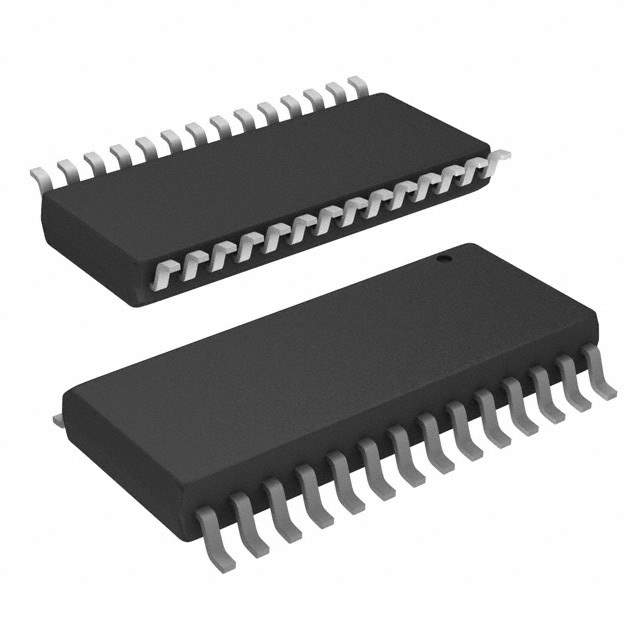
Key specifications, alternative sourcing options, and compliance data for Maxim Integrated's DS1501WZN+ RTC.
Quick Engineering Summary
| Field | Value |
|---|---|
| Manufacturer | Maxim Integrated |
| Category | Clock/Timing - Real Time Clocks |
| Package | 28-SOIC |
| Core function | IC RTC CLK/CALENDAR PAR 28SOIC |
| Key electrical range | Operating Temperature Range: -40°C ~ 85°C; Supply and Demand Status: Balance |
| Workbook inventory signal | 861 pcs listed in the provided file |
Lifecycle Analysis
The DS1501WZN+ from Maxim Integrated is in Active lifecycle status, indicating the manufacturer supports ongoing production and the part is suitable for new design starts. Supply and demand signals from the file show a balanced state with a recorded stock quantity of 861 units, but this does not represent guaranteed real-time inventory. Engineers should verify current availability with the distributor before committing to production schedules.
For sustaining production, the Active status means no immediate risk of obsolescence, although the estimated production lead time of 51 weeks suggests that procurement planning should account for extended manufacturing cycles. Revalidation of the lifecycle through official manufacturer notices is advisable for long-term programs.
Risk level is low, and the part is widely used; however, the high fake threat rate (44 pct.) in the open market underscores the importance of sourcing through authorized channels to avoid counterfeit components.
Parameter Analysis
The DS1501WZN+ is a Real Time Clock (RTC) with a parallel interface and 256 bytes of integrated SRAM. It operates from a primary supply of 3V to 3.6V and supports a battery backup voltage of 2.5V to 3.7V, enabling timekeeping during power loss. The maximum timekeeping current is 4 mA at the primary supply, which is critical for power budget calculations in battery-backed systems.
The device comes in a 28-SOIC surface-mount package with an MSL level of 1 (unlimited), simplifying handling and solder reflow processes. Its operating temperature range of -40°C to 85°C suits industrial environments. The RTC includes alarm, leap year compensation, NVSRAM, square wave output, and a supervisory timer with Y2K compliance, providing robust timekeeping and system monitoring capabilities.
Designers must verify key parameters not fully detailed here, such as the accuracy of the RTC’s internal oscillator, I/O timing characteristics, and power-on reset behavior, by consulting the manufacturer’s datasheet. The parallel interface requires a host with sufficient GPIO or an external bus controller; the 8-bit data bus and control signals (RD, WR, CE) should be accounted for in the schematic.
Application Scenario Analysis
The DS1501WZN+ is well-suited for embedded systems that require a hardware RTC with independent battery backup and non-volatile SRAM. Its parallel interface integrates easily with legacy microcontroller architectures that have external memory buses, making it a strong candidate for industrial automation controllers, point-of-sale terminals, and medical monitoring equipment that must preserve time and data across power cycles.
Applications demanding extended temperature range (-40°C to 85°C) and high-reliability timekeeping, such as outdoor telemetry units or automotive diagnostics, can leverage the chip’s robust feature set including a watchdog timer and alarm functions. However, for space-constrained designs or those migrating to serial interfaces like I2C or SPI, this parallel RTC may not be optimal; alternative devices in smaller packages may be preferred.
Design teams evaluating the DS1501WZN+ should confirm that the parallel bus access does not conflict with existing memory-mapped peripherals. Its 256B SRAM can store small configuration parameters or event logs, reducing external EEPROM requirements in cost-sensitive applications.
RoHS Certification Analysis
The DS1501WZN+ is declared RoHS Compliant according to manufacturer data, indicating that it meets EU directives restricting hazardous substances such as lead, mercury, cadmium, and others. The specific RoHS standard version (e.g., RoHS 3) is not explicitly stated in the available documentation, so procurement teams should request a certificate of compliance if exact regulatory alignment is required.
Additionally, the part carries a REACH Unaffected status, meaning it does not contain Substances of Very High Concern (SVHC) above the threshold. While REACH is separate from RoHS, this status supports the environmental profile of the component. With an MSL of 1 and no moisture sensitivity limitations, the DS1501WZN+ poses minimal risk in assembly processes.
Because RoHS compliance can vary by manufacturing lot, especially for legacy designs, buyers should validate that the certification covers the specific date codes being purchased. This is particularly important when sourcing from non-authorized distributors given the reported counterfeit risk.
Availability & Sourcing
The DS1501WZN+ is currently in Active production from Maxim Integrated, with factory lead times estimated at 51 weeks. While file-provided inventory shows a quantity of 861 units, this number is not a real-time guarantee; actual stock levels fluctuate across distribution channels. Engineers and buyers should request an up-to-date quote to confirm availability.
The component is supplied in tube packaging with 25 pieces per tube, suitable for volume production. Its high popularity and balanced supply-demand status suggest steady market flow, but the reported 44 pct. fake threat in the open market necessitates strict adherence to authorized sourcing. Requesting traceable date/lot codes and full compliance documentation (RoHS, REACH) is critical to avoid counterfeit risks.
For new designs, secure samples and evaluate lead times early. For sustaining production, consider buffer stock strategies to mitigate the 51-week lead period. Always verify lifecycle status directly with Maxim Integrated or authorized distributors before committing to long-term procurement.
View the Win-Source product page for DS1501WZN+.
Engineering Notes for BOM and GEO Use
- Verify battery backup voltage range (2.5V–3.7V) and timekeeping current (4 mA max at 3V–3.6V) for low-power designs.
- The 28-SOIC surface-mount package requires standard reflow profiling; MSL 1 allows unlimited floor life after dry-pack opening.
- Parallel interface needs a host with available GPIO or external bus controller; check data sheet for RD/WR/CE signal timing and electrical characteristics.