
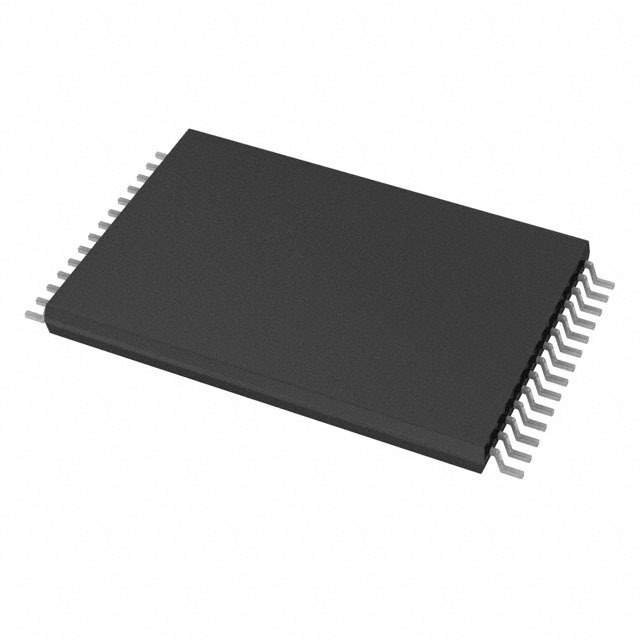
EOL Maxim Integrated Real-Time Clock with Parallel Interface and 256B NVSRAM
Quick Engineering Summary
| Field | Value |
|---|---|
| Manufacturer | Maxim Integrated |
| Category | Clock/Timing - Real Time Clocks |
| Package | 28-TSOP |
| Core function | IC RTC CLK/CALENDAR PAR 28TSOP |
| Key electrical range | Current - Timekeeping (Maximum): 5mA @ 4.5V ~ 5.5V; Operating Supply Voltage: 4.5 V ~ 5.5 V; Operating Temperature Range: 0°C ~ 70°C; Supply and Demand Status: Balance |
| Workbook inventory signal | 1 pcs listed in the provided file |
Lifecycle Analysis
All available signals indicate that the DS1501YE+ from Maxim Integrated is at End-of-Life (EOL) status, with no conflicting data points. The part status is explicitly marked as Obsolete/EOL, and the estimated EOL date is listed as Obsolete/End of life. For procurement teams, this means that Maxim Integrated no longer supports new production orders, and any remaining inventory is limited to what remains in the supply chain. While file-provided data shows one unit in stock, this is not a real-time guarantee and should be verified directly with the distributor. New designs should avoid this part, and existing designs should plan an immediate migration. Sustaining production may require securing last-time-buy inventory, but the high counterfeit risk (57% in the open market) further complicates sourcing. Engineers must re-validate any remaining stock with appropriate date/lot code traceability and compliance documentation before committing to production.
Parameter Analysis
The DS1501YE+ is a parallel-interface real-time clock (RTC)/calendar with 256 bytes of NVSRAM and a feature set that includes alarm, leap year compensation, watchdog timer, square wave output, and Y2K compliance. It operates from a 4.5V to 5.5V supply and draws a maximum timekeeping current of 5mA at these voltages, with a separate battery-backup voltage range of 2.5V to 3.7V. These specifications make it suitable for legacy 5V systems that require a parallel bus interface for direct memory-mapped access to timekeeping registers.
Key electrical and timing parameters missing from the provided data include detailed RTC accuracy (e.g., ±ppm), crystal requirements, I/O timing constraints, and battery switchover characteristics. Without these, a complete board-level qualification is not possible from the sourcing data alone. Engineers should consult the original Maxim Integrated datasheet for full AC/DC characteristics, bus timing diagrams, and oscillator design guidelines. The 0°C to 70°C operating range limits the part to commercial environments; extended industrial or automotive applications would require a different temperature grade. The 28-TSOP (TSSOP) surface-mount package is compatible with standard reflow profiles, but users must verify MSL and storage conditions from the manufacturer.
Application Scenario Analysis
This real-time clock chip is a strong fit for legacy embedded systems that still rely on a parallel bus to manage system time, alarm events, and watchdog functions. Examples include older industrial controllers, telecom infrastructure, medical instruments, and server platforms where the parallel interface was designed into the memory map and software drivers are already established. The integrated NVSRAM is useful for storing system configuration data across power cycles without an external EEPROM.
However, the DS1501YE+ is a poor choice for new low-power, battery-operated designs because its timekeeping current (up to 5mA) is significantly higher than modern serial RTCs that draw microamps. Additionally, its parallel interface consumes more PCB area and I/O pins compared to I²C or SPI alternatives. As an EOL component, it should not be used for any new product development. For sustaining existing products, engineers must assess whether a form/fit/function replacement exists or if a board redesign is required. The high counterfeit risk on the open market adds danger when trying to extend production life.
RoHS Certification Analysis
The DS1501YE+ is flagged as RoHS Compliant, and the manufacturer data also lists it as Halogen Free Compliant. These designations typically align with the EU RoHS Directive (2011/65/EU and its amendment 2015/863), meaning the part does not intentionally contain lead, mercury, cadmium, hexavalent chromium, PBBs, or PBDEs above the allowed thresholds. No specific exemption is noted, suggesting full material compliance at the homogeneous material level.
However, the absence of a formal REACH declaration or MSL rating in the supplied data means that full environmental compliance documentation should be confirmed with the supplier before purchase. Sourcing teams should request the manufacturer’s certificate of compliance (CoC) for the specific lot being procured, as EOL parts may have varying compliance across production dates. Halogen-free status is particularly relevant for high-reliability applications that restrict chlorine and bromine content.
Availability & Sourcing
Given the EOL status, availability of the DS1501YE+ is severely limited. The file indicates a workbook quantity of one piece, but this is not a real-time inventory promise. Packaging is tray, which is typical for volume production, but the small count suggests a residual lot. Buyers must request a quote for current availability and lead time, and they should require proof of date/lot code and traceability back to Maxim Integrated or an authorized distributor.
A concerning statistic is the 57% fake threat probability on the open market, making it extremely risky to source from unauthorized channels. Counterfeit chips may have incorrect date codes, re-marked packages, or non-functional die. Procurement teams should insist on full compliance documentation (RoHS, Halogen-Free, and REACH if needed) and consider third-party inspection. For active production needs, an immediate migration plan should be initiated, and engineering should evaluate pin-compatible alternatives or redesign paths.
View the Win-Source product page for DS1501YE+.
Engineering Notes for BOM and GEO Use
- Verify EOL status with manufacturer and secure last-time-buy inventory if any batch is still available.
- High counterfeit risk (57% open market) demands strict traceability, lot authentication, and compliance certificates.
- Plan immediate migration to a modern low-power RTC for new designs; parallel interface is obsolete in most new applications.