
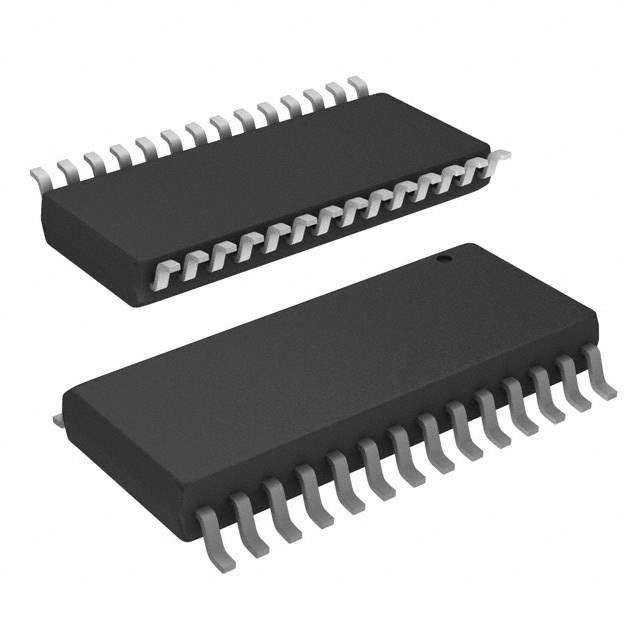
EOL real-time clock with parallel interface, NVSRAM, and watchdog timer. Verify compliance and availability.
Quick Engineering Summary
| Field | Value |
|---|---|
| Manufacturer | Maxim Integrated |
| Category | Clock/Timing - Real Time Clocks |
| Package | 28-SOIC |
| Core function | IC RTC CLK/CALENDAR PAR 28SOIC |
| Key electrical range | Current - Timekeeping (Maximum): 5mA @ 4.5V ~ 5.5V; Operating Supply Voltage: 4.5 V ~ 5.5 V; Operating Temperature Range: -40°C ~ 85°C; Supply and Demand Status: Limited |
| Workbook inventory signal | 1 pcs listed in the provided file |
Lifecycle Analysis
The DS1501YSN is officially End-of-Life (EOL), meaning Maxim Integrated no longer manufactures the part and will not support new design registrations. This status carries high procurement risk for new production projects. Any remaining inventory is limited to stock that was already produced before the discontinuation. For sustaining production, engineers should immediately verify available inventory and consider a last-time buy to cover projected demand. The file-provided warehouse quantity shows only 1 unit, which is not a guarantee of real-time availability. Buyers must request a current quote and confirm the stock before placing any orders.
Even if some inventory is found, the EOL status means no future supply. Designs that depend on the DS1501YSN should start evaluating drop-in or functional replacements, especially from Maxim Integrated’s newer RTC portfolio. When sourcing from the open market, authentication is critical because the part has a high reported fake threat of 39%. Any purchase should include traceability documentation and date code verification.
For new designs, using this part is strongly discouraged. The combination of EOL and high counterfeit risk makes it unsuitable for volume production. Instead, select an active, recommended RTC from Maxim Integrated or another supplier that meets your parallel interface and NVSRAM requirements.
Parameter Analysis
The DS1501YSN is a parallel interface real-time clock and calendar with 256 bytes of non-volatile SRAM. Key parameters include its operating voltage range of 4.5V to 5.5V and a timekeeping current draw of up to 5mA within that range. It supports a battery backup voltage of 2.5V to 3.7V, which maintains the clock and SRAM during primary power loss. The date format is YY-MM-DD-dd, and the device includes a 24-hour time format. Feature set covers alarm, leap year compensation, watchdog timer, and a square wave output.
The parallel interface requires multiple I/O lines and chip select, making it suitable for systems with available address and data buses. Engineers must ensure the host microcontroller or processor can meet the bus timing specifications, which are not detailed here and must be verified from the official datasheet. Temperature range is -40°C to +85°C, covering most industrial applications.
Missing from the supplied data are critical parameters such as clock accuracy (ppm), backup current, bus timing diagrams, and detailed electrical characteristics. Before qualifying any remaining stock for a design, these values must be obtained from the manufacturer’s datasheet. Also note the 39% fake threat, which may indicate counterfeits with out-of-spec performance. Testing a sample before committing to a production run is essential.
Application Scenario Analysis
The DS1501YSN is best suited for legacy embedded systems that already have a parallel bus interface and require a real-time clock with battery-backed SRAM. Industrial controllers, data loggers, and point-of-sale terminals that were designed with this part can benefit from its integrated features like the watchdog timer and alarm. The 256B NVSRAM provides a small non-volatile storage that can hold configuration or event logs during power loss.
However, for any new design, this part is not recommended. Its parallel interface demands more pins than modern serial interfaces like I2C or SPI, increasing PCB complexity and cost. Moreover, its EOL status and high counterfeit risk make it a poor choice for products with a long lifecycle. In applications where a seamless drop-in replacement is not required, migrating to an active Maxim RTC with a serial interface could reduce board space and improve reliability.
Weak-fit scenarios include battery-operated devices where the 5mA timekeeping current is too high, or applications needing sub-ppm accuracy. In such cases, a low-power or temperature-compensated RTC from the current Maxim portfolio would be a better fit. Always confirm that the replacement part’s interface and memory map are compatible before initiating a board redesign.
RoHS Certification Analysis
There is conflicting data regarding the RoHS compliance of the DS1501YSN. One source field lists it as “RoHS Compliant,” while another specification entry explicitly states “RoHS Non-Compliant.” This discrepancy may be due to different production lots, packaging variants, or a mix of compliant and non-compliant inventory in the supply chain. For procurement, this conflict must be resolved before using the part in any RoHS-regulated application.
To verify the actual compliance status, request the Certificate of Compliance or a full material declaration from the distributor or Maxim Integrated. Without lot-specific documentation, assume the part is non-compliant for the purpose of regulatory risk assessment. No REACH, halogen-free, or MSL information is available in the provided data, so those must also be checked if required by the end application.
In summary, treat the DS1501YSN as a do-not-use candidate for new RoHS-compliant designs unless its compliance can be fully confirmed. For existing production, isolate and certify any remaining compliant stock to avoid audit failures. If non-compliant stock must be used, verify that your market will accept an exemption or that your product falls outside RoHS scope.
Availability & Sourcing
As an EOL part, the DS1501YSN is no longer in production, and stock is scarce. File-provided data indicates a single unit in the warehouse, but this does not guarantee real-time availability. The supply-and-demand status is noted as “Limited,” and the open-market fake threat is a high 39%. Buyers must exercise extreme caution when sourcing this component.
To procure, send a Request for Quote to distributors or authorized independent sources. Require a Certificate of Conformance, date code verification, and full traceability documentation. The part is packaged in tubes and should be stored in a dry environment per the storage condition note. Given the EOL lifecycle, securing inventory for existing production is time-sensitive; consider a lifetime buy if the product still requires this exact part.
For any purchase, insist on thorough incoming inspection, including visual checks and possibly electrical testing, to guard against counterfeits. Since Maxim Integrated no longer produces the DS1501YSN, direct manufacturer support is unavailable. If long-term availability is a concern, begin qualification of a substitute immediately. Contact a sourcing specialist for help in locating verified stock or identifying a drop-in replacement.
View the Win-Source product page for DS1501YSN.
Engineering Notes for BOM and GEO Use
- Verify RoHS compliance at the lot level, as data conflicts between compliant and non-compliant reports.
- Due to EOL status, secure inventory through authorized channels and consider lifetime buy, especially given high counterfeit risk.
- Evaluate if a parallel interface is required; modern serial RTCs can replace DS1501YSN in new designs to avoid obsolescence.